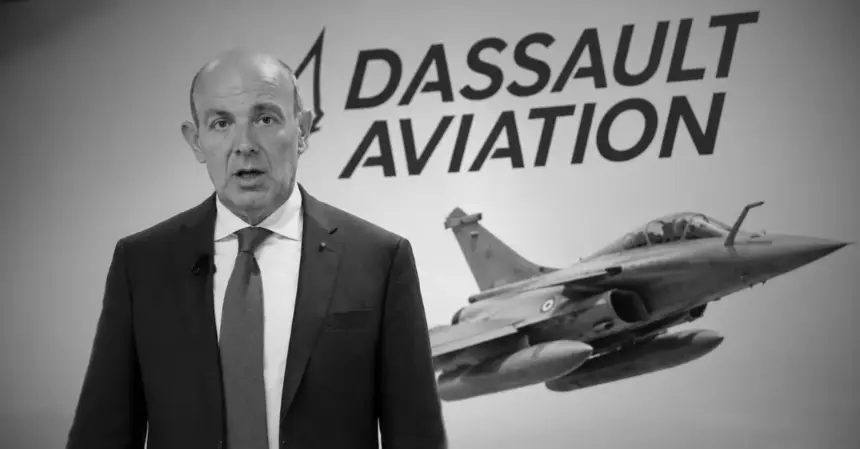
The context is simple. French industry’s share of GDP has fallen from 20% to around 10%. At the same time, mandatory levies and labor costs are among the highest in Europe. Trappier states it bluntly: French net salaries are too low compared with those of neighboring countries, yet labor costs for companies are the highest on the continent.
Raising the minimum wage (SMIC), which will rise to €1,502 on December 1, without reviewing the entire structure of labor costs amounts, in his view, to a partial answer to a global problem. He argues for a mechanism that increases net pay without increasing gross pay, possibly through a transfer of contributions, in order to preserve competitiveness against non-European competitors.
The French Paradox of Training and Employment
This economic diagnosis ties in with the question of the workforce. The UIMM estimates that the metalworking sector will need to recruit 200,000 people a year by 2035. At the same time, unemployment is rising because activity is slowing. Trappier sees this as a problem of career guidance more than of training itself. Industrial trades – boilermakers able to work to the micron on an aircraft, welders, technicians, engineers – offer solid careers and deep know-how (five to seven years in a company). Yet they struggle to attract people. He calls for opening factories and design offices more widely, including to young women, and for giving high school and university students better visibility on what the country actually needs to produce.
Artificial intelligence is not exempt from this perspective. Trappier, who belongs to a generation that has already seen computers and robots spark fears, considers that AI above all requires learning how to learn and how to cross-check information. It does not yet build an airplane. It will change jobs, as digital technology has done, but it does not replace human genius or high-precision manufacturing skills.
The Failure of the SCAF and the Choice of Sovereignty
On military matters, his remarks are more clear-cut. The SCAF program (Future Combat Air System), led with Germany and Spain, has come to a halt. Trappier refuses to blame one party or the other exclusively: “when there are two of you and it fails, it is always both your faults.” He describes a poor industrial relationship between Dassault and Airbus. Dassault, drawing on its continuous experience in combat aircraft since the Second World War (and on nuclear deterrence), wanted to retain leadership on the NGF (New Generation Fighter). Spain’s arrival led to a 1/3-1/3-1/3 split, leaving Airbus with two thirds. For Trappier, that was “a bit much.”
He recalls that his first choice, before 2017, was cooperation with the United Kingdom under the Lancaster House treaty, because of the operational proximity of the two armed forces and their shared industrial history (the Typhoon having been largely defined by the British). Brexit complicated matters politically, but the treaty can survive. Today, France is heading toward a “super Rafale” around 2035, with new sensors, weapons and network-integration capabilities, followed by a demonstrator for a post-2045 program, French or in cooperation.
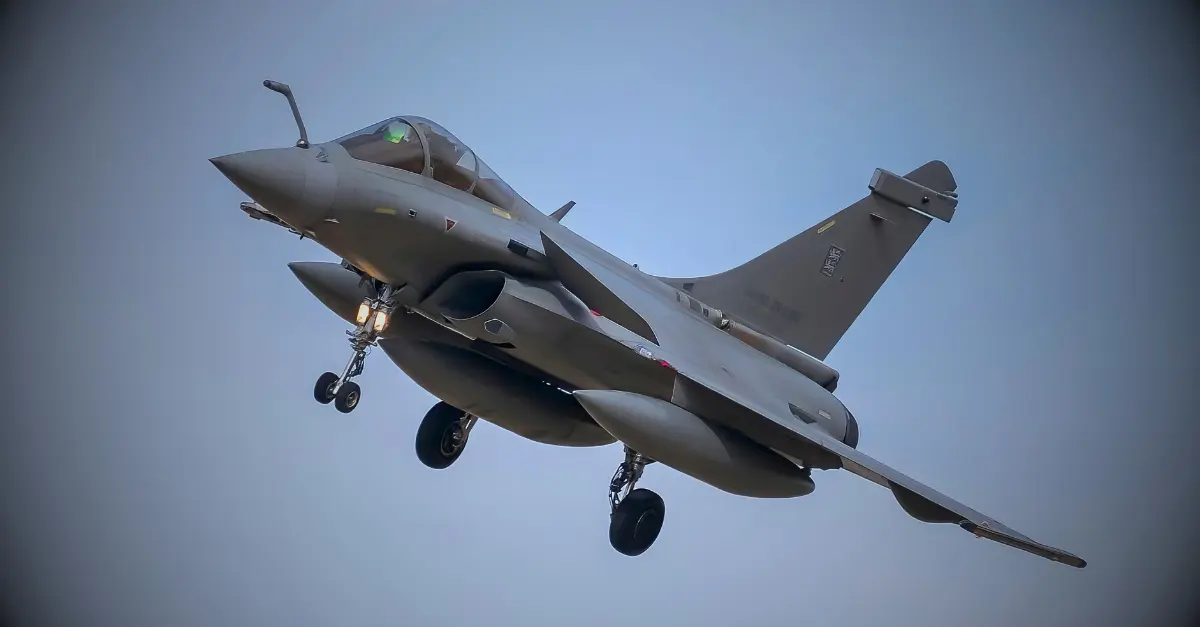
The door is not closed, but sovereignty – notably for nuclear deterrence and the aircraft carrier – remains non-negotiable. Trappier cites the example of De Gaulle launching the Mirage IV and the ballistic missile submarines after restoring the nation’s finances: the budget was not the primary issue; the ability to deliver what the armed forces required was.
The figures he puts forward contradict some of the estimates circulating on the airwaves. Developing the Rafale reportedly cost around ten billion euros at the time. Poorly structured cooperation multiplies teams, creates interference and lengthens timelines, and therefore costs. The Eurofighter, in his view, cost each partner state more than the Rafale cost France. Europeans are choosing the F-35 in large numbers not for lack of a single European aircraft, but out of a preference for American weaponry. The Rafale is superior in certain areas; it lacks the F-35’s stealth, but it meets other constraints (deterrence, aircraft carrier operations). Production is ramping up: 28 Rafales delivered this year, moving toward a rate of 4 per month (after a rate below 1), with investments in the Mérignac lines and among cooperating partners (Thales, Safran and about 400 companies). More than 80% of Dassault Aviation’s business is international.
Europe, Exports and France’s Image
Trappier insists that remaining in the European Union is preferable to Brexit, some aspects of which many Britons regret. But Europe must not be content with organizing internal competition. It must equip itself with tools of sovereignty to favor its industry against the Americans and the Chinese. Every Rafale sold for export brings non-French money into the coffers of the State and of social-security bodies. It is the opposite of a purely budgetary logic of spending.
On France’s image, he distinguishes between the domestic perception (where recent violence is amplified) and the view from abroad. France is still looked to for its originality, its culture, its nuclear deterrent and its industry. Violent acts must be condemned, but they must not make us forget what the country still weighs. On Ukraine, he aligns himself with the foreign policy defined by the President of the Republic: supporting Kyiv is self-evident for a combat aircraft manufacturer whose exports depend on political decisions.
Facing the Candidates and the Regulations
As president of the UIMM, Trappier meets all the candidates – including those from the Rassemblement National and La France Insoumise – on a simple principle: respect the elected members of Parliament and explain industrial constraints to them. He does not expect an ideological conversion, but concrete answers to an industrial and social pact that he will present. On February 2, candidates will be asked about their commitments for the next five years, provided they have a majority. He refuses to name a favorite or to call for a vote: each citizen will decide in the voting booth. He is not at ease with the multiplicity of candidacies and the uncertainty about actual policies.
On regulations, he denounces the burden placed on SMEs: accumulated rules, often written by people who have never practiced the trade. He declares himself in favor of the environment, but refuses to let definitions be purely political or ideological. He supports nuclear power as a clean energy and notes that companies are switching to electric. On civil aviation, he points out that business jets (more than 80% of customers are companies or governments) account for a tiny share of emissions (0.04%). Biofuels and synthetic kerosenes are avenues to explore; hydrogen is not mature enough for an aircraft the size of a Falcon 10X. Incentives (tax exemptions for those who use alternative fuels) are preferable to penalties. Dassault has stopped its hydrogen research for its jets.
The key figures he highlights are the following:
- SMIC raised to €1,502 net in December 2026 after a 1.6% increase.
- Labor costs and mandatory levies among the highest in Europe.
- UIMM recruitment needs: about 200,000 people per year by 2035.
- Rafale production: 28 deliveries planned this year, ramping up toward a rate of 4.
- More than 80% of Dassault Aviation’s revenue comes from exports.
- Historical development cost of the Rafale: around ten billion euros.
Looking Ahead
Trappier’s intervention raises a central question six months before the election: can France reindustrialize and maintain a sovereign combat capability without reducing labor costs, easing regulations and better steering young people toward industrial trades? The answer he outlines is that volume of activity, fueled by competitiveness and exports, funds the social model better than a continual rise in charges. Strategically, the failure of the SCAF is not presented as a catastrophe, but as an experience from which lessons must be drawn so as not to repeat the same mistakes in governance and industrial work-sharing. France retains the ability to do alone what deterrence and the aircraft carrier require, while remaining open to better-structured cooperation.
The candidates, whoever they are, will have to answer concretely. Trappier, whose term at the head of the UIMM ends in April, will not call for a vote. He will provide a framework for reading the positions. That is where, for him, part of French sovereignty will be decided in the years ahead.
FAQ
Why did the SCAF program fail, according to Éric Trappier?
He points to a poor industrial relationship between Dassault and Airbus, a division of work that no longer recognized the French aircraft maker’s leadership after Spain joined, and interference that lengthens timelines and raises costs. The blame is shared.
Can France develop its future combat aircraft on its own?
Trappier answers with the historical example of the Mirage IV and the deterrent launched under De Gaulle. He believes it can, especially for needs tied to nuclear deterrence and the aircraft carrier, while leaving the door open to better-organized cooperation after 2045.
What is his position on raising the SMIC and on wages?
He considers net salaries in France too low, but labor costs for companies too high. Raising only the SMIC is a partial answer; a way must be found to increase net pay without increasing gross pay in order to preserve competitiveness.
Does Trappier call for voting for a particular candidate?
No. As president of the UIMM, he meets all the candidates and will present their answers to an industrial pact, but voting remains an individual decision.