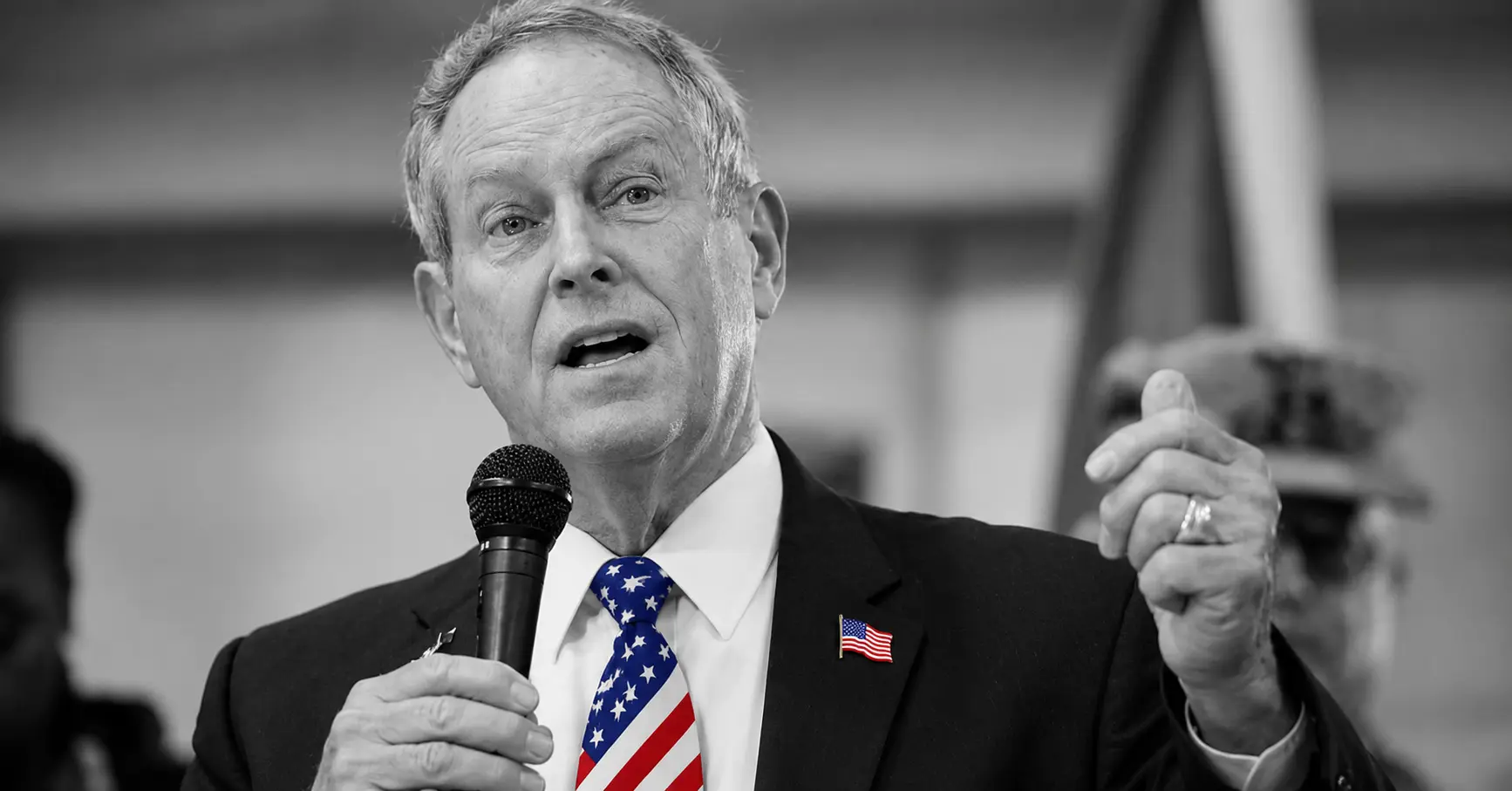
The US draft resolution, which had eleven votes in favor, was blocked by a Russian veto. It would have extended the mission while placing Morocco’s autonomy plan at the center of negotiations. The next day, Republican Representative Joe Wilson of South Carolina reacted on X, calling for sanctions against Algeria under the CAATSA law and for the Polisario Front to be designated a foreign terrorist organization.
This sequence directly links a diplomatic deadlock in New York to Russian-Algerian military cooperation. It shows how a long-standing territorial dispute can serve as leverage in the competition between major powers.
The Russian veto and Joe Wilson’s reaction
The American draft (document S/2026/868, according to reports) aimed to extend MINURSO until the end of 2027 while explicitly anchoring Morocco’s autonomy plan as the basis for talks. It would also have changed the mission’s framework, notably by reducing the reference to a self-determination referendum. Russia voted against it, exercising its veto. A competing Russian text, calling for a simple extension of the existing mandate, was not adopted either, for lack of a sufficient majority.
Of course Russia vetoed the widely-supported & common sense UN resolution to extend peacekeeping and lay the path for Moroccan sovereignty over Western Sahara. Russia’s goal? Further destabilization of Africa.
Who benefits? Russia, its puppet Algeria, Iran, and the Hezbollah trained Algeria-backed Polisario Front.
It is high time to designate the Polisario as an FTO AND impose CAATSA sanctions on Algeria for building an arsenal of Russian weapons to cause CHAOS in North Africa and Europe. Algeria could do well if its leaders chose to back a bright future instead of terrorism.
— Joe Wilson (@RepJoeWilson) October 31, 2026
In his October 31 message, Wilson wrote that Moscow’s goal was “further destabilization of Africa.” He named as beneficiaries “Russia, its puppet Algeria, Iran, and the Hezbollah trained Algeria-backed Polisario Front.” He added that it was “high time to designate the Polisario as an FTO AND impose CAATSA sanctions on Algeria for building an arsenal of Russian weapons to cause CHAOS in North Africa and Europe.”
These remarks are part of a longer-running effort. On June 24, 2025, Wilson and Democrat Jimmy Panetta introduced bill H.R. 4119, the “Polisario Front Terrorist Designation Act.” The text asks the Secretary of State to assess, within 90 days, whether the Polisario meets the criteria for designation as a Foreign Terrorist Organization, citing alleged links to Iran and Hezbollah (training of cadres and drone deliveries, according to press sources). The bill remains in committee but has attracted several cosponsors, mostly Republican.
The CAATSA law and Russian arms purchases
Passed in 2017, the Countering America’s Adversaries Through Sanctions Act allows US authorities to sanction individuals or entities that conduct significant transactions with Russia’s defense or intelligence sectors. Its application is not automatic: it depends on an assessment by the administration (State Department and Treasury), with room for discretion and possible waivers. It has already been invoked or threatened in other cases, notably over S-400 systems.
Algeria has historically been one of the main customers of the Russian defense industry. According to SIPRI data, Russia has supplied a majority share of Algeria’s major arms imports over the long term (often estimated at around 70% depending on the period). These purchases have included fighter jets (Su-30MKA, MiG-29), tanks, air defense systems and submarines. Volumes have dropped sharply since 2022, because of Russian production constraints linked to the war in Ukraine and logistical difficulties. However, SIPRI notes that Algeria maintains a high degree of secrecy around its contracts, which can lead to underestimating actual flows.
Open-source reports point to strong interest in the Su-57 (export version Su-57E), a fifth-generation fighter. Leaked documents and Russian statements have presented Algeria as the first foreign customer, with orders reported at around a dozen aircraft and deliveries already begun or imminent according to some sources. The US State Department warned in early 2026 that such acquisitions could trigger CAATSA measures. Wilson repeats this argument and extends it to a broader “arsenal,” which he presents as likely to fuel tensions in North Africa and beyond.
Strategic stakes and points of view
For Washington, the Russian veto and Algeria’s support for the Polisario fit into a broader dynamic: Russian military presence in Africa, ties with Iran, and opposition to a settlement favorable to Morocco, a historic US ally. The American recognition of Moroccan sovereignty over the Sahara, initiated in 2020, has been maintained. Rabat and its supporters present the autonomy plan as a realistic solution, compared with a referendum that the United Nations has never organized.
On the Algerian and Polisario side, the opposite position prevails. Algiers considers Western Sahara a non-self-governing territory whose status must be settled by a self-determination referendum, in line with earlier Security Council resolutions. Russia justified its veto by arguing that the Council could not prejudge sovereignty and that a unilateral approach would lead to a dead end. Sahrawi voices have described Wilson’s remarks as interference and a legitimization of an occupation.
The alleged links between the Polisario, Iran and Hezbollah rest on press reports and on allegations repeated in bill H.R. 4119. They are not backed by an international consensus, nor by an official US designation at this stage. Such a designation would have significant legal and financial consequences (asset freezes, a ban on material support), but it falls to the Secretary of State and not to a simple call from lawmakers.
- The Russian veto of October 30 prevented the adoption of a text backed by eleven members, including France and the United Kingdom.
- H.R. 4119, introduced in June 2025, calls for a formal assessment of the Polisario for a possible FTO listing.
- Algeria remains a major customer of Russian weapons despite the drop in volumes recorded by SIPRI since 2022; Su-57 contracts have been the subject of US warnings since early 2026.
Conclusion
The effective application of CAATSA sanctions against Algeria would depend on a decision by the US executive branch. It is neither imminent nor automatic, even though congressional pressure exists. Designating the Polisario as a foreign terrorist organization would carry even heavier political and diplomatic consequences. It could deepen the divide between Rabat and Algiers, already marked by the closure of the land border and limited trade.
At the UN, the failure to renew the MINURSO mandate leaves the mission in uncertainty. Peacekeeping missions can sometimes continue under temporary technical arrangements, but the precedent of a double deadlock (a Russian veto followed by the failure of the Russian text) shows how hard it is to maintain a consensual framework on this issue. For Algeria, which has partially diversified its suppliers (notably toward China), a direct confrontation with the United States over Russian purchases could weigh on its trade and financial relations, even if its hydrocarbon resources give it some room to maneuver.
The Western Sahara dispute thus continues to serve as a stage for broader rivalries between Washington, Moscow and, to a lesser extent, Tehran. The positions expressed by Joe Wilson reflect a firm line in the US Congress in favor of Morocco and against Russian partners in North Africa. They do not prejudge any immediate action by the administration, but they illustrate how a diplomatic veto can be used to revive tools of economic and legal pressure.
FAQ
What is the CAATSA law and how could it apply to Algeria?
Passed in 2017, it authorizes sanctions against significant transactions with Russia’s defense sector. Its application is discretionary and assessed case by case by the US administration.
Is the Polisario Front already designated a terrorist organization by the United States?
No, not yet. A bill (H.R. 4119) introduced in 2025 calls for a formal assessment; no designation has been made to date.
Why did Russia use its veto?
According to its representative, the American text prejudged the territory’s sovereignty and imposed a unilateral approach incompatible with the existing UN framework.
Are Algeria’s Russian arms purchases an established fact?
Yes, over the long term. Russia has been the main historical supplier. Recent contracts (notably around the Su-57) are the subject of reports and US warnings, even though overall volumes have dropped according to SIPRI.