On 29 October 2026, a Pakistani general was received by Morocco’s highest-ranking officer to discuss mine clearance, logistics and security. The next day, the Security Council was due to vote on the future of the mission he commands. That coincidence of timing says a lot about the moment the Moroccan Sahara file is going through.
A courtesy visit at a moment that is anything but routine
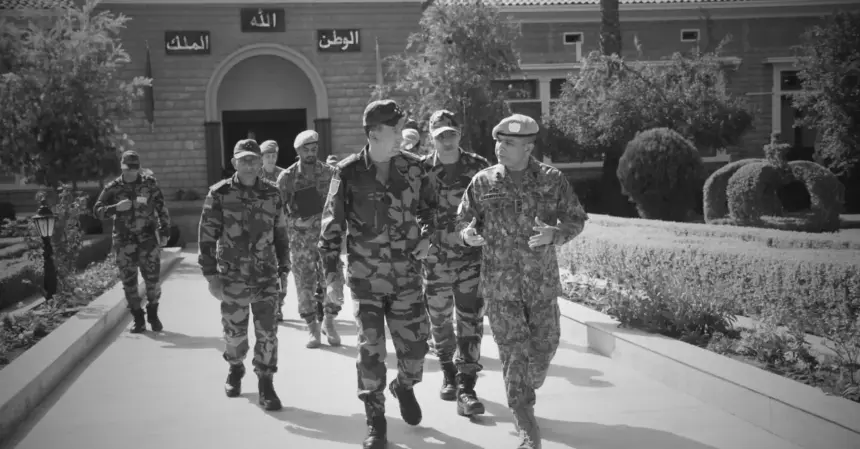
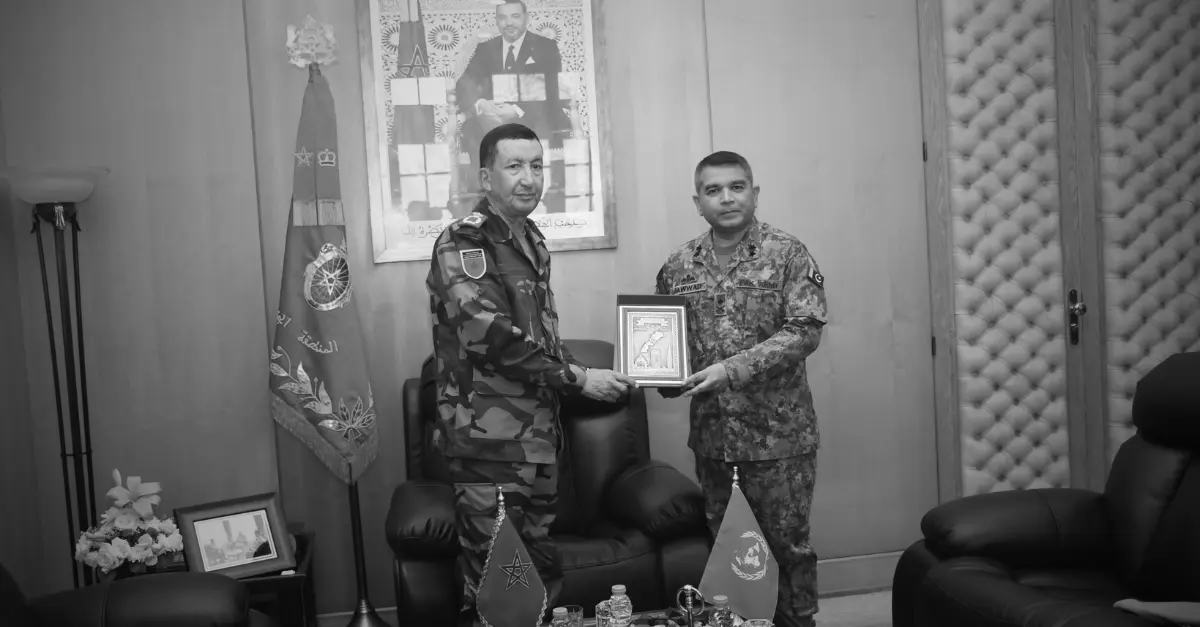
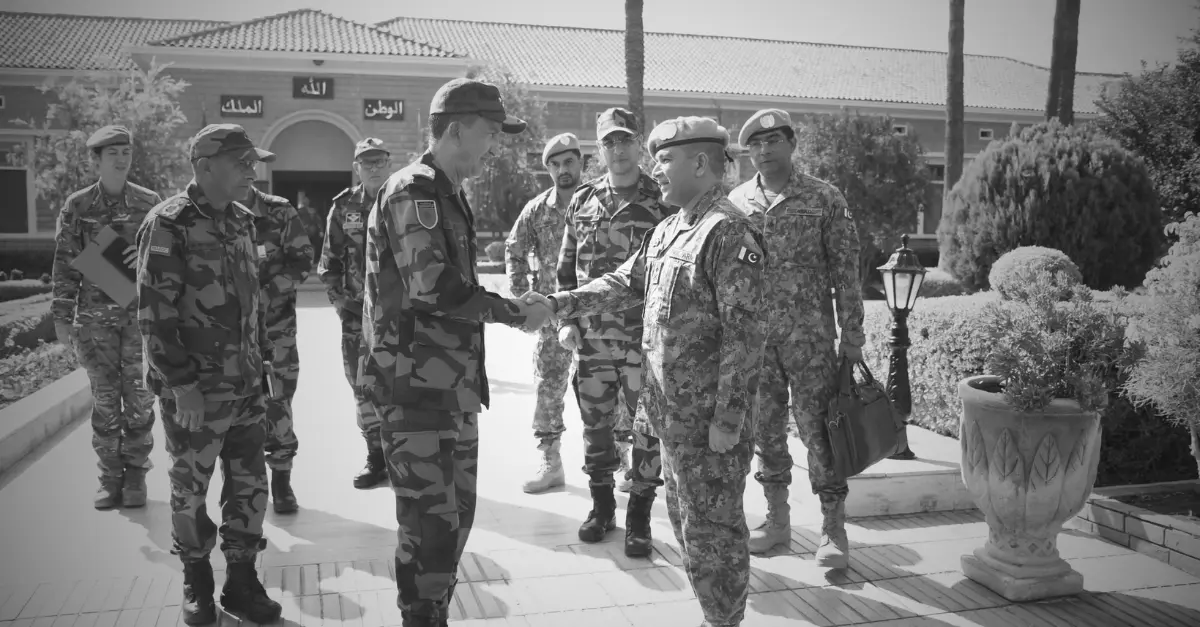
Major General Jawwad Ahmed, the new MINURSO force commander, was received in Agadir at the headquarters of the Southern Zone. His host was Lieutenant General Mohammed Berrid, Inspector General of the Royal Armed Forces and commander of that zone. According to a statement from the General Staff reported by MAP, the two men praised an exceptional level of coordination in operations, security, mine clearance and logistical support.
This kind of meeting is standard. A UN force commander taking up his post meets the authorities of the country where most of his deployment is located. Still, I note the contrast between the tone of this statement, entirely about technical cooperation, and the diplomatic tension surrounding the mission in New York.
António Guterres appointed Jawwad Ahmed on 11 August 2026. He succeeds Bangladesh’s Md Fakhrul Ahsan, whose term ended on 2 August. According to information published by the mission, the Pakistani general has more than 35 years of experience in his country’s army and in peace operations. He has notably led an infantry division, commanded the force in the Northern Areas, and served in the Pakistani UN contingent in Eastern Slavonia, Croatia.
What MINURSO actually does
MINURSO was created in 1991 as part of the ceasefire between Morocco and the Polisario Front, as the specialist outlet PassBlue notes. Its name still carries its original mandate, the organisation of a referendum, which has never taken place. The parties have never agreed on the electorate or on the options to be put to a vote.
In practice, the mission is mainly an observation force. Its teams monitor the ceasefire and liaise with both sides. They also follow mine-clearance activities, a subject mentioned in the Moroccan statement, since the territory remains littered with explosive remnants of war. The ceasefire itself collapsed in November 2020, after an incident at Guerguerat. Since then, the Polisario has said it is at war, while Morocco downplays the scale of the fighting. Casualty figures cannot be independently verified.
Why Friday’s vote matters
A year ago, on 31 October 2025, the Council adopted Resolution 2797. It received 11 votes in favour, none against and three abstentions (China, Russia, Pakistan), according to the UN Digital Library. Algeria did not take part in the vote. The text, drafted by the United States, invited the parties to negotiate on the basis of Morocco’s autonomy plan, while also referring to a solution providing for the self-determination of the people of Western Sahara. It also asked the Secretary-General for a strategic review of the mission’s mandate.
It is this review, and above all Washington’s desire to go further, that is fuelling the current debate. Here is what the available sources report about the draft under discussion:
- Name of the mission. The initial text, dated 20 October, would rename the mission the “United Nations Mission for Western Sahara” (MINUSO), dropping the word referendum (Morocco World News, PassBlue).
- Nature of the mandate. According to PassBlue, the peacekeeping component would end after six months. From 1 May 2027, the mission would become a special political mission until 31 October 2027. The Spanish outlet Atalayar mentions an end to the traditional functions on 30 April 2027.
- Basis for negotiations. The initial text would describe Morocco’s autonomy plan as the only possible basis for talks.
- Humanitarian aspects. It would express deep concern about the Tindouf camps in Algeria and call for “voluntary and durable” solutions for the refugees.
One caveat is in order. Morocco World News notes that this document is informal and cannot be independently verified. The same outlet, in a piece dated 27 October, indicates that the revised version would have removed some passages while keeping the name change. I have not been able to confirm the exact wording of the text put to the vote.
The arguments on the table
The view from Rabat and its supporters
Morocco, which controls most of the territory, has defended an autonomy plan under its sovereignty since 2007. Its ambassador to the UN, Omar Hilale, described the text under discussion as an irreversible turning point, one that moves from “managing” the conflict to resolving it. The United States recognised Moroccan sovereignty in 2020, and many European states have since backed the plan. For its supporters, the old referendum logic is outdated after more than thirty years of deadlock, and a mission geared towards negotiation would better fit realities on the ground.
The Secretary-General’s Personal Envoy, Staffan de Mistura, himself acknowledged in early October that the negotiations had hit a wall. According to his statement as reported by PassBlue, he believes autonomy should serve as the basis for the next discussions.
The view from the Polisario and its supporters
The Polisario Front, backed by Algeria, calls for the implementation of the original self-determination referendum plan. Its representative at the UN, Sidi Omar, warned that the Front would disengage from the peace process if the text were adopted without substantial changes. He also accused Mr de Mistura of compromising his neutrality. Organisations such as Western Sahara Resource Watch argue that the text would violate international law by endorsing an occupation.
The Secretary-General himself recalled, in his report of 1 October, the Sahrawis’ inalienable right to self-determination. He adds that any proposal must be subject to genuine consultation with the population, which must be free to accept or reject it.
Positions in between
Russia indicated, through its spokesperson Maria Zakharova on 27 October, that it supported extending the mandate and dialogue between the parties. She specified that its final position would depend on negotiations among Council members. In 2025, Moscow abstained. I have no confirmation of its final vote.
A Pakistani commander in a political context
One detail deserves mention without drawing hasty conclusions. Pakistan was among the three abstentions in 2025. This has no bearing on General Ahmed’s work. UN force commanders serve in an international capacity and do not represent their country of origin. But for anyone following the file, the nationality of mission leaders is part of the diplomatic landscape, and that is one more reason not to over-interpret the Agadir meeting.
What matters is the force’s practical role. In a territory where the front line is a sand wall several thousand kilometres long, coordination with the Moroccan army west of the wall, and with the Polisario to the east, determines the safety of observers. If the mandate shifts to a political mission, the fate of this military presence becomes the real question, and it has no public answer yet.
What is at stake for the region
Several lines of force intersect.
On the strategic front, a change of mandate would strengthen Morocco’s position, at a time when the Polisario is threatening to leave the process. The risk described by analyst Hannah Rae Armstrong, cited by PassBlue, is an escalation of the conflict. I cannot say whether that scenario will materialise, but several observers take it seriously.
On the humanitarian front, PassBlue cites around 170,000 refugees in the Tindouf camps, a figure that has been disputed in the past and should be handled with caution. The same article reports, citing UNICEF, that about 11% of young children there suffer from malnutrition.
On the diplomatic front, four-party talks (Morocco, the Polisario, Algeria, Mauritania) were held in January and February in Madrid and Washington, under the auspices of Massad Boulos, Mike Waltz and Staffan de Mistura. They did not succeed. The Washington Institute, a US think tank, also noted that Algeria would leave the Council in January, which changes the balance of power for future negotiations.
The Agadir meeting shows that operational cooperation between the UN and the Moroccan army works, at least according to both sides. It says nothing about the central question: what MINURSO will be for tomorrow. If the mission changes in nature, General Ahmed could be one of the last force commanders of a traditional peacekeeping mission in Western Sahara. If the text is amended, the mission will continue as it is, but the debate over its purpose will remain wide open.
FAQ
Who is the new MINURSO force commander?
Major General Jawwad Ahmed of Pakistan, appointed on 11 August 2026 by António Guterres. He succeeds Bangladesh’s Md Fakhrul Ahsan.
When does the Security Council vote?
The vote is expected on Friday, 30 October. The mission’s current mandate expires on 31 October 2026.
What does the draft resolution provide for?
The versions in circulation mention a name change, the gradual end of the peacekeeping component and Morocco’s autonomy plan as the basis for negotiations. The exact text is not public and may have changed.
Why does the Polisario oppose it?
It calls for a self-determination referendum and considers that the text endorses Morocco’s position. It has threatened to withdraw from the peace process if the text passes without substantial changes.