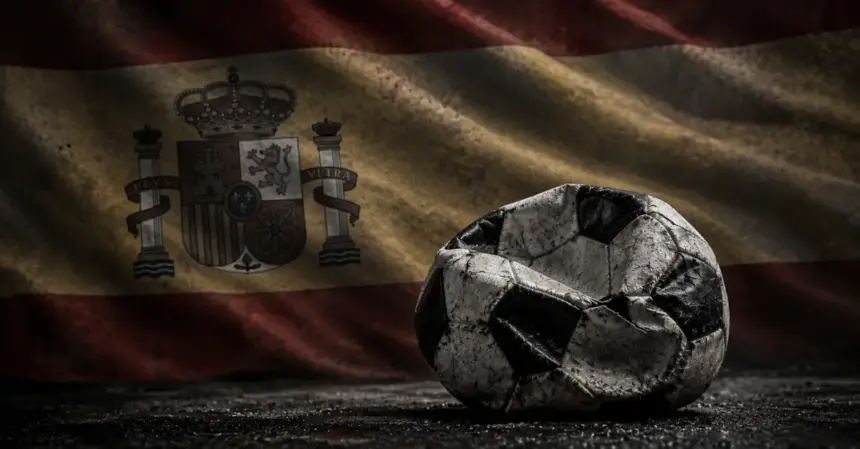
I ask the question without bias: does Spain have what it takes for this event? The answer is more nuanced than online controversies suggest. Nor can it be reduced to a duel with its Moroccan neighbor, since the two countries are hosting this tournament together.
A tournament across three continents
The 2030 World Cup will be split between Spain, Portugal and Morocco, while the first three matches will be played in Paraguay, Argentina and Uruguay, in tribute to the centenary of 1930. It is a first: six countries, three continents.
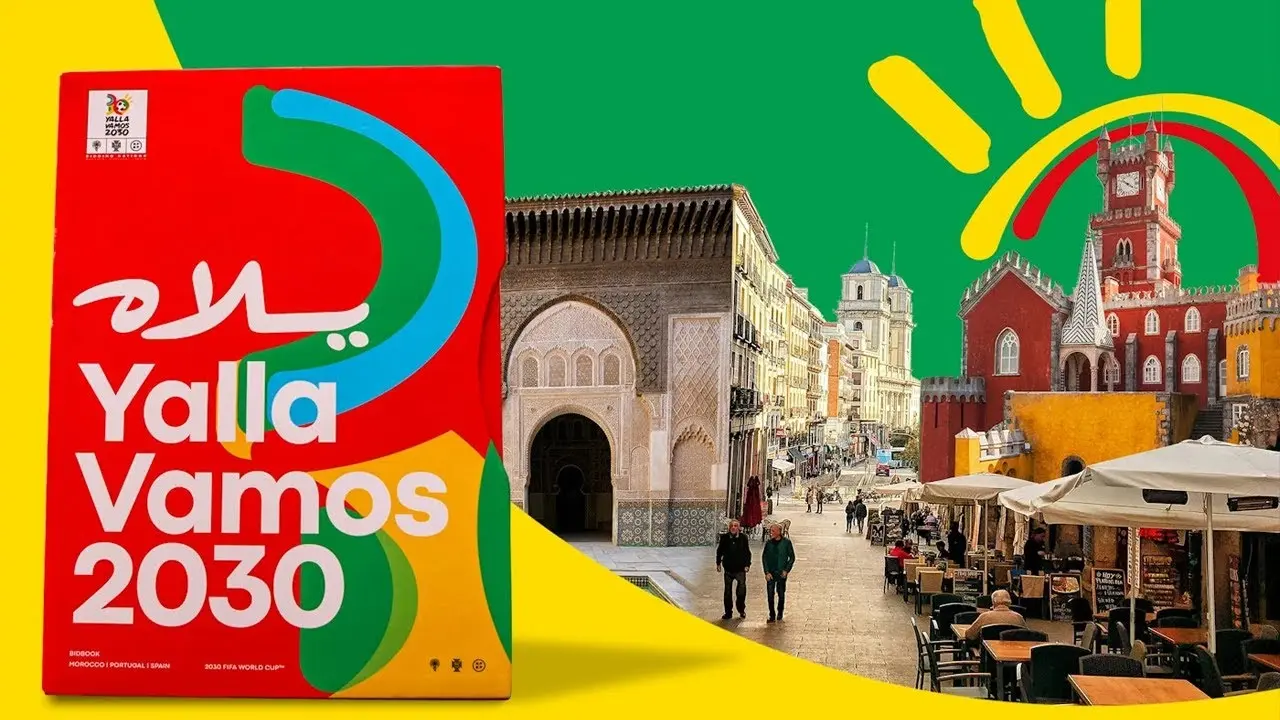
The stakes are considerable. For FIFA, it is an unprecedented logistical test. For the host states, it means massive infrastructure investment, with hoped-for tourism gains. For fans, it is the guarantee of being able to get around, find accommodation and get home safely.
The rail shock of January 2026
On January 18, 2026, an Iryo train traveling from Málaga to Madrid derailed near Adamuz and struck a train coming the other way. The toll rose to 46 dead, making it Spain’s deadliest rail accident in more than a decade.
Several elements are established. The technical investigation was entrusted to the CIAF, an independent body whose work can take several months. The government has ruled out sabotage, and Spanish media have reported a rail break of more than 30 centimeters at the accident site. It is still unknown whether this break was the cause or the consequence of the derailment. I therefore refrain from pointing to anyone as responsible.
Another notable fact: a second accident occurred in Gelida, Catalonia, when a commuter train hit a retaining wall that had collapsed onto the tracks under heavy rain. The causes are different, but the accumulation has damaged the image of a network Spain was proud of: the government had strongly defended the rail network and public transport.
Unions have sounded the alarm. The French CGT railway workers’ federation, for example, links the accident to maintenance and the liberalization of the sector. This is a union viewpoint, which I do not present as a conclusion of the investigation.
Housing, social tensions and political divisions
Several issues weigh on Spanish public debate, and I cite them as background, not as proven obstacles to hosting the tournament.
- Housing: rising rents and prices in big cities fuel regular protests.
- Political divide: the country is polarized between the PP, the PSOE and Vox, a far-right party whose parliamentary weight has grown.
- Territorial questions: Catalan independence has remained a major political issue since the 2017 referendum. It is expressed today through institutional channels and also in the street, sometimes quite virulently (burned Spanish flags, insults directed at Spain, etc.).
- Basque Country: ETA announced its dissolution in 2018. The organization ended its armed activity, after a ceasefire in 2011 and disarmament in 2017. According to the Vox party (a far-right political group close to Franco), ETA is still around!
Do these tensions affect a World Cup? Precedents (Germany 2006, Russia 2018, Qatar 2022) show that tournaments go ahead despite domestic debates, but that those debates can complicate funding and social acceptance. That is the real risk: a public weary of the cost of the event.
And what about the stadiums?
When storms disrupt Spanish football
On September 16, 2026, the La Liga match between Levante and Athletic Bilbao was postponed just before kickoff. The pitch at the Ciutat de València stadium was unplayable and the tunnel leading to the field was completely flooded. It was not a simple shower: the AEMET weather agency had issued an orange alert for heavy rain in the province of Valencia, and the rain fell heavily half an hour before the match. Another detail often forgotten in the commentary: the stadium has a roof covering all the stands, but the amount of water was such that everything was soaked.
It is not an isolated case. In March 2025, Villarreal–Espanyol was postponed just before kickoff because of torrential rain forecast in the province of Castellón. In that case, the decision was preventive: the club cited safety recommendations linked to flood risk, following a red alert. At the end of September 2025, the Valencia–Real Oviedo match was also moved because of the red alert.
To put these postponements in perspective, the context must be recalled. The floods of October 2024 killed 235 people in the Valencia region, which explains the caution of the authorities. According to scientists cited by Le Matin, human-caused climate change is intensifying the Mediterranean storms that typically hit eastern Spain in autumn.
Morocco is moving fast
Across the strait, the construction effort is spectacular. The Grand Stade Hassan II, under construction in Benslimane, is designed for more than 115,000 spectators and is set to become the largest football stadium in the world. Morocco has proposed six stadiums, in Casablanca, Agadir, Marrakech, Fez, Tangier and Rabat, all renovated or expanded.
On the economic side, Morocco’s Ministry of Economy and Finance cites 190 billion dirhams of investment and more than 100,000 jobs a year through 2030. These are official figures, to be read as targets.
Morocco already has a transport asset in the Al Boraq high-speed line between Tangier and Casablanca, in service since 2018.
To be fair, this development also has its critics. The economist cited by Bladi points out that the kingdom still faces major challenges, notably inequalities between urban and rural areas. In autumn 2025, youth mobilizations also criticized the government for prioritizing stadiums over health and education.
A race for the final, not a trial
Iberian media have raised the possibility of a battle over the final. FIFA has confirmed the date of July 21, 2030, without naming the stadium, and nothing is settled. This rivalry is a matter of prestige. It should not obscure the essentials: three countries, one shared project, and shared risks.
FAQ
Is Spain officially at risk of losing the 2030 World Cup?
I found no information to that effect. The tournament was awarded to Spain, Portugal and Morocco, with three opening matches in South America.
Has ETA resumed its activities?
No. The organization announced its dissolution in 2018, after renouncing violence in 2011. But some Vox members denounce its return on social media.
Who will host the final?
It has not been decided. The date of July 21, 2030 is set, but FIFA has not named the stadium.
Is Morocco competing with Spain?
The two countries are co-hosts. The competition is mostly about how the biggest matches are allocated.