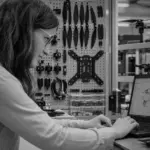
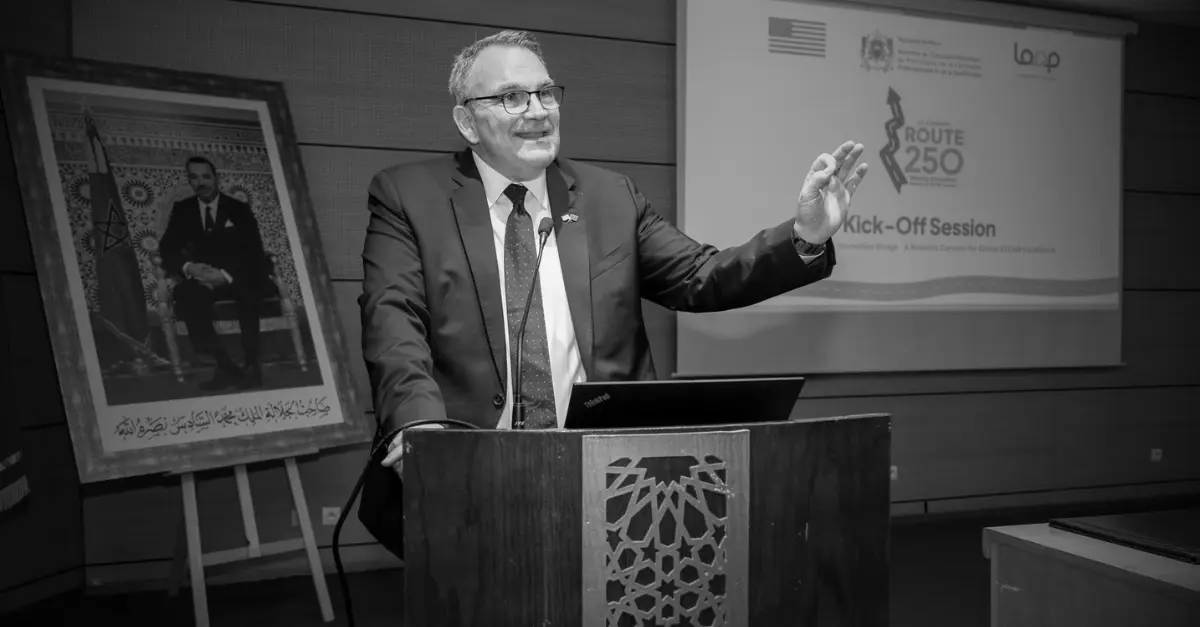
In Rabat, Morocco’s Ministry of National Education, the US Embassy and LOOP for Science & Technology have launched the national robotics caravan Route 250. On paper, it is a training programme for teachers. Looking at it more closely, I also see a diplomatic signal, and that is what made me stop and take a closer look.
A caravan to train teachers before students
The scheme is ambitious in its coverage. According to the information shared at the launch, Route 250 is set to cover all 12 regional education and training academies, as well as around twenty provincial directorates. The workshops will take place in regional and provincial training centres.
The target audience deserves attention: primary and middle school teachers rather than students directly. I find this a sensible choice. Training a teacher multiplies the impact across hundreds of students over the years, whereas a one-off workshop for students remains an isolated event.
The training will focus on three areas:
- coding, to introduce the logic of programming;
- robotics, as a concrete teaching tool;
- generative artificial intelligence tools, including Gemini, and prompt engineering.
Certified trainers will lead these sessions, with a stated goal: to make learning more interactive, stimulate creativity and develop problem-solving skills.
A note on terminology is in order. The press release refers to “superintelligence” to describe these tools. Given the content of the workshops (Gemini, prompts), this is in fact generative artificial intelligence, not superintelligence in the sense researchers give the term, that is, AI surpassing human capabilities. The difference is not trivial for readers.
The three players and their roles
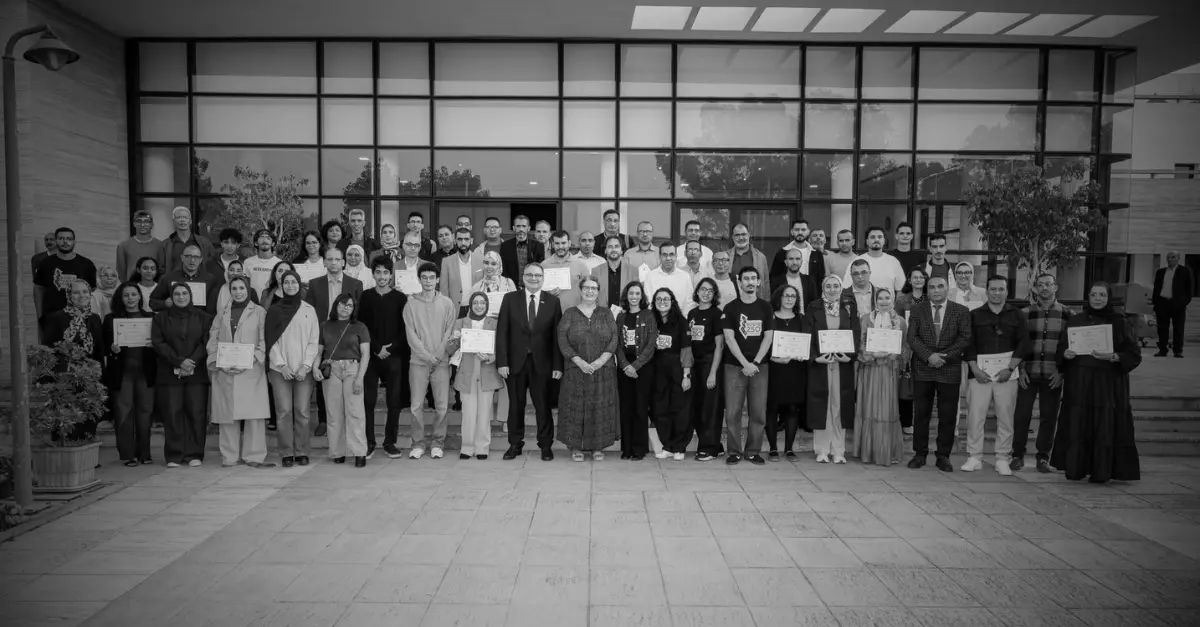
The partnership rests on a fairly classic balance. The Ministry provides the institutional framework and access to the school network. LOOP for Science & Technology brings field expertise, notably through extracurricular technology clubs where teachers and students are introduced to robotics. The US Embassy provides support and the international dimension.
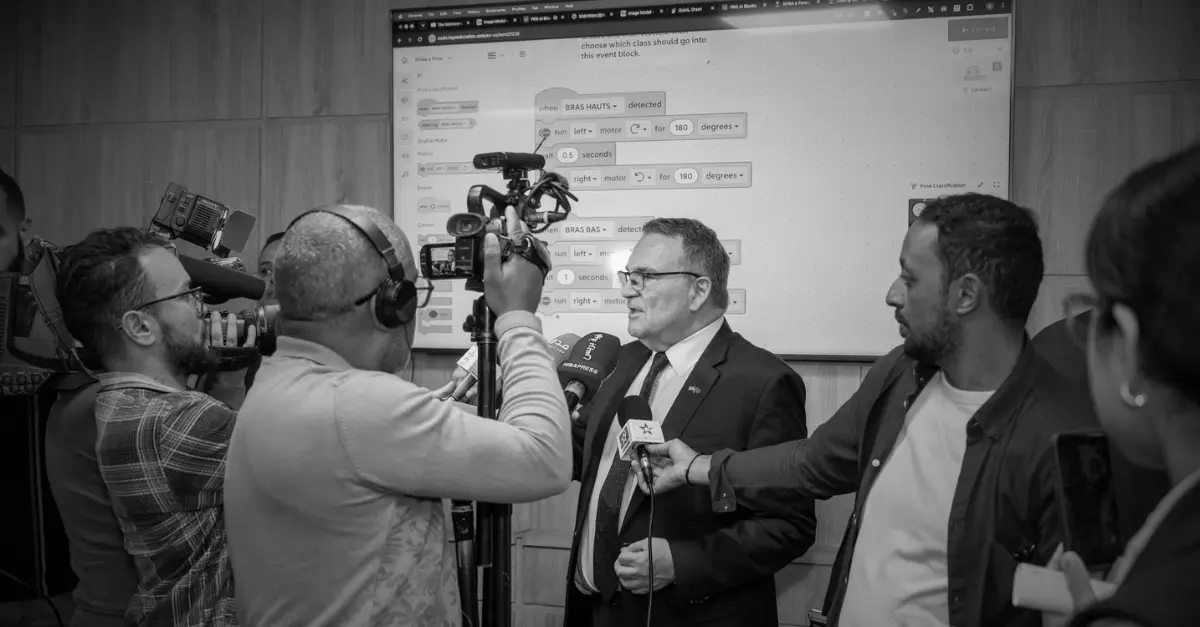
Ilham Laaziz, director of educational and digital resources at the Ministry, said the caravan would make it possible to integrate computational thinking and artificial intelligence into teacher training. According to her, it fits within the Ministry’s digital strategy. This is the point that seems most important to me: the initiative is not grafted on from the outside, it aims to become part of a national education policy.
The diplomatic dimension of Route 250
Benjamin Ziff, the US chargé d’affaires, stated that the project reflected centuries of bilateral relations and would open up new opportunities for Moroccan youth, while strengthening cooperation in science, technology and innovation.
The very name of the programme is a message. Route 250 refers to the 250th anniversary of the US Declaration of Independence. It also recalls that Morocco was, in 1777, the first country to recognise American independence. Washington has clearly chosen to turn this historical legacy into a lever of public diplomacy.
I read this as an example of soft power: influencing through education, training and technology rather than through military or conventional economic instruments. In a Mediterranean basin where powers are multiplying their cooperation offers, investing in teachers’ digital skills is a long-term bet.
A robotics competition as a showcase
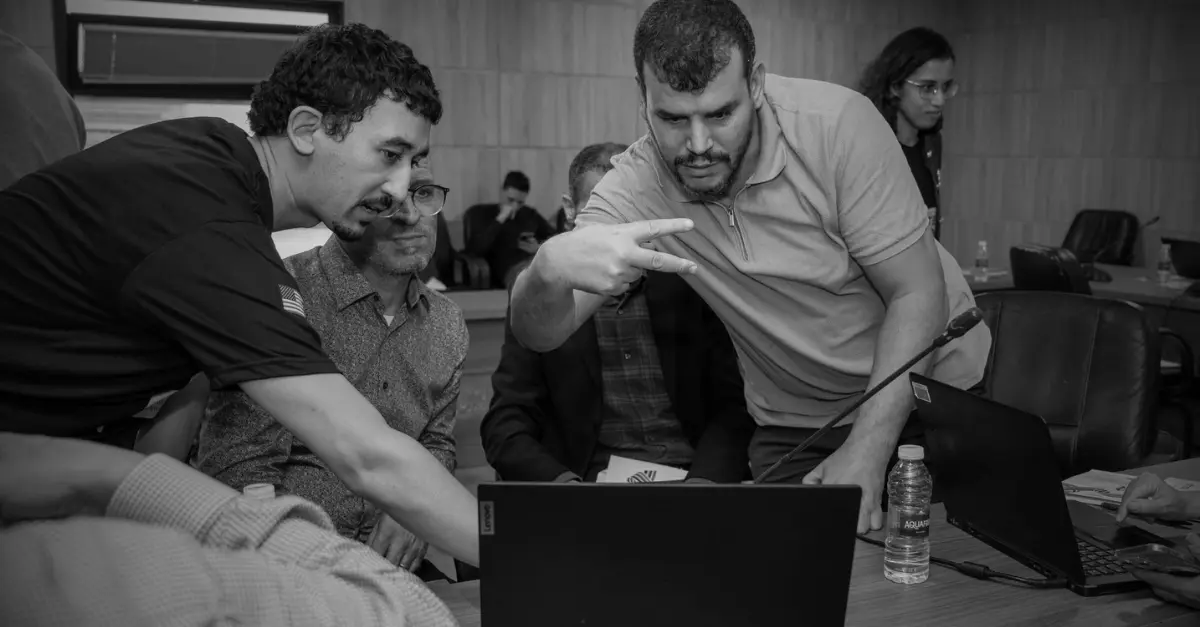
The Embassy has also introduced the American FIRST Robotics Competition (FRC) to Morocco. In its first season, Team Matrix won the Rookie All-Star Award, a distinction reserved for rookie teams. Two other Moroccan teams are receiving Embassy support this year to develop their skills in robotics, engineering and innovation.
These competitions have a dual effect. They create emulation among young people and, at the same time, expose participants to the American technology ecosystem. Tools, standards and networks are passed on along with the competition.
The stakes and open questions
I do not want to fall into easy enthusiasm. Several questions remain open, and the press release does not answer them.
- The real scale: how many teachers will be trained, over what period, and with what budget? To my knowledge, no figures have been released.
- Follow-up: will a caravan leave lasting skills or just an announcement effect? Much will depend on the equipment available in schools after the trainers have left.
- Technological independence: the use of American tools such as Gemini raises the question of dependence on foreign platforms, a debate Morocco shares with many countries.
- Territorial equity: will rural schools, often the least equipped, benefit as much as urban centres?
Conversely, supporters of this kind of partnership argue that a country undergoing digital modernisation benefits from drawing on international expertise rather than waiting to build everything on its own. Both readings are defensible, and it is implementation that will settle the question.
My analysis
What strikes me is the combination of three registers in a single project: education, technology and diplomacy. Route 250 is neither a defence agreement nor an arms contract, but it follows the same logic of strategic rapprochement between Rabat and Washington, through a quieter and more popular channel.
Above all, I believe the real test will not be the launch ceremony. It will happen in classrooms, when a middle school teacher uses, or does not use, what they have learned to change their practice. If they do, the caravan will have kept its promise. If not, it will remain a nice symbol.
FAQ
What is Route 250?
It is a national robotics caravan launched on October 27 in Rabat by Morocco’s Ministry of National Education, the US Embassy and LOOP for Science & Technology, to train teachers in coding, robotics and generative AI.
Who is covered by the training?
Primary and middle school teachers, across the 12 regional academies and around twenty provincial directorates.
Why the name Route 250?
It refers to the 250th anniversary of the US Declaration of Independence, and to the fact that Morocco was the first country to recognise that independence, in 1777.
What is the FIRST Robotics Competition?
It is an American robotics competition introduced to Morocco by the Embassy. Team Matrix won the Rookie All-Star Award there in its first season.