On October 20 and 21, 2026, a delegation from the Royal Air School of Marrakech, led by Colonel Khaled Khabouzi, visited the Military Aviation School in Atar, Mauritania. The announcement came from the Mauritanian army itself, in a statement picked up by several local media outlets. Following these exchanges closely, I see less an isolated event than one link in a longer chain of military contacts between Rabat and Nouakchott. The visit is modest in format, but it touches a sensitive area: the training of pilots and aeronautical technicians, in a region where security threats shift quickly.
A Working Visit Focused on Aeronautical Training
According to the Mauritanian army’s statement and reports published notably by Rapideinfo and other Mauritanian outlets, the programme was strictly professional. It began with a presentation of the Atar institution’s missions and training curricula, which are intended for pilot officers and non-commissioned officers specializing in aeronautical maintenance. The Moroccan delegation then toured the flight simulator, the training management offices, the classrooms and the training aircraft.
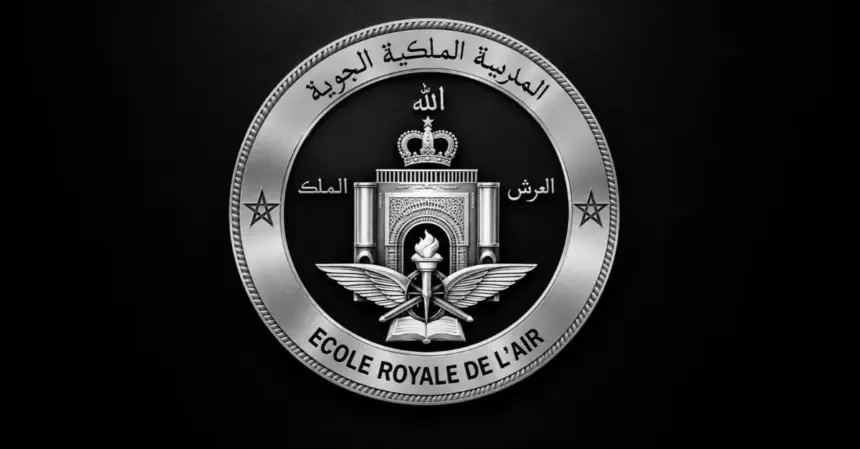
These details are far from trivial. The Royal Air School of Marrakech is the main training centre of the Royal Moroccan Air Force. It trains pilot officers (a four-year bachelor’s programme with a piloting option after the baccalaureate) and engineers in aeronautical systems, with curricula recognized by the Ministry of Higher Education. It also provides part of the training for Royal Air Maroc airline pilots.
On the Mauritanian side, the Military Aviation School in Atar, founded in the early 2010s, handles the local training of pilots and technicians for the Islamic Air Force of Mauritania. The Atar base notably hosts Embraer EMB 312 Tucano and Super Tucano aircraft, used both for instruction and for counter-insurgency missions.
The two sides exchanged views on prospects for bilateral cooperation, particularly in the field of air training. The Moroccan delegation was received by the school’s commander, Colonel Mohamed Moustapha Ould Abdi Vall. Nothing in the official statements mentions signed agreements or immediate operational decisions. This was an exchange of experience and a mutual introduction to each side’s resources and methods.
On October 20, the visit coincided with the arrival in Nouakchott of a Royal Armed Forces delegation specializing in military medicine, led, according to Mauritanian sources, by Lieutenant-Colonel Ridouane Qasmi. It was received by officials of the Mauritanian armed and security forces’ health service and toured the military hospital. These two parallel trips illustrate a broad approach to cooperation that goes beyond the aeronautical field alone.
Continuity in Bilateral Military Exchanges
To understand the weight of this visit, it must be placed in the sequence of preceding months. In April 2026, Morocco and Mauritania held the sixth session of their Joint Military Commission in Nouakchott. The Moroccan delegation was led by Lieutenant General Mohammed Berrid, Inspector General of the Royal Armed Forces and Commander of the Southern Zone. He was received by Mauritanian President Mohamed Ould Cheikh El Ghazouani and co-chaired the proceedings with the Chief of the General Staff of the Mauritanian armed forces. Both sides welcomed the positive results of the cooperation, described in official statements as “fruitful” and as part of a strategic partnership. General Berrid was also awarded the Mauritanian National Order of Merit at the rank of Commander.
In September 2026, another Royal Armed Forces delegation, led by Colonel Saïd Lamrani, travelled to Nouakchott on the 15th and 16th of the month. According to the Mauritanian army, this visit was part of the implementation of the Joint Military Commission’s action plan and aimed to strengthen cooperation and the exchange of expertise. In early October, on the sidelines of the Marrakech Airshow, General Berrid met the Mauritanian Chief of Staff, General Mohamed Vall Ould Raiss, to discuss cooperation prospects.
These successive contacts show institutional regularity. The Joint Military Commission serves as the formal framework. Technical visits, such as the one to Atar or the one devoted to military medicine, are its practical extensions. They focus on training, a field where needs are constant and political risks are relatively limited.
Strategic Stakes in a Complex Regional Environment
Why does this cooperation matter? Morocco and Mauritania share a land border. They face, to varying degrees, the security dynamics of the Sahel: armed groups, trafficking and migration pressures. Nouakchott has long sought to maintain a balance in its relations with its neighbours. It cooperates with Morocco while keeping ties with Algeria, including on border security issues. Algerian-Mauritanian military meetings took place around the same dates, a reminder that Mauritania is not following a logic of exclusive alignment.
For Morocco, strengthening ties with Nouakchott is part of a broader strategy of presence and partnerships in West Africa and the Sahel. Military training is a classic tool of soft power and of building relationships of trust. Sharing instruction methods, simulator experience or technical training approaches creates networks of officers who know one another. In time, this can facilitate more operational exchanges if both parties wish.
On the Mauritanian side, having a partner able to train pilots and technicians reduces dependence on more distant outside instructors. The Atar school has already trained several classes of pilots. A dialogue with an institution like the Royal Air School can offer additional reference points, without implying a massive transfer of skills or equipment.
It is important to stay measured. No official source reports large-scale joint projects, cross-training on a major scale or operational air coordination. The statements remain within the classic register of “exchange of experience” and “strengthening cooperation.” It is precisely this restraint that makes the dynamic interesting: it advances through technical steps rather than spectacular announcements.
Prospects for Cooperation
Recent exchanges open up several possible avenues, all still conditional. The first concerns training itself: officer internships, sharing of teaching programmes, or occasional use of simulators. The second involves related fields already discussed, such as military medicine, where both armies have similar needs for medical support in difficult conditions. A third, more political avenue lies in the ability of both countries to keep this channel open regardless of fluctuations in the Western Sahara issue or relations with other regional players.
The coming months will show whether this Atar visit remains a one-off event or is part of a densification of contacts. The Joint Military Commission has already produced an action plan; its concrete implementation, field by field, will say a great deal about the real depth of the partnership.
Having followed these developments for several years, I note that military cooperation of this type between neighbouring Maghreb and Sahel states often moves faster in technical and training fields than in major public strategic agreements. The Marrakech-to-Atar visit is a discreet but documented example of this reality.
FAQ
Why did this visit take place now?
It is part of the exchanges planned under the Moroccan-Mauritanian Joint Military Commission, whose sixth session was held in April 2026 in Nouakchott, and follows several Royal Armed Forces delegations to Mauritania over recent months.
What exactly did the Moroccan officers visit in Atar?
The flight simulator, the training management offices, the classrooms and the training aircraft of the Military Aviation School, according to the Mauritanian army’s statement.
Does this visit imply a defence agreement or an equipment transfer?
No official statement mentions a signed agreement, aircraft deliveries or an operational decision. It was an exchange of experience and a working visit on aeronautical training.
Does Mauritania cooperate militarily only with Morocco?
No. Nouakchott maintains military relations with several partners, including contacts with Algeria on border security issues, in a logic of diversification.