I am looking at the figures in Finance Bill No. 60.26 for 2027 with the perspective of someone who has followed the strategic balance in the Mediterranean for years. It is not a complete surprise, but the trajectory is clear.
Article 36 authorizes the Minister Delegate in charge of the National Defense Administration to commit, from 2027, 190.5 billion dirhams in advance on the 2028 appropriations of the special account “Acquisition and repair of equipment for the Royal Armed Forces and support for the development of the defense industry”. The figure was 157.171 billion in the 2026 finance law, 133.453 billion in 2025 and 124.766 billion in 2024. The year-on-year increase is around 21%.
These amounts are not annual payment appropriations. They set a ceiling on multi-year commitments for armament programs and industrial partnerships with long cycles. The operating expenses of the National Defense Administration are on a different scale, at around 57.7 billion dirhams in 2027 according to available data, including about 49.34 billion for personnel (up 5% compared with 2026) and a little over 8 billion for equipment and miscellaneous expenses.
The special account itself is stabilized at around 11.49 billion dirhams of spending for 2027. The distinction matters: the Kingdom is giving itself visibility to negotiate and contract, without turning every fiscal year into a peak of immediate disbursements.
This increase is in line with the modernization of the Royal Armed Forces (FAR) that has been under way for several years under the leadership of King Mohammed VI, Supreme Chief and Chief of the General Staff. It responds to a regional security environment that has not fundamentally changed: the situation in Western Sahara, the relationship with Algeria, the risks in the Sahel and the need to protect extensive land and maritime borders. It also comes with an industrial ambition that has been stated for a long time.
A modernization built on diversified partnerships
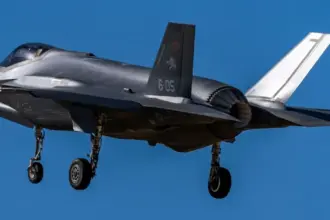
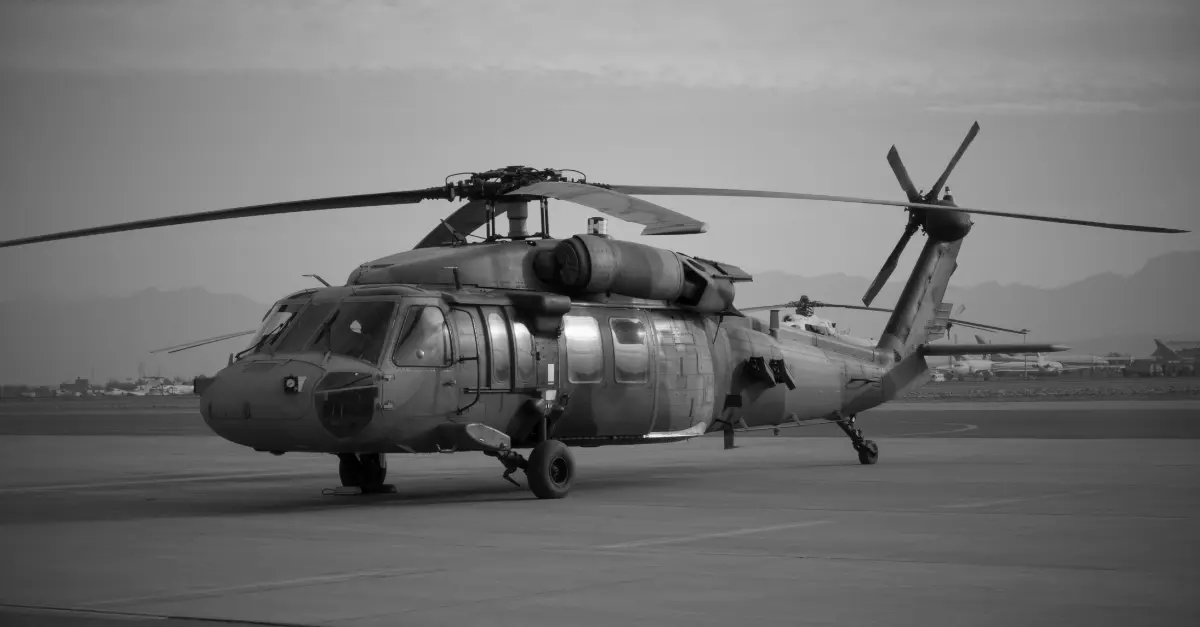
Recent and ongoing acquisitions illustrate this momentum. The Royal Moroccan Air Force has received AH-64E Apache attack helicopters and is continuing the F-16 program: upgrading its existing fleet to the Block 70/72 standard (V) and ordering 25 new Block 72 aircraft, the first of which made its test flight in October 2026 according to Lockheed Martin. Deliveries are expected in the coming years. On land, the fleet of Abrams tanks (M1A1 SA and M1A2) and armored vehicles has grown, while artillery and rocket systems (including HIMARS projects) strengthen strike capabilities. Drones play a growing role: Turkish Bayraktar TB2 and Akinci, Israeli and Chinese platforms, with an emphasis on intelligence, surveillance and strike capabilities.
This equipment does not come from a single supplier. The United States remains the central partner (African Lion exercises, formalized cooperation, access to accelerated acquisition channels for certain drones and counter-drone systems). Türkiye, Israel, India and France are also involved. This diversification reduces the risk of exclusive dependence, even though the most complex platforms remain largely imported.
At the same time, Morocco is building a national defense industry. The 2020 framework law opened up the sector. Dedicated industrial zones in Berrechid and Benslimane are being developed. Tata Advanced Systems already produces WhAP 8×8 armored vehicles in Berrechid, with a goal of gradual local integration (from around 35% toward 50%). Atlas Defence, a Baykar subsidiary, is preparing a drone factory. Partnerships cover aeronautical maintenance (notably with Lockheed Martin for the F-16 and C-130), turrets, ammunition and more advanced systems. At the Marrakech Air Show 2026, protocols were signed, including one with Harmattan AI for a long-range autonomous drone that could be produced locally.
Abdeltif Loudyi, Minister Delegate in charge of the National Defense Administration, summed up the approach in Marrakech in October 2026: the Kingdom relies on a legal framework, a stable business climate and a geographic position between Africa, the Arab world and Europe, with an Atlantic opening, to attract investment and localize technologies. The stated goal is to move from importing capabilities to building national ones.
Sovereignty and regional positioning at stake
This twofold dynamic, modernizing equipment while building up industry, responds to a vision set out by King Mohammed VI. In his speech marking the 27th anniversary of Throne Day, he stressed that establishing an industrial and technological base in the defense and cybersecurity industries would help strengthen sovereignty, create development opportunities and consolidate Morocco’s position as a regional power in these fields.
Strategically, the calculation is clear. A local industry, even a partial one, improves maintenance, shortens lead times and support costs, and provides room to maneuver in the face of export restrictions or diplomatic tensions. It can also generate skilled jobs and, in time, exports to other African markets. Geopolitically, Morocco is strengthening its role as a reliable partner for Western countries at a time when security questions in the Sahel and the western Mediterranean remain acute. Cooperation with the United States, joint exercises and industrial agreements all fit this logic.
That said, it is important to keep things in proportion. According to SIPRI data for 2025, Moroccan military spending stood at around 5.6 to 6.3 billion dollars depending on sources and methodologies, or about 3.5% of GDP, which places the Kingdom second in Africa behind Algeria (whose spending was several times higher). The multi-year commitment ceilings of 190.5 billion dirhams (about 19 billion dollars at the indicative exchange rate) do not translate into equivalent annual spending. The real budgetary burden remains under control, even if it is significant for an economy the size of Morocco’s.
The challenges are real. The success of localization depends on foreign manufacturers actually transferring technologies and know-how, and on local suppliers building up their skills. Complex programs (aircraft, air defense systems, precision munitions) will remain dependent on critical imports for a long time. Regionally, the gap in resources with Algeria remains large. Finally, medium-term budget sustainability, against a backdrop of competing social and economic priorities, will have to be monitored closely.
Key figures from the 2027 Finance Bill for defense
- Advance commitments authorized in 2027 against 2028 appropriations: 190.5 billion dirhams (versus 157.171 billion in 2026).
- 2027 personnel spending: about 49.34 billion dirhams (up roughly 5%).
- Special account (acquisitions, repairs, industry): about 11.49 billion dirhams of spending.
- Trajectory of commitment ceilings: 124.766 (2024), 133.453 (2025), 157.171 (2026), 190.5 (2027).
The trajectory is consistent with royal guidelines and ministerial statements. It reflects a determination to modernize the FAR while gradually building an industrial base. The outcome will depend on how contracts are executed, the quality of technology transfers and the ability to sustain this effort without compromising other priorities. In a Mediterranean and Sahelian region still marked by rivalries and instability, this buildup is a defining fact. Its real impact will be measured in the coming years, by the operational capabilities actually available and by the share of added value produced on Moroccan soil.
Frequently asked questions
Does the figure of 190.5 billion dirhams represent the annual defense budget?
No. It is a ceiling on multi-year commitments authorized in 2027 against 2028 appropriations for the acquisition and defense-industry support account. Annual operating expenses are far lower.
Why is Morocco increasing these commitments?
To support the modernization of the Royal Armed Forces and to finance acquisition programs and industrial partnerships over several years, in line with strategic guidelines aimed at strengthening capabilities and developing a national defense industry.
Which industrial partners are the most active in Morocco?
The United States (Lockheed Martin in particular), India (Tata Advanced Systems), Türkiye (Baykar) and several Israeli and French players are involved in armored vehicles, drones, aeronautical maintenance and other systems.
Does this increase change the regional balance with Algeria?
It strengthens Moroccan capabilities, but Algerian military spending remains clearly higher according to SIPRI data. The gap in resources persists.