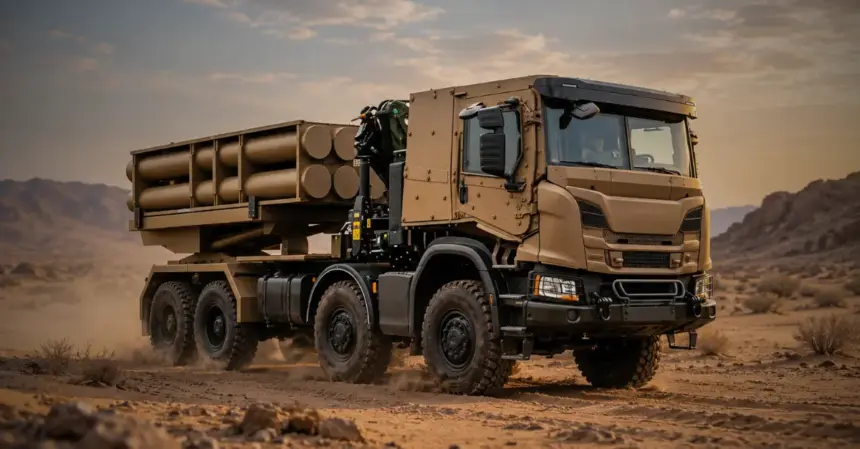
According to Global Firepower data reported by Euronews on 20 October 2026, Morocco fields 185 mobile multiple rocket launcher systems. Spain has had none since the Teruel systems were withdrawn in 2011.
I looked into this gap because it illustrates a divergence in priorities and industrial and political constraints between two neighbouring countries that share a sensitive maritime border and overlapping interests in the western Mediterranean. Multiple rocket launchers can saturate an area or strike land targets at varying ranges depending on the munitions used, while their mobility complicates any response. Their absence on the Spanish side is not a technical detail: it deprives Madrid of an area-saturation tool that Rabat has progressively rebuilt.
What Global Firepower measures and what it does not
The figure of 185 Moroccan systems must be treated with caution. Euronews notes that Global Firepower does not publish an auditable methodology and relies on the CIA World Factbook as well as unidentified sources. More precise open inventories, such as those compiled by specialised media, describe a fleet made up of Chinese systems of different calibres (notably the PHL-03/AR2 300 mm and the WS-2D), Soviet-origin BM-21s, and the Israeli PULS system already in service.
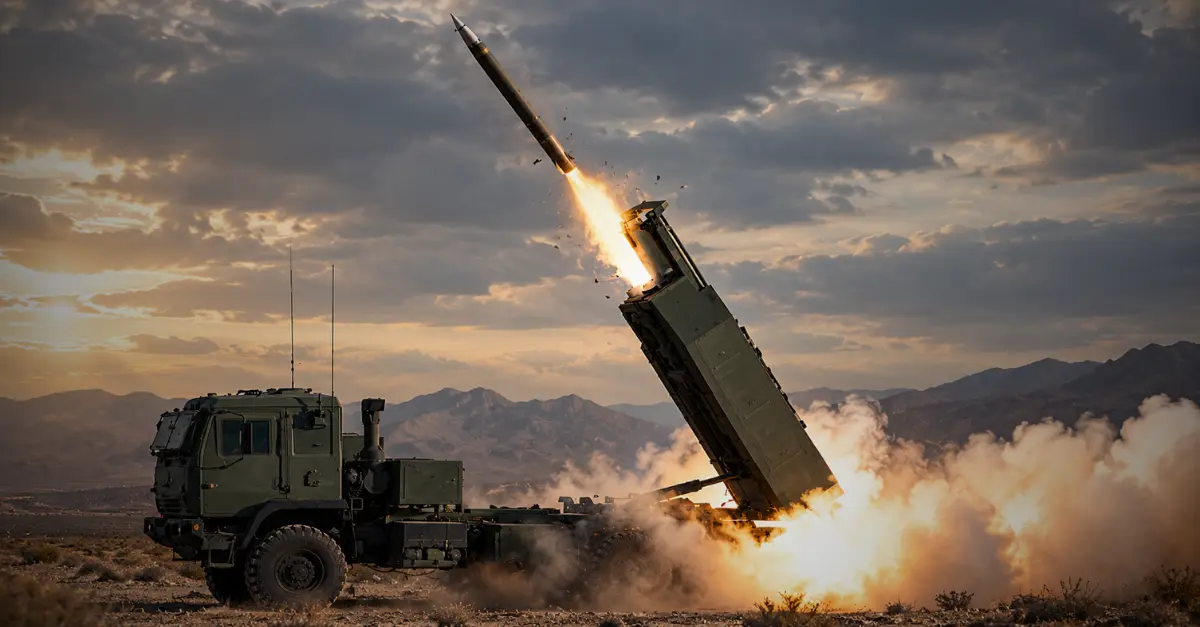
In April 2023, the US State Department authorised the potential sale of 18 M142 HIMARS launchers to Morocco, along with ATACMS M57 missiles, guided GMLRS rockets and related equipment, for an estimated $524.2 million. Deliveries of these systems, the first tranche of which is expected around 2027 according to open sources, would add to the existing inventory and strengthen a layered fires architecture.
On the Spanish side, the Teruel system, developed by national industry and in service since the mid-1980s with the rocket artillery regiment in Astorga, was withdrawn at the end of 2011. The Army justified the decision by the obsolescence of the platform and munitions in the face of advances in range and precision. The regiment was then re-equipped with 155 mm howitzers, but the rocket capability disappeared.
The SILAM programme and its setbacks
Madrid sought to restore this capability through the SILAM programme (Sistema Lanzador de Alta Movilidad). It initially planned the acquisition of twelve launchers based on Israeli Elbit Systems PULS technology, with a substantial volume of rockets and a maximum announced range of 300 kilometres for certain munitions. The contract, awarded to a consortium that included Spanish companies, was cancelled in September 2025 after the government decided to suspend purchases of Israeli armaments in the context of the war in Gaza.
A national solution was then proposed by Rheinmetall Expal and EM&E Group. But the project has accumulated delays. In an investigation published by Infodefensa on 7 October 2026, General Antonio Mongío Bergua, head of the Field Artillery Command, described the situation as “uncertain”. One of the main difficulties concerns finding a technology partner willing to transfer design authority for the future system to Spanish industry. The original schedule called for a first demonstration as early as December 2024 and full equipping of the Astorga regiment by 2027-2028. These deadlines are now compromised, even though some command and reconnaissance vehicles have reportedly already been received.
Here are the elements that currently structure the gap between the two armies in this segment:
- Morocco: operational Chinese systems, Israeli PULS in service, US HIMARS authorised and in progressive delivery, with guided munitions reaching up to approximately 300 km.
- Spain: zero multiple rocket launchers since 2011; SILAM programme cancelled in 2025 for political reasons linked to Israel; national alternative still seeking a technology partner and with an unstabilised timetable.
- Ranges and roles: modern systems enable precision or saturation strikes against land targets (depots, concentrations, infrastructure) at distances well beyond the old Teruel (approximately 25 km).
Why this gap matters in the Mediterranean basin
Rocket artillery is not the only measure of power. According to the same data reported by Euronews, Spain retains clear advantages in the navy (frigates, amphibious ships, submarines), combat aviation and defence budget. Morocco, for its part, has larger ground forces and has diversified its suppliers (United States, Israel, China) while developing local industry, notably through partnerships on armoured vehicles.
From a strategic standpoint, multiple rocket launchers provide a long-range land-strike capability that can weigh in limited-crisis or conventional-deterrence scenarios around the Strait of Gibraltar, Ceuta and Melilla, or more broadly in the face of security developments in the Maghreb. Spanish military leaders have for years stressed the need to restore this capability for fire-support operations and NATO commitments. On the Moroccan side, these systems form part of a broader modernisation effort aimed at strengthening deterrence and the operational depth of the Royal Armed Forces.
Spanish political constraints linked to the relationship with Israel have slowed a rapid solution based on the PULS. They have also illustrated the tensions between industrial sovereignty, alliances and diplomatic priorities. Morocco, by multiplying suppliers, has limited this kind of unilateral dependence on this specific segment. Nothing indicates, however, that the gap is turning into an overall imbalance: rankings such as Global Firepower place Spain clearly ahead (18th versus 56th in 2026), while themselves acknowledging the limits of their methodologies.
Open perspectives
The Astorga regiment remains the symbol of this lost capability that still needs to be regained. Spanish industry is working on a sovereign solution, but statements from the Field Artillery Command show that the timetable and technology transfer remain sensitive points. On the Moroccan side, the progressive arrival of HIMARS and the already effective use of PULS and Chinese systems outline a more complete fires architecture.
This gap is neither spectacular in absolute terms nor negligible in its regional context. It is a reminder that military capabilities are also built through industrial and political choices that are measured over time. The next budgetary and industrial decisions on both sides will determine whether Madrid closes this gap before the end of the decade or whether Rabat retains this specific advantage in rocket artillery.
FAQ
Why has Spain had no multiple rocket launchers since 2011?
The Teruel system was withdrawn because the platform and munitions had become obsolete. No immediate replacement was introduced at the time.
Does Morocco really have 185 systems?
That is the Global Firepower figure cited by Euronews. More detailed inventories describe a combination of Chinese systems, the Israeli PULS and HIMARS currently being acquired. The exact total remains open to interpretation depending on the sources.
Why was the Spanish SILAM programme cancelled?
The contract based on Israeli PULS technology was cancelled in September 2025 as part of the Spanish government’s measures suspending purchases of Israeli armaments.
Are the Moroccan HIMARS already in service?
The sale of 18 launchers was authorised by the United States in 2023. Deliveries are expected progressively, with a first tranche around 2027 according to open sources.