It is budgetary and administrative: who buys what, from whom, and on what timetable. That is the starting point of a paper published by the Rabat-based think tank Global Governance & Sovereignty Foundation (GGSF) and the Konrad-Adenauer Foundation, in the eleventh issue of their Morocco Radar series. I read the document closely because, better than many official speeches, it lays out the concrete conditions for a lasting Moroccan defense industry.
A single customer, therefore a single responsibility
The authors’ observation is simple. The kingdom’s defense industrial and technological base is still in its early days, and it has only one major buyer: the Royal Armed Forces (FAR). This means that the way the general staff and the administration place their orders determines everything else.
The orders of magnitude show the scale of that responsibility. According to the paper, the 2026 Finance Act allocates around 73 billion dirhams to the National Defense Administration and authorizes 157 billion dirhams in multi-year commitment appropriations for the acquisition and refurbishment of equipment. That is a considerable windfall, but most of this money still flows to foreign suppliers.
The two foundations’ recommendation boils down to one idea: gradually reserve a share of these orders for Moroccan companies. Not out of economic patriotism for show, but to give newcomers a steady volume of work and a concrete reason to meet military standards, before asking more of them.
🇹🇷 Türkiye is testing SİVRİSİNEK kamikaze drones: AI-coordinated swarms, a announced range of over 1,000 km and GPS-free navigation. Another demonstration of autonomous drone warfare.
#Turkey #Drones #Defense #Turquie #Ankara #IA #war #Army https://t.co/ZaWjuEZsZu
— Silicon Valley (@SiliconValleyMa) October 13, 2026
What Turkey teaches us
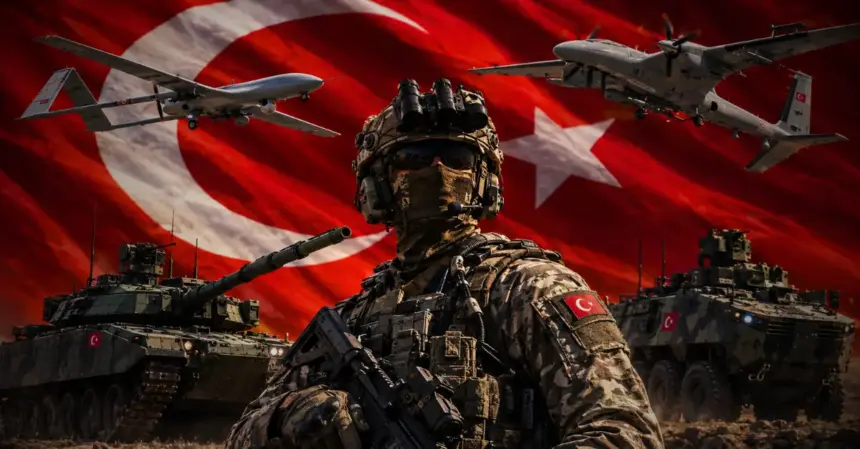
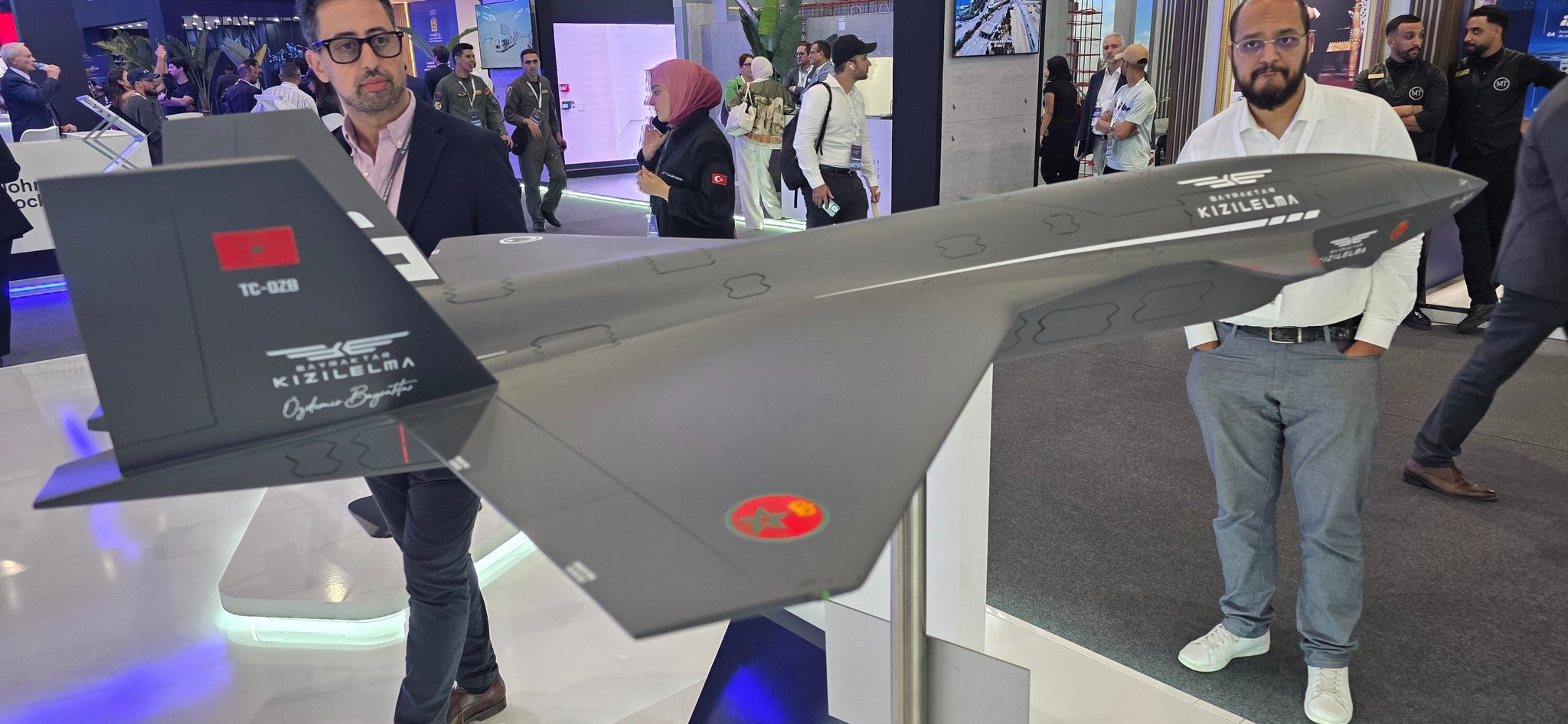
I am often wary of international comparisons, which erase differences in context. This one strikes me as illuminating, however. According to the paper, the Turkish army first placed modest orders with local companies, sometimes years before those companies began to export. The domestic market served as a school before the global market.
The reasoning holds for Morocco, with a nuance I would add: Turkey had an established industrial fabric and a large military apparatus. Morocco starts from further ahead than people think in some sectors, but from lower down in others. The Turkish trajectory is a source of inspiration, not a roadmap to be copied.
A unit to link the army and industry
The authors propose creating a small defense industry unit, housed within an existing institution rather than built from scratch. Its mission: to translate long-term military needs into perspectives that manufacturers can read, so they can invest with full knowledge of the facts. It would also act as a single point of contact for companies wishing to present their technologies or gain access to testing.
The model is not new. In 1961, France created the body that became the Direction générale de l’armement (DGA), which supports every program from the statement of need through to delivery. Saudi Arabia more recently set up an authority tasked with tying its military procurement to the development of its local industry. I believe this is the most realistic point in the paper: a light, inexpensive structure that avoids a dialogue of the deaf between the armed forces and companies.
Foundations already in place
Morocco is not starting from nothing. Law 10-20, adopted in 2020, opened the manufacture of defense equipment to private companies under a licensing regime. On the ground, armored vehicles are now rolling off a production line in Berrechid, near Casablanca. The American group Lockheed Martin, with its partners, is building a heavy maintenance center for military aircraft in Benslimane. Morocco Radar asks the right question: will these first plants become a lasting industry?
On the land side, the Military Housing and Equipment Agency (ALEM) provided the footprint for two defense-dedicated industrial acceleration zones, approved by the Council of Ministers in June 2024. MEDZ, the subsidiary of the Caisse de dépôt et de gestion that specializes in industrial parks, contributes its expertise. In 2025, the two entities created on an equal footing the Defense Industrial Zones Management Company (SGZID), which was granted the concession of both sites by decree in November. For licensed companies, this means dedicated locations and a single manager.
Here are the key figures that frame the issue:
- 73 billion dirhams allocated to the National Defense Administration in the 2026 Finance Act
- 157 billion dirhams in multi-year commitment appropriations authorized for the purchase and repair of equipment
- Two defense industrial zones approved in June 2024, managed by the SGZID
- Around 2,500 direct jobs expected from the ten authorized defense projects
- More than 3,500 kilometers of coastline to monitor
Maintenance, a less spectacular but safer market
I find that maintenance is talked about too little, even though it probably represents the most immediate opportunity. A military aircraft stays in service for thirty years or more, and its upkeep ends up costing more than its purchase. The paper stresses that this demand exists whether or not new contracts are signed, and that depots can carry out most of the work close to the units.
In Benslimane, MEDZ is part of the joint venture responsible for maintaining the F-16 and C-130 fleets of the Royal Air Force. Many African air forces operate the C-130, and a Moroccan depot could in time serve customers other than the FAR. It is a scenario of exporting services, more modest than selling equipment, but far more accessible.
Ordinary goods, a demanding approval process
An army consumes huge quantities of unglamorous products: uniforms, boots, tents, backpacks, tires, filters, batteries, cables. Moroccan textile and automotive suppliers already make similar items for a civilian clientele. The main obstacle is military approval: strict specifications, full traceability, and documentation that most civilian suppliers have never had to produce. Another limit is that garment workshops import most of their fabric, which narrows the appeal of this route in textiles.
The international context nonetheless plays in the kingdom’s favor. Western defense manufacturers are looking for new suppliers, as their supply chains, designed for peacetime, are under strain. Civil aviation is a telling example: twenty years ago, Moroccan factories made simple parts; today they assemble complex subassemblies. Moving up the value chain is possible, but it requires a higher entry cost and compliance with far heavier confidentiality and export-control rules.
Naval and drones, the two bets of the decade
The naval sector is the weak link. The main vessels of the Royal Navy were built in European shipyards. The National Ports Agency has launched a call for tenders for a 30-year concession of the new Casablanca shipyard. Its future will depend on upcoming ship purchases and on the share of maintenance carried out locally.
The authors harbor no illusions: frigates and submarines will remain imported. On the other hand, recent conflicts have shown the weight of naval drones and maritime sensors, for example in the Black Sea or in the face of attacks in the Red Sea, where very costly interceptors were fired at far cheaper craft. This equipment relies on electronics and composite materials, two fields where Morocco’s civilian industry is already active. A frigate order that brought maintenance to Casablanca would provide a first substantial piece of naval work, as would a surveillance program open to local drone and sensor manufacturers.
Small drones assembled from civilian components offer another entry point. Production lines cost far less than an aircraft factory, and civilian outlets exist, from agricultural mapping to mine inspection. The start-up Aerodrive Engineering Services signed an innovation financing agreement with the Ministry of Industry in October 2024. The sovereignty argument carries weight: a Moroccan design, even a rudimentary one, can be modified and exported without the permission of a foreign government.
What I take away from it
This paper is not a triumphalist manifesto, and that is precisely what makes it useful. It describes an industry that can exist if the buyer state agrees to also be an architect: planned orders, a single point of contact, suitable financing, and training and retention of engineers. It is worth remembering that its authors are think tanks, whose recommendations do not bind the public authorities, and that other analysts might consider it a priority to keep buying the most complex systems abroad, for reasons of operational efficiency.
The real question remains open: will Morocco manage to turn its first industrial sites into an ecosystem, or will they remain showcases? The answer will depend less on announcements than on the discipline of order books in the years ahead.
FAQ
What is Morocco Radar?
It is a series of analysis papers published by the Moroccan think tank GGSF with the German Konrad-Adenauer Foundation. The eleventh issue is devoted to building the kingdom’s defense industry.
What does Law 10-20 of 2020 provide?
It opens the manufacture of defense equipment to private companies, within a framework of licenses issued by the state.
What is the SGZID for?
This company, created on an equal footing by ALEM and MEDZ in 2025, manages the concession of two industrial zones dedicated to defense, offering licensed companies dedicated sites under a single manager.
Why is maintenance considered an opportunity?
Because a military aircraft stays in service for thirty years or more, and its upkeep costs, over that period, more than its purchase. This demand is stable and can be served locally.