A test flight that met its objectives
According to Airbus, the flight achieved all of its objectives. The aircraft took off with rocket assistance, flew at several altitudes and speeds up to Mach 0.8, and received mission adjustments in flight. Mach 0.8 corresponds to roughly 80% of the speed of sound: a high-subsonic regime, typical of a combat aircraft in a support role rather than an interceptor.
It is worth keeping the event in perspective. This was a technical test, not a combat demonstration. It validates the integration of an existing platform into a European environment and paves the way for what comes next: upcoming trials will put the MARS mission system to work.
An American airframe, a European brain
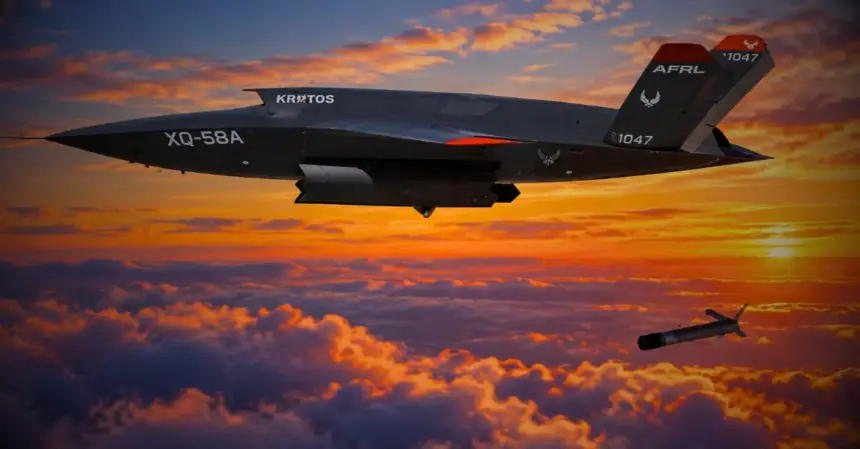
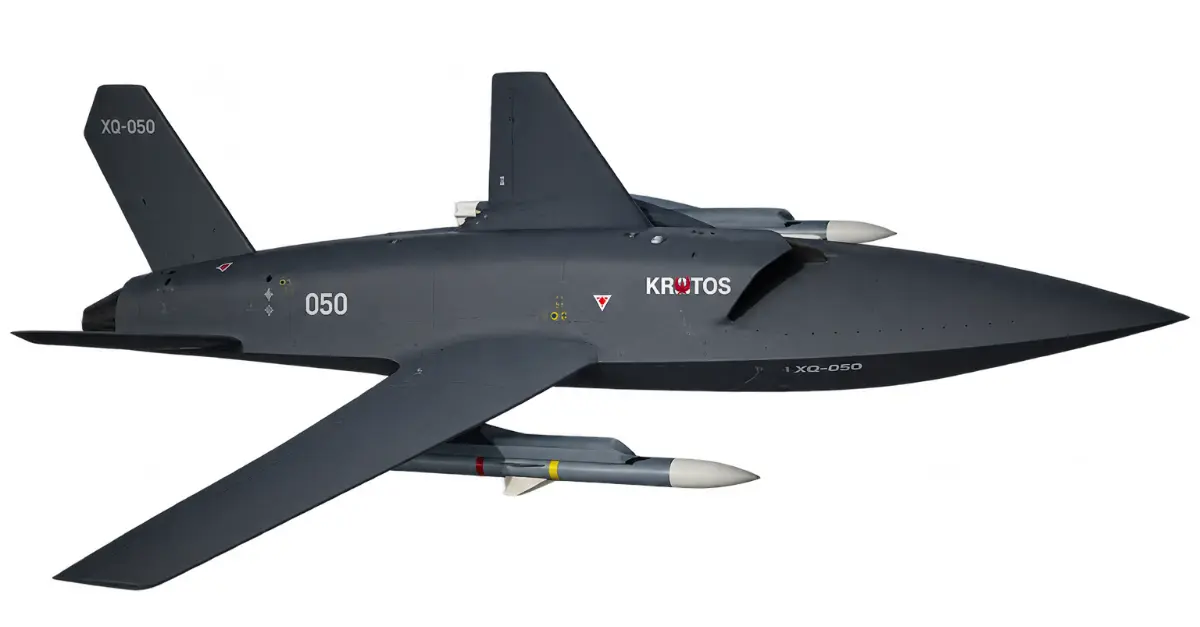
The platform is the Valkyrie built by Kratos Defense & Security Solutions, a US company. The aircraft is about 9.1 metres long with a wingspan of 8.2 metres and a stated range of more than 5,000 kilometres. Its first flight in the United States dates back to 2019, which makes it a proven platform rather than a prototype.
Airbus’s choice is a deliberate one: not to start from a blank sheet. Marco Gumbrecht, head of key account Germany at Airbus Defence and Space, sums up the logic by describing an already proven flying system paired with a European mission system that does not have to be developed from scratch, at length and at great cost.
Europe’s contribution lies in the software. MARS (Multiplatform Autonomous Reconfigurable and Secure) includes an artificial intelligence module, MindShare, designed to replace the pilot and coordinate groups of crewed and uncrewed aircraft. Airbus presents it as the aircraft’s “European brain.”
Why sovereignty is at the heart of the issue
In my view, the central point has less to do with the aircraft than with what flies it. By controlling the software, mission applications, data and system hardware, Airbus says it can guarantee the German and European armed forces full operational sovereignty. In practical terms, that means not depending on a foreign supplier to update, adapt or operate the aircraft.
The question is far from trivial. European armed forces have already experienced the limits of certain dependencies in equipment and software. One caveat remains: the airframe is still American. The sovereignty claimed therefore applies to the software layer and the conduct of the mission, not to the entire industrial chain. It is a pragmatic compromise, which some will see as clever and others as insufficient.
What the Valkyrie would bring to the Eurofighter
The Valkyrie is designed to operate alongside crewed aircraft, first and foremost the Eurofighter. Airbus is also working on upgrades that would allow the latter to act as a command aircraft. According to the manufacturer, the drone is meant to provide it with:
- an extended range, allowing it to go further without exposing the crew;
- increased firepower, thanks to additional payload capacity;
- better survivability, as the uncrewed aircraft can be committed to the riskiest missions;
- operational resilience, thanks to rail launch capability that reduces dependence on runways, with conventional takeoff and landing still available as an option.
This is the very logic of the collaborative combat aircraft concept: a crewed aircraft orchestrates several relatively inexpensive drones, which absorb part of the risk and workload of the mission.
A tight timeline, open questions
Airbus aims to deliver the system to the Luftwaffe by 2029, a very close horizon by defence-programme standards. That pace contrasts with more ambitious European projects, such as the Future Combat Air System, whose timelines are measured in decades.
Several points remain to be clarified:
- The real cost: the affordability argument has yet to be demonstrated, as no definitive figure has been published to my knowledge.
- Certification of autonomy: how far should decisions be entrusted to an AI, particularly during the engagement phase?
- European coherence: does this programme complement national efforts and competing projects, or does it add another layer of fragmentation?
- Residual dependence on a US supplier for the platform.
Opinions differ. Supporters see a fast, realistic response to an urgent need. Sceptics fear a stopgap solution that would divert resources from more structural European projects.
What I take away
This first flight does not make Europe a power in combat drones, but it marks a change of pace. The real test will come in the upcoming trials with MARS, and then in the ability to turn a technical demonstration into a reliable military capability within the announced timeframe. That is where we will see whether the claimed sovereignty is a reality or a sales argument.
FAQ
What is a collaborative combat aircraft (CCA)?
It is an armed drone designed to operate as a team with crewed aircraft, giving them range, payload capacity and protection for the crew.
Who builds the Valkyrie?
The airframe is built by the American company Kratos. Airbus integrates its own mission system, MARS.
When will the European Valkyrie be operational?
Airbus is aiming for entry into service with the German air force by 2029, an objective that remains to be confirmed.
Why talk about sovereignty?
Because Airbus says it controls the software, data and mission hardware, so that European armed forces do not have to ask a third party for permission to operate the aircraft.