
Key takeaways
- Facing Spain’s escalation over Ceuta and Melilla, Rabat chose strategic depth over direct confrontation
- Strengthening ties with Washington and Tel Aviv allowed Morocco to impose a precise balance of power on Madrid
- Pedro Sánchez is navigating between Algerian gas dependency, domestic pressure, and a complicated historical memory with Rabat
- Criticism of Morocco’s alliances looks more like media noise than a serious analysis of the actual balance of power
One crisis, two opposing diplomatic logics
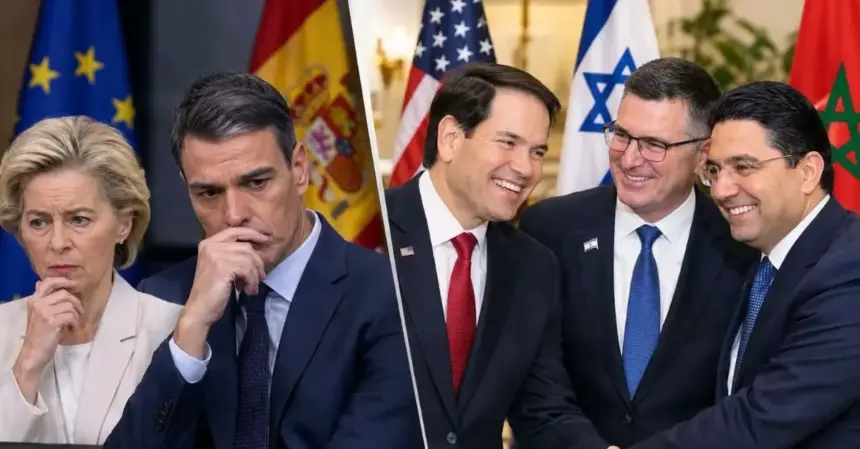
During the Ceuta and Melilla crisis, Madrid chose the path of a show of force: invoking Brussels, mobilizing European institutions, a martial discourse befitting a power defending the borders of an empire. The only thing missing from this display was a symbolic deployment of the Legion at the gates of the capital to complete the picture.
Rabat, for its part, took the opposite approach entirely. Rather than answering noise with more noise, or the provocations of Spain’s right and far-right with verbal escalation, Morocco chose strategic depth: consolidating its alliances with two heavyweight partners, the United States and Israel, to deliver Madrid a surgical, almost clinical response. The message is clear: the Kingdom is not a peripheral power hanging on Brussels’ decisions, but an actor that shapes its own balance of power.
Madrid caught between several fronts
Today’s diplomatic equation puts Pedro Sánchez’s government in a particularly uncomfortable position. It must protect its economic interests while keeping a minimal channel open with Rabat, without giving up its dependence on Algerian gas, a balancing act in which the energy bill weighs on one hand and diplomatic calculation on the other.
While Madrid keeps sending signals of refusal to Moroccan claims over the occupied presidios and the nearby islands, Rabat responds with a policy of partnerships and balances of power built over the long term. Because powers that genuinely carry weight on a strategic issue don’t settle for statements, they take their positions directly into international forums and the UN, leaving Spain caught between internal pressure from the left and the right, demands from its European allies, and the weight of a dense historical memory stretching from the expulsion of Jews from Spain to the Rif War.
Rhetoric versus the reality of power dynamics
Against this strategy, criticism of Morocco’s alliances looks more like media noise than serious geopolitical analysis. One question is enough to disarm those waving slogans and placards: how many centimeters of territory have they actually liberated with these speeches?
International relations aren’t negotiated through hashtags, they’re built through converging interests, military agreements, and structuring economic alliances. A state unable to secure its sovereignty and economy eventually falls at the mercy of other powers, with social tension and a weakened position as the result, a scenario Morocco has managed to avoid through a quiet but determined diplomacy that prioritizes controlling the pieces on the board over posturing.
Why has Morocco strengthened ties with the United States and Israel in this context?
These alliances give Rabat diplomatic and security weight that rebalances the power dynamic with Madrid, without needing to resort to direct confrontation or traditional European channels.
Why does Spain depend on Algerian gas in this matter?
This energy dependence limits Madrid’s room for maneuver, forcing it to weigh its regional economic interests against its position on the Moroccan file.
Is the issue of the occupied presidios still relevant?
Yes, it remains a recurring point of friction between Rabat and Madrid, regularly reignited by diplomatic tensions between the two countries.