While the Vox party keeps stepping up its hostile stance toward Morocco, on the Spanish enclaves, migration and European aid, net direct investment flows from the EU-27 to the kingdom reached €1.36 billion in 2025, a 4.8-fold increase compared with 2024. The European stock stood at €22.68 billion at the end of 2025.
I have been following these data series for a long time. They illustrate a recurring gap between the rhetoric of certain political parties and the choices made by European investors and institutions. Morocco remains a strategic partner for the Union on migration, security and the economy. The figures confirm it, regardless of the controversies in Madrid.
Vox’s rhetoric versus bilateral realities
Under the leadership of Santiago Abascal, Vox has made the relationship with Morocco a recurring theme. The party regularly demands that Rabat explicitly recognize Spanish sovereignty over Ceuta, Melilla and other territories. It has proposed suspending or revising the 1991 friendship treaty, reinforcing the borders and reviewing cooperation.
After the migration incidents in Ceuta in 2026, Vox representatives, including Jorge Buxadé, asked the European Commission to recover funds already paid to Morocco and to consider sanctions. The Commission defended the partnership, citing in particular a drop in irregular crossings on the western and Atlantic routes. Abascal has at times softened his tone, stating that Morocco was not the “enemy” and that a respectful relationship was desirable, while criticizing what he calls the Sánchez government’s submissive approach and calling for firm borders.
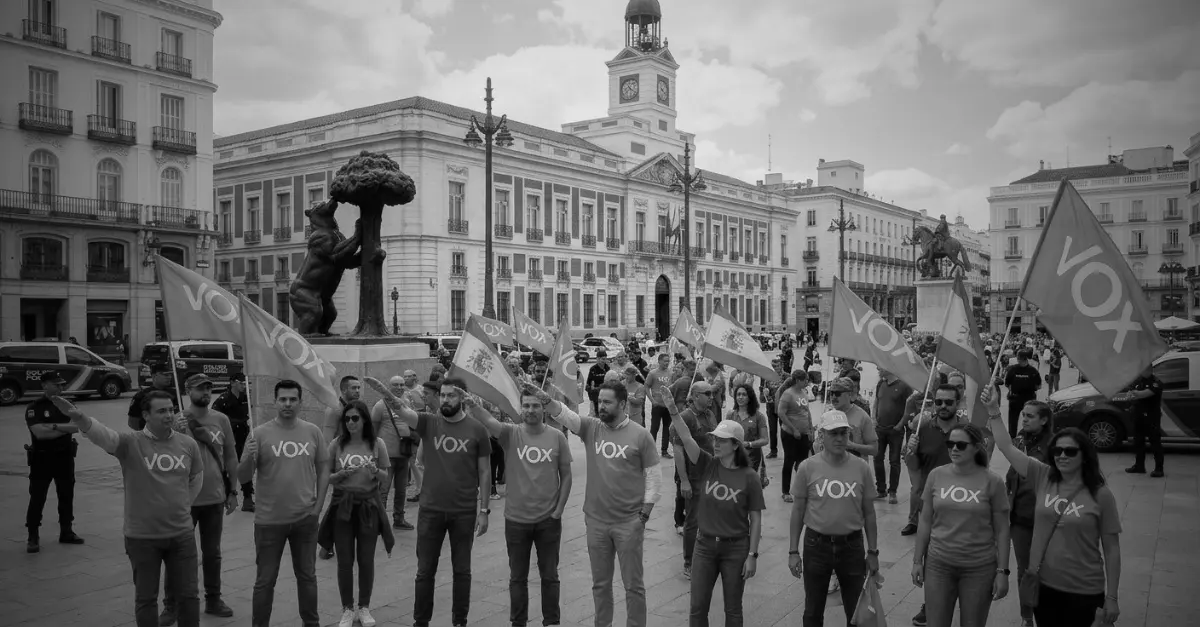
These positions reflect a sovereigntist, migration-control line. Critics describe them as contributing to a hostile climate toward Moroccans in Spain. What is established are the party’s public statements and parliamentary proposals.
What the Eurostat figures show
European flows aggregate capital contributions, reinvested earnings and intra-group operations. In 2025, France recorded €358 million in net flows, ahead of the Netherlands (€272 million), Belgium (€270 million), Spain (€239 million), Germany (€149 million) and Denmark (€121.3 million). The Belgian and German contributions rose sharply.
The European stock in Morocco is concentrated: France holds €8.44 billion (37.2%), the Netherlands €4.28 billion and Spain €3.22 billion. These three countries account for about 70% of the stock. Despite Vox’s criticism, Spain ranks among the main European investors.

In the other direction, Moroccan investment in the European Union grew by 10.5% to reach €2.72 billion. Moroccan flows toward the EU-27 turned positive (€191.4 million in 2025, compared with a negative balance the previous year). France hosts the vast majority of this stock.
Income from European investments in Morocco fell slightly, from €1.16 billion to €1.13 billion. The ratio between the European stock in Morocco and the Moroccan stock in Europe narrowed slightly, without changing the overall structure.
- Net European flows to Morocco in 2025: €1.36 billion (+377%)
- European stock in Morocco at the end of 2025: €22.68 billion (+7.1%)
- Share of France + Netherlands + Spain: about 70% of the stock
- Spanish contribution to 2025 net flows: €239 million
- Moroccan flows to the EU: +€191.4 million
These data are part of a broader dynamic. Morocco has become the EU’s 17th trading partner, with goods trade exceeding €62 billion. Financing from the European Investment Bank and European budget support complete the picture. Spain remains a major trading partner and investor, with companies present in industry, infrastructure and services.
What is at stake
The contrast is stark. While Vox calls for a break or strong conditionality, European institutions and part of Spanish capital are pursuing cooperation. The interests at play are many: migration control, nearshoring, ports, renewable energy and regional stability. Tanger Med and Moroccan industrial projects attract European investors for reasons of cost, logistics and market access.
On the military side, US data indicate the shipment of 35 non-tracked armored combat vehicles from the port of Savannah to Morocco between January and July 2026, worth $41.54 million, under a commercial license. These movements fit within the defense cooperation between Morocco and the United States, a major non-NATO ally, and within the modernization of the Royal Armed Forces.
Several readings coexist. For supporters of a hard line such as Vox, Morocco instrumentalizes migration and lays claim to territories, which justifies a show of force. For others, in Madrid, Brussels and the business community, the partnership is indispensable and investment flows reflect a rational assessment of risks and opportunities. Eurostat’s data do not settle the political debate, but they show that European capital and institutions have not followed the calls for isolation.
The coming months will show whether this momentum holds. Moroccan projects in industry, energy and infrastructure will probably continue to attract European capital. However virulent, political rhetoric has not so far stopped investment from growing.
Frequently asked questions
Why did European investment rise so sharply in 2025 despite Vox’s criticism?
According to Eurostat, net flows increased 4.8-fold. Spain itself contributed €239 million. European investors and institutions prioritize strategic interests (migration, the economy, stability) over the positions of an opposition party.
What is Vox’s exact position on Morocco?
The party demands recognition of Spanish sovereignty over Ceuta and Melilla, criticizes the handling of migration and has asked for European funds to be recovered or for agreements to be revised. Abascal has at times stated that Morocco was not the “enemy,” while remaining highly critical of the Sánchez government.
Does Spain really invest in Morocco?
Yes. It holds a stock of €3.22 billion and recorded net flows of €239 million in 2025, ranking among the main European investors according to Eurostat.
Do these figures contradict anti-Morocco rhetoric?
They show a gap between the political rhetoric of part of the Spanish opposition and the decisions of investors, as well as the policy of the European Commission, which maintains the partnership.