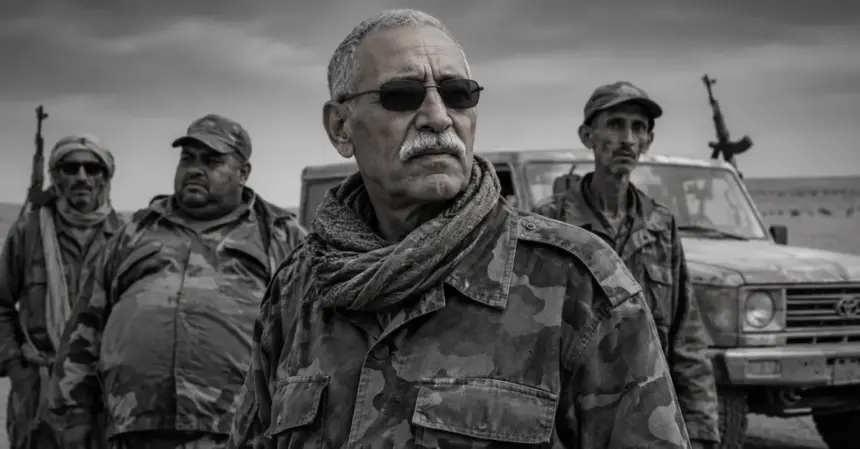
On 10 November 2026, the movement’s leadership, meeting around Brahim Ghali, declared a “general mobilization” and accused Morocco of massing forces along the defensive wall. The announcement came just days after the mandate of the United Nations Mission for the Referendum in Western Sahara (MINURSO) expired on 31 October, when the Security Council failed to reach an agreement: a US draft was blocked by a Russian veto, and the Russian text did not secure the necessary votes.
This sequence revives the question of the Polisario’s real military capacity to alter the balance of power. The data gathered by Jeune Afrique (17 November 2026) and corroborated by other open sources point to an arsenal largely inherited from the Cold War, operational troop numbers well below the figures claimed, and structural difficulties in keeping pace with the technological evolution of the modern battlefield, particularly in drones, reconnaissance and precision strikes.
A wide gap between claimed troop numbers and operational forces
Estimates vary widely. Sources close to the Front and an Algerian expert quoted in 2025 suggest it could mobilize between 25,000 and 26,000 people. Jeune Afrique, by contrast, reports assessments from Moroccan military experts who put the truly operational elements at around 5,000 fighters, to which 3,000 to 5,000 reservists would be added. Swiss estimates, based on data from the French Office for the Protection of Refugees and Stateless Persons, put active forces at between 6,000 and 7,000, with around 2,000 reservists.
This gap is not merely a matter of communication. It distinguishes the total number of people theoretically available for mobilization in the Tindouf camps from the trained, equipped and logistically supported core capable of holding a position or conducting sustained operations. Internal documents of the Front, under the “Youth Plan 2025-2030”, themselves acknowledge the ageing of the cadres and the need to attract new generations. In September 2026, Chief of Staff Hamma Salama called on university graduates to join the military institutions, a sign that combat experience from the 1980s is no longer enough in confrontations that increasingly rely on surveillance and communication systems.
An arsenal frozen in the 1980s
On the equipment side, Jeune Afrique relies on the inventory published in 2021 by the specialist site Oryx. It listed around 191 armored vehicles, including about a hundred Soviet tanks (roughly 70 T-55As and 30 T-62s), BMP-1s, BTR-60s and other vehicles, most of them supplied by Muammar Gaddafi’s Libya in the 1980s.
A 2021 inventory says nothing about the real operational status in November 2026. The age of the platforms, difficulties in obtaining spare parts and the constraints of a desert environment severely limit availability rates. Since the resumption of hostilities in November 2020, the Polisario has favored long-range artillery fire, 120 mm and 160 mm mortars and Grad rocket launchers over large-scale ground operations. A study cited by several analyses, notably from the Carnegie Endowment for International Peace in February 2025, stresses that the arsenal remains dominated by Soviet systems and that its main use relies on artillery.
Air defense is the weakest point. A few portable systems and ageing equipment do not amount to a network capable of durably contesting aerial reconnaissance and precision strikes. A March 2025 report by the International Crisis Group quotes a security official of the Front acknowledging the difficulty of coping with Morocco’s advantage in drones.
Key figures on the military gap
- Claimed troop numbers (sources close to the Polisario): 25,000-26,000
- Expert estimates (cited by Jeune Afrique): around 5,000 active + 3,000-5,000 reservists
- Swiss estimates (via OFPRA): 6,000-7,000 active + ~2,000 reservists
- Armored vehicles recorded (Oryx 2021): ~191, including ~100 T-55/T-62 tanks
- Dominant doctrine since 2020: artillery and long-range strikes
The continued modernization of the Royal Armed Forces
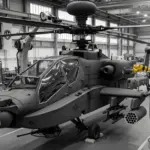
By contrast, Morocco has invested steadily in integrated air, land and air defense capabilities. A first batch of AH-64E Apache attack helicopters arrived in March 2025; in October 2026, six additional aircraft brought the total delivered to 19 out of 24 ordered, at a ceremony at the Salé base. These helicopters fit into a force that already includes modernized F-16s. On 6 October 2026, Lockheed Martin announced the first test flight of Morocco’s first F-16 at the Block 72 standard.
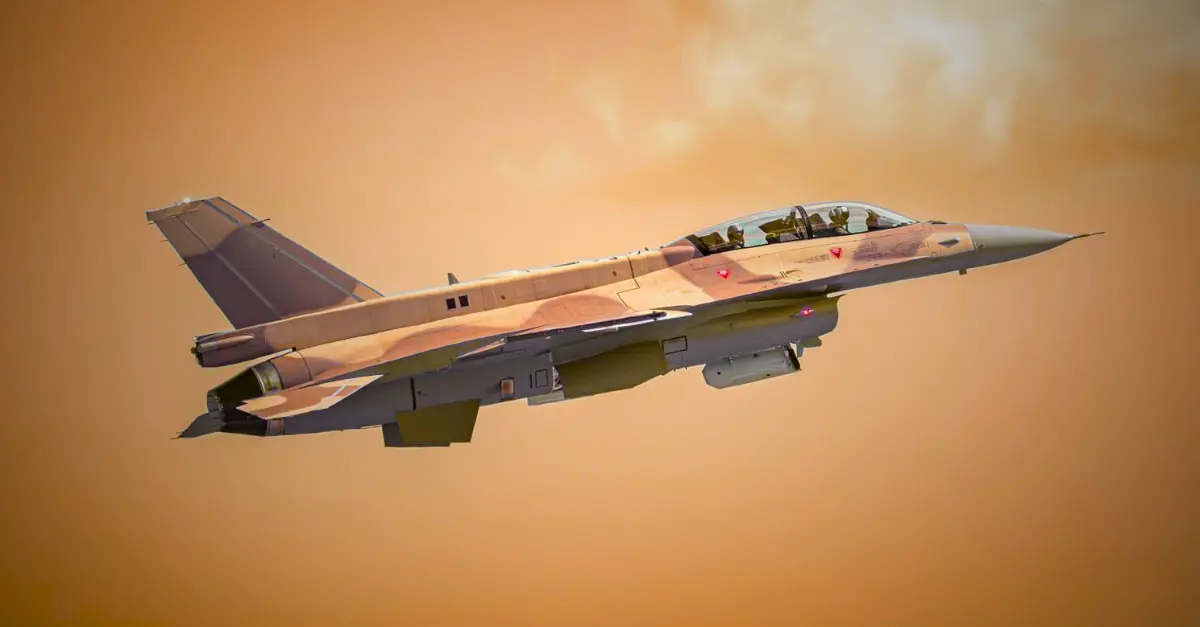
On the ground, American Abrams tanks offer surveillance, targeting and protection systems far superior to the T-55s and T-62s. In air defense, the Israeli Barak MX system is operational, including in the Sahara region, and forms part of a multilayered architecture designed to intercept aircraft, drones and missiles. Morocco is also developing local industrial capabilities to reduce its dependence on imports and ensure maintenance.
Strategic stakes
This technical and human asymmetry does not mean the absence of risk. Artillery or rocket fire can continue to disrupt local security and maintain political pressure. The Polisario retains Algeria’s logistical support, even though Algiers has repeatedly indicated that it refrains from supplying more modern weapons in order to avoid a direct escalation. The end of the MINURSO mandate reduces the presence of international observers and changes the monitoring framework of the ceasefire, without automatically creating the conditions for a conventional offensive.
On the Moroccan side, modernization is part of a broader strategy to secure the southern provinces and respond to a competitive regional environment. The capability gap observed in 2026 makes it unlikely that the forces currently available to the Polisario alone could significantly change the military balance. It leaves open the question of whether the mobilization rhetoric is aimed mainly at a domestic and international audience, or whether it prepares more limited and asymmetric forms of action.
The available data, attributed to open sources and expert estimates, converge on a finding of structural constraints. Only a significant change in supplies, training and command systems could alter this assessment. For now, inventories and operational observations since 2020 point the other way.
FAQ
How many fighters can the Polisario actually mobilize?
External estimates cited by Jeune Afrique put active forces between 5,000 and 7,000, well below the 25,000-26,000 sometimes claimed.
Does the Polisario’s arsenal really date back to the Cold War?
Yes, according to the 2021 Oryx inventory cited by Jeune Afrique: most of the tanks and armored vehicles (T-55, T-62, BMP-1, BTR-60) come from Libyan deliveries in the 1980s.
Does Morocco already have the Apaches and the F-16 Block 72?
Yes: 19 AH-64E Apaches out of 24 ordered were delivered in October 2026, and the first F-16 Block 72 made its test flight on 6 October 2026.
Does the end of MINURSO change the military balance?
It reduces the presence of observers, but on its own it does not change the material and human capabilities of the two sides.