The stated objective is clear: to gradually reduce dependence on imported military equipment by building capabilities in design, production, maintenance and, ultimately, export. This orientation reflects a logic of industrial and strategic sovereignty, in a geopolitical context marked by regional tensions and the continuous modernization of armed forces.
For a country that remains, according to data from the Stockholm International Peace Research Institute (SIPRI), Africa’s largest importer of major arms over the 2021-2025 period (28th worldwide, up 12% compared with 2016-2020), this ambition marks a turning point. The main suppliers remain the United States (about 60%), Israel (24%) and France (10%). Local production is not intended to immediately replace these flows, but to control a growing share of them and to create an ecosystem capable of partially meeting the needs of the Royal Armed Forces (FAR) and the security services.
Morocco Wants to Build a National Defense Industry
Excessive dependence on imports exposes the Kingdom to risks of supply disruption, to political constraints linked to export authorizations granted by supplier countries, and to high foreign-currency costs. In an international environment where supply chains can be disrupted by conflicts or sanctions, having national production capabilities becomes a matter of resilience. The notion of industrial sovereignty, already applied successfully in the automotive and aeronautics sectors, now extends to the defense domain.
Law No. 10-20 of 2020 on defense and security materiel and equipment, weapons and ammunition established the legal framework: manufacturing authorizations, export controls, classification of equipment, and the possibility for private operators (under conditions, notably majority Moroccan ownership) to produce under license or in partnership. This text, supplemented by decrees and tax measures (temporary corporate tax exemptions for certain activities), paved the way for the first projects. Local production is nevertheless not an end in itself; it must be accompanied by a gradual transfer of skills and a move up the technology ladder, so as to avoid remaining stuck in low-value-added assembly.
The Strategic Roadmap Announced in November 2026
Presented before the King, the “Morocco Offer” (“Offre Maroc”) roadmap sets quantified targets for 2035: covering roughly 40% of the needs of the FAR and the security bodies through national production, generating more than 65% of the sector’s revenue from exports, and creating nearly 50,000 direct and indirect jobs. These targets remain strategic ambitions; they do not yet correspond to operational capabilities of that scale.
Initial financing relies notably on a contribution of 4 billion dirhams from the Hassan II Fund for Economic and Social Development, decided by the King. This envelope is meant to support the setup of governance structures, the development of industrial zones and the first equity stakes. A dedicated strategic agency will be responsible for steering the national strategy and supporting investors; an industrial holding company will structure the ecosystems, mobilize public and private capital and foster the emergence of local champions.
On the territorial front, two defense industrial acceleration zones have already been launched (Nouaceur, about 75 hectares, and Sidi Yahya, about 600 hectares, for a total of 675 hectares, managed by the Société de gestion des zones industrielles de défense – SGZID). The offer provides for two new platforms at Benguerir and Benslimane. The priority sectors identified include drones and autonomous systems, land and naval systems, defense electronics, cyberdefense and artificial intelligence, with a preference for dual (civil and military) uses. The targeted value chain covers design, production, maintenance, testing and storage. The King called for “rapid and effective” implementation, first and foremost for the governance bodies and the financing plan, while simplifying procedures and mobilizing the national private sector.
Morocco’s First Industrial Achievements
Operational projects remain limited in volume, but they illustrate the shift from a legal framework to concrete facilities. In Berrechid, the Tata Advanced Systems Maroc (TASM) plant, inaugurated in September 2025, produces and assembles WhAP 8×8 armored vehicles, developed in partnership with India’s DRDO. The first deliveries to the FAR took place in December 2025 under a program covering 150 vehicles over three years. The site integrates about 35% local content at launch, with a target of 50% over time, and creates several dozen direct and indirect jobs. This is mainly assembly and integration under license, with a gradual transfer of skills, rather than an entirely national design.
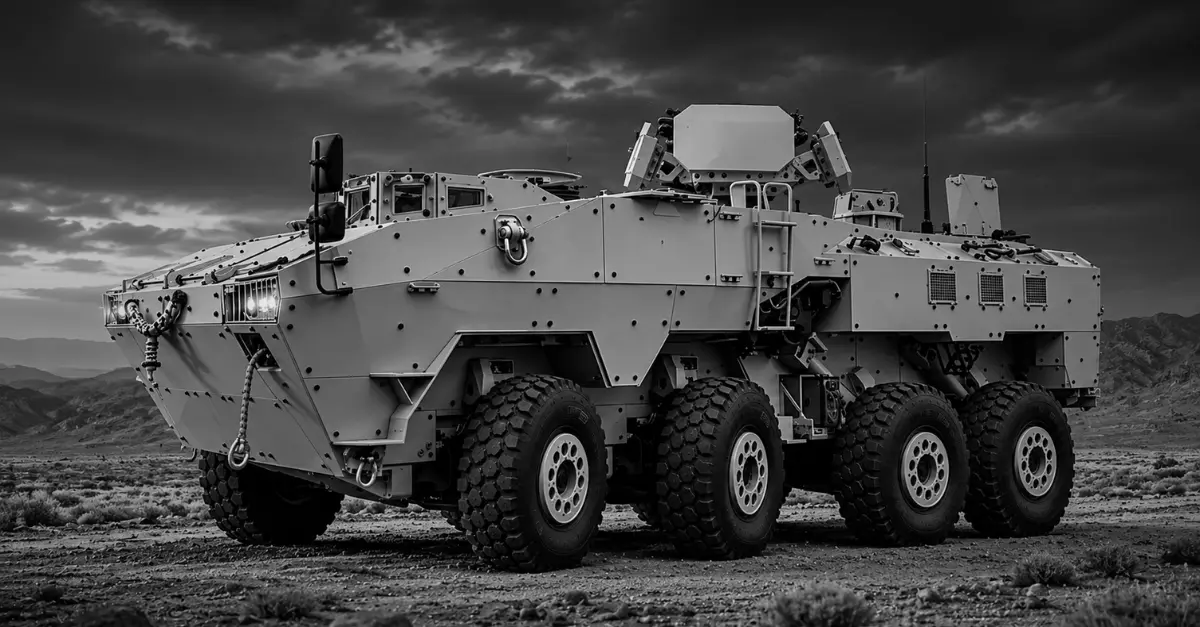
Other activities are developing: manufacturing of 30 mm turrets for the WhAP within the Midparc Nouaceur ecosystem (Moroccan Military Industry), medium- and large-caliber ammunition projects at Sidi Yahya, and initiatives related to drones and autonomous systems at Benslimane (notably through partnerships with Turkish players such as Baykar/Atlas Defense and Israeli ones such as BlueBird for loitering munitions). Land agreements have been signed with operators such as Arquus, MKU, Inkas, Harmattan AI and Moroccan companies for activities in electronics, ballistic protection and counter-drone systems. These achievements clearly distinguish local assembly and licensed manufacturing from full technological mastery or sovereign design, which remain later stages.
Why Are Foreign Companies Interested in Morocco?
The Kingdom already has a solid industrial base in automotive (well-developed value chains) and aeronautics (a subcontracting and assembly ecosystem around Casablanca and other hubs), which offers transferable skills in production, quality and logistics. Its geographic position between Europe and Africa, combined with high-performing port and airport infrastructure (Tanger Med, Atlantic ports, airports), facilitates the import of components and the export of finished or semi-finished products.
Strategic partnerships (United States, France, India, Turkey, Israel and others) and the relative stability of the regulatory framework attract manufacturers looking to diversify their production sites and gain access to African markets. Law 10-20 and the dedicated zones lower certain barriers. These collaborations can foster skills transfer and the gradual integration of Moroccan suppliers, provided that contracts include effective localization and training clauses. The AMDIE and the Ministry of Industry play a supporting role, drawing on experience from the civil sectors.
Drones, Artificial Intelligence and New Technologies
Drones and autonomous systems are among the priorities, as they offer an attractive cost-effectiveness ratio and dual-use applications (surveillance, logistics, agriculture, security). Production and maintenance projects are developing at Benslimane, with foreign players and Moroccan initiatives (such as locally tested ISTAR systems). Defense electronics, communication systems, cyberdefense and artificial intelligence (including for data processing or autonomy) are also targeted. These fields build on the engineering and electronics skills already present in Morocco.
For Moroccan engineers, technology companies and startups, this opens up opportunities in subsystem design, embedded software, cybersecurity and integration. Specialized training (through an academy planned in the roadmap) and partnerships with higher education institutions will be decisive in moving from assembly to more advanced contributions. Dual uses also help spread risk by drawing on civilian markets.
Can Morocco Become a Defense Industrial Player in Africa?
The export ambition (more than 65% of revenue) targets African markets in particular, where many armies are modernizing their equipment with often constrained budgets and a need for tailored solutions (armored vehicles, drones, ammunition, maintenance). Regional production could reduce lead times and logistics costs compared with suppliers from outside Africa. Morocco has strengths in terms of stability, infrastructure and partnerships.
However, concrete results remain limited for now. Current operational capabilities (such as the WhAP, destined primarily for the FAR) do not yet make the Kingdom an established exporter. Success will depend on product quality, price competitiveness, export authorizations and the ability to meet the specific requirements of African customers. The distinction between strategic ambitions and proven performance remains essential.

The Challenges to Overcome
Several obstacles persist. Dependence on foreign technologies (propulsion, advanced electronics, critical software) remains strong; mastering the most complex segments will require heavy investment in research and development. The training of specialized engineers and technicians must scale up quickly. Financing for companies, beyond the initial public support, will require mobilizing the private sector and mechanisms suited to the long cycles of defense.
Building a viable national subcontracting chain, beyond the first assemblers, is a major challenge. Public orders (FAR and security services) will provide a baseline workload, but export volumes will be crucial to achieve economies of scale. Authorization procedures and security requirements may slow projects down. Finally, international competition and the technological sovereignty concerns of foreign partners will limit the full transfer of know-how.
A New Stage in Morocco’s Industrial Strategy
This roadmap continues Morocco’s industrial diversification, following the successes of automotive, aeronautics and electronics. The defense industry could become a new engine of value creation, skilled jobs and exports, provided that international partnerships and investments are turned into genuinely national capabilities.

The central question remains: will the Kingdom manage to move beyond assembly and licensed manufacturing to master more advanced technological segments and build an autonomous, competitive ecosystem? The coming years, with the effective setup of governance structures, the development of the zones and the ramp-up of the first projects, will provide the first elements of an answer. For now, Morocco has clearly chosen to bet on local production as a lever for sovereignty and economic development, in a careful balance between ambition and industrial realism.