The maximum deadline is fourteen days. He was accompanied by the Director General of Maaden Mauritania, Mohamed Yahya Ould Ahmed Ghadhi, who was recently appointed to the post. The tours covered sites at Bir Moghrein, Fderick, El Malhatt, Azkoula and other locations. The Mauritanian News Agency (AMI) confirmed the operation on November 17 and 18.
Officially, the measure aims to protect prospectors, keep them away from border areas and allow the Mauritanian armed forces to carry out their security missions freely along the border strip. President Mohamed Ould Cheikh El Ghazouani instructed Maaden Mauritania to propose alternative zones. Some gold miners have asked for more time. A Chinese company with heavy equipment has also been ordered to leave within roughly ten days, according to accounts of the tour.
Until now, activities had been tolerated in unauthorized areas. The authorities now cite “regional circumstances” and risks for nationals who cross the border. On the ground, remarks attributed to the head of Maaden describe Mauritanians being exposed to drone strikes once on the other side. These statements do not appear in the official AMI communiqués, which remain focused on the protection of citizens and territorial control.
The Context of the End of MINURSO
The decision comes as the mandate of the United Nations Mission for the Referendum in Western Sahara (MINURSO) expired on October 31, 2026. The Security Council failed to renew it: the American draft was blocked by a Russian veto, and the Russian draft did not gather the necessary votes. The liquidation phase began on November 1. Alexander Ivanko, tasked with overseeing the wind-down, said he is aiming for January 31, 2027 as the end of the on-site presence. The first contingents left Laâyoune starting November 16. About 160 military observers and 180 civilian personnel are to be repatriated, and thirteen facilities closed.
Since 1991, MINURSO had, among other things, monitored the buffer zone east of the Moroccan defense wall. Its departure leaves a verification gap. Morocco reaffirmed its commitment to the ceasefire while noting the end of the UN framework. Mauritania, through its spokesperson Mohamed Ould Bebbana, reiterated its position of “total positive neutrality” and its desire to be “part of the solution and not part of the problem.”
Reported Incidents and Risks to Civilians
In the days preceding the evacuation order, gold miners present near the border described to Mauritanian media an exchange of fire on the night of November 15 to 16. According to their accounts, the Polisario Front allegedly targeted areas close to the wall (Tarf Abdo and Tarf Menine), while Moroccan artillery reportedly responded on areas outside it (Akleibat al-Foul and Oum Arouissine). Around fifteen shells reportedly fell near exploration sites, with no casualties according to these testimonies. Sahara Media stated that it had been unable to verify this information with an independent source. Neither the Moroccan army nor the Polisario has issued an official comment on the episode.
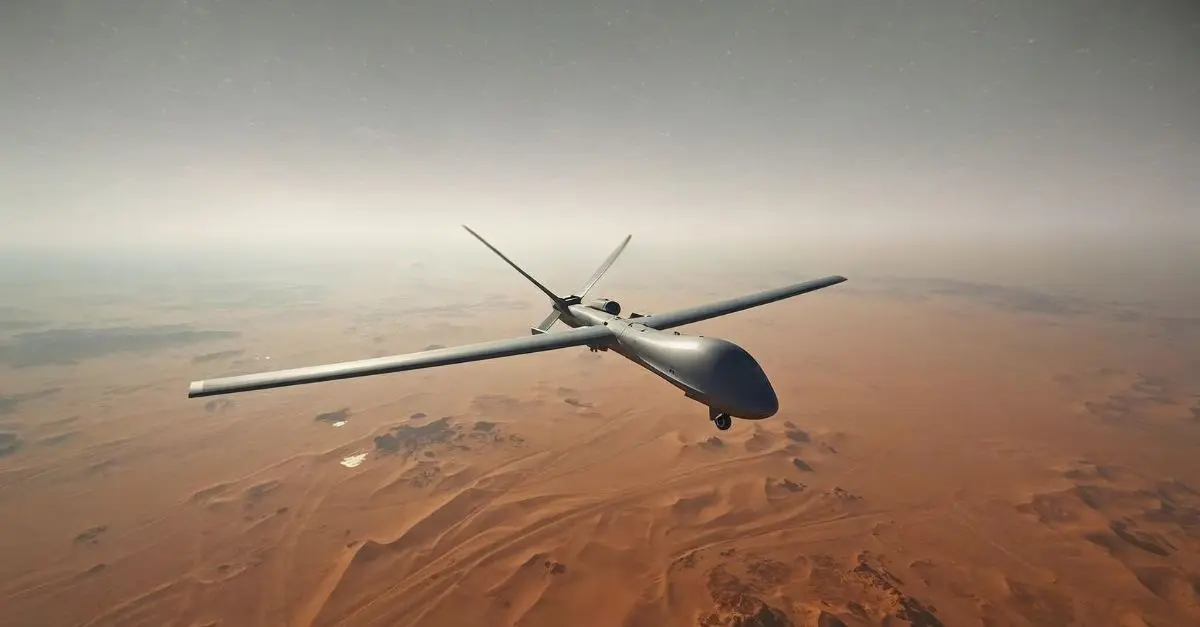
Other media outlets, citing union or local sources, reported that a drone of the Royal Armed Forces allegedly struck a Mauritanian-registered fuel truck that had entered the buffer zone, around November 10-11 in the Mijek sector. One death was mentioned in some versions. The Mauritanian army reinforced its presence in the Gleibat El Foula sector in the wake of Moroccan operations. These elements rest on field statements and press sources; they have not been independently cross-checked.
The risk of confusion is structural. Gold miners, herders and smuggling networks move through the same desert spaces as Polisario elements. Civilian vehicles and tracks used by gold prospectors can serve as cover. Earlier incidents, notably near Guerguerat, had already led Nouakchott to warn its nationals against border crossings.
Strategic Stakes
For Nouakchott, the stated priority is the protection of its citizens and effective control of its border. A ten-kilometer strip empty of civilians makes patrols easier and reduces pretexts for incidents. The artisanal gold-mining sector employs several tens of thousands of people (estimates of around 50,000 direct jobs according to earlier studies by Maaden and GIZ). Relocating sites therefore carries an immediate social and economic cost, even if alternatives are promised.
On the Moroccan side, emptying this strip reduces uncontrolled crossings and the opportunities for militias to blend in among civilians. Media outlets have mentioned an unannounced visit by Nasser Bourita to Nouakchott around November 6, reported by private Mauritanian sources, in a context of consultations following the end of MINURSO’s mandate. This visit was not the subject of an official communiqué from either side. Meanwhile, military exchanges are continuing: a delegation of the Royal Armed Forces completed a visit to the Atar Military Academy around November 18.

The Algerian-backed Polisario Front thus finds itself in a more constrained position east of the wall. The buffer zone, long described as “liberated territories” in its communications, becomes harder to use as a corridor or refuge if the two neighboring states tightly control their respective borders. Mauritania nevertheless refuses to openly take sides and maintains its line of positive neutrality.
Key Points of the Decision
- Order issued on November 17, 2026 by the wali of Tiris Zemmour: evacuation of sites within 10 km of the border within a 14-day period.
- Applies to artisanal gold miners and private mining companies.
- Commitment by Maaden Mauritania to propose replacement zones, on presidential instruction.
- Official objective: the safety of citizens and freedom of maneuver for the armed forces along the border strip.
- Context: end of MINURSO’s mandate on October 31 and the ongoing liquidation phase.
This measure does not fully resolve the Sahara dispute. It does, however, clarify the practical conditions on the ground at a time when the UN verification mechanism is disappearing. Nouakchott’s ability to enforce the fourteen-day deadline, the reality of the alternatives offered to gold miners and the evolution of movements in the buffer zone in the coming weeks will show the true extent of this tightening. Bilateral relations between Rabat and Nouakchott, already marked by growing cooperation, will continue to be closely watched, as will Algiers’ position in the face of a more strictly controlled Mauritanian border.
FAQ
Why is Mauritania imposing this evacuation now?
According to the authorities, to protect gold miners and allow the army to secure the border strip in a tense regional context following the end of MINURSO’s mandate.
Does the decision explicitly mention the Polisario or Morocco?
Not in the official AMI communiqués. They refer to border security and the protection of citizens. Field statements and media reports link it to the risks of drones and incidents related to border crossings.
What will happen to the affected gold miners?
Maaden Mauritania is to offer them alternative sites. The exact zones were not immediately disclosed.
Is Nasser Bourita’s visit to Nouakchott confirmed?
It was reported by Mauritanian media citing private sources in early November, without official confirmation from either government.