The eighth edition of the Marrakech Air Show, held from 7 to 10 October 2026, brought together nearly 200 exhibitors from 27 countries around explicit themes: industrial sovereignty, resilient supply chains, advanced defense systems and artificial intelligence. Contracts, letters of intent and memoranda of understanding followed one another. Together they point to an ambition: to produce, assemble and maintain on Moroccan soil a growing share of the equipment of the Royal Armed Forces. I see it less as an economic strategy than as a response to a strategic risk, that of depending entirely on outside suppliers to keep one’s armed forces running.
A dependence that recent conflicts have made visible
The wars of recent years, Ukraine above all, have shown that an army depends as much on its ammunition stocks, its spare parts and its maintenance as on its most advanced equipment. A country that imports everything can be slowed down by a delivery delay, a postponed export license or a political decision taken in the supplier’s capital.
Local production therefore aims to shorten logistics chains and to guarantee continued support in a crisis. Industrial sovereignty comes down to a concrete goal: keeping the ability to act when foreign supply seizes up.
A legal and institutional framework taking shape
The cornerstone is Law 10-20, adopted in 2020, on defense and security materiel and equipment, weapons and ammunition. According to analyses in the Moroccan economic press, it lays the foundations of a national industry and provides for specialized industrial zones, incentives and a national supervisory commission.
The framework has since been fleshed out. Two industrial acceleration zones dedicated to defense were announced in 2024. A decree authorized the creation of the Defense Industrial Zones Management Company (SGZID), formed through a partnership between the Military Housing and Equipment Agency and MEDZ, a subsidiary of the Caisse de Dépôt et de Gestion. Created in July 2025, the SGZID made its first major public appearance in Marrakech, formalizing about ten memoranda of understanding with Moroccan and foreign manufacturers. According to the press, the rollout of the zones is entering its operational phase.

Growing resources, to be read with caution
Budget figures fuel a lot of commentary and call for rigor. The 2026 draft finance bill mentions 157.17 billion dirhams, compared with about 133 billion in 2025 and 124.7 billion in 2024. According to the text, these funds are intended for the acquisition, maintenance and modernization of equipment, as well as support for the national defense industry.
That reading is disputed. According to Le360, the budget of the ministry in charge of the National Defense Administration is close to 73 billion dirhams in 2026, up from 65.9 billion a year earlier. The 157 billion would correspond to advance commitments, that is, authorizations to enter into multi-year contracts, not sums spent within the year. I therefore prefer to distinguish the two levels rather than add up figures that do not measure the same thing.
Marrakech 2026, a string of announcements
Here are the most notable items, as reported by the press and in manufacturers’ statements:
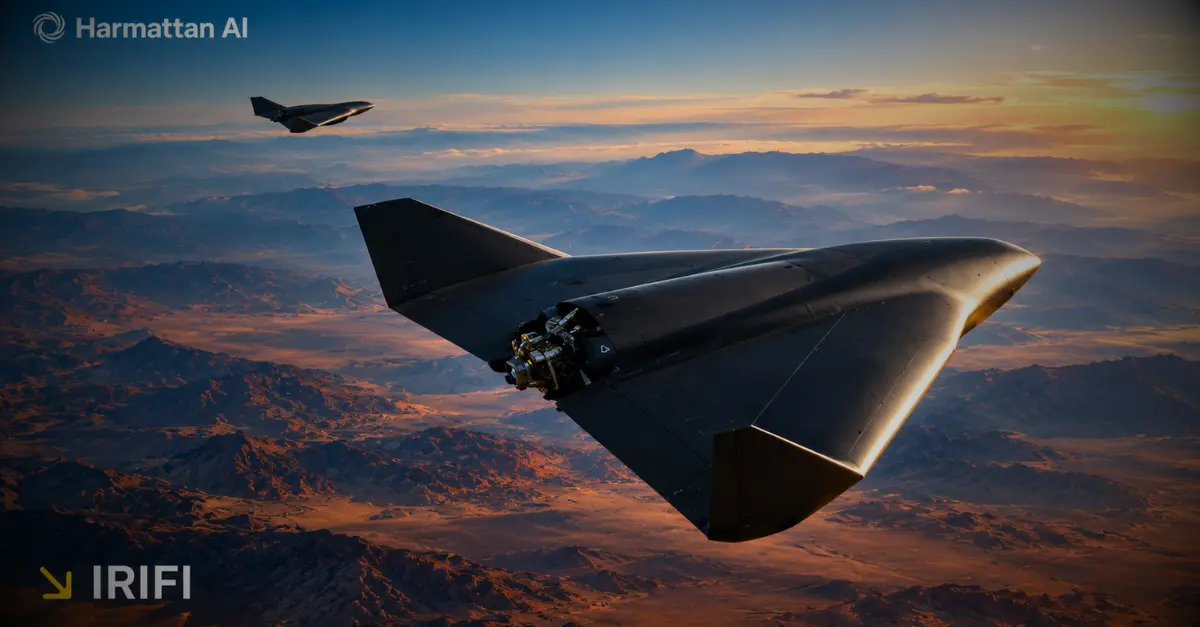
- Harmattan AI: the National Defense Administration signed a letter of intent for the acquisition, development and production in Morocco of the IRIFI long-range strike system. An investment agreement with the State covers an industrial sector dedicated to counter-drone technologies, from research to testing.
- MMI, the Moroccan subsidiary of Elbit Systems: first deliveries of 30 mm turrets to the Royal Armed Forces are planned for March 2027, to equip the WhAP 8×8 armored vehicles assembled in Berrechid with India’s Tata. A second ammunition site is being set up in Sidi Yahya.
- EDGE: a contract with the National Defense Administration to supply guided munitions for the combat drones of the Royal Moroccan Air Force, and a memorandum of understanding to study local production of small arms and aircraft engines.
- Industrial research: a consortium bringing together Boeing, Airbus, Lockheed Martin, Safran Nacelles, Cetim, the OCP Group and UM6P is to be based within the Africa Center of Manufacturing Excellence.
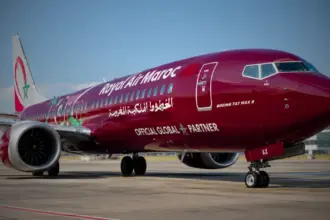
- Other agreements: the establishment of a Safran Oil Systems subsidiary, an agreement between the Ministry of Industry and Royal Air Maroc on local sourcing, memoranda with Mecapole and Korea Aerospace Industries, and a partnership between ND Defense, MZ Automotive and Demarko.
Israel also took part officially, for the first time, in a defense show held in the Kingdom.
Drones, the tipping point
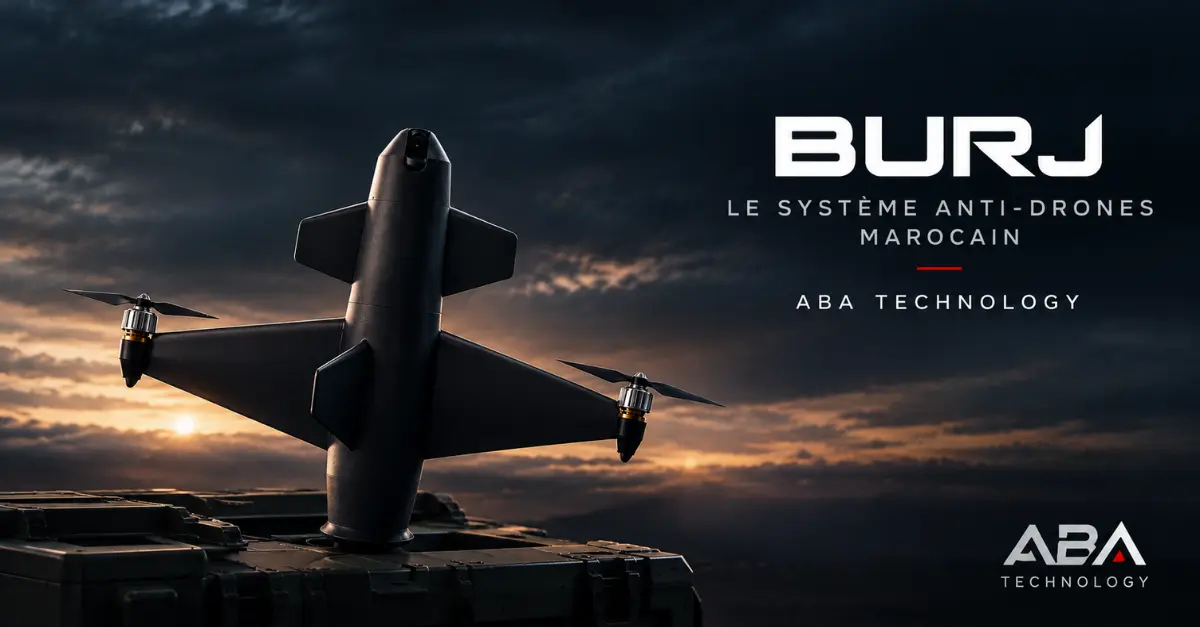
Drones draw the most attention because they require less demanding skills than a fighter jet or a warship and meet immediate needs for border and coastal surveillance.
The case of Harmattan AI deserves a precise description. The company is French, co-founded by the French-Moroccan entrepreneur Mouad M’Ghari, born in Rabat, and has a subsidiary, Harmattan AI Morocco, as well as an engineering hub in Rabat. A partnership had already been concluded in June 2026 with the Royal Armed Forces. IRIFI is advertised with a range of 2,000 kilometers. The job figures put forward, about 1,000 direct and indirect jobs, come from information released at the signing. This is a letter of intent: the drone is not yet produced in Morocco.
Another signal comes from a local start-up: Ballistic Defense System (BDS), founded in Rabat in December 2023, announced on 28 September that it had completed a prototype autonomous drone, navigating without GPS through terrain recognition. According to the company, the design, code and intellectual property remain in Morocco. The media that relayed the announcement nevertheless point out that the system has only been validated on a 17 kg test aircraft, and that the operational airframe of about 250 kg, advertised with a 2,000 kilometer range, has not yet demonstrated that performance. The founders say they have held meetings with the National Defense Administration and the General Staff, and regret the lack of a framework for testing, which leads them to fly in Europe. They are calling for a legal status for defense R&D that would complement Law 10-20. An expert quoted by Médias24 considers the technology plausible but now commonplace.
BlueBird, for its part, presented its Benslimane site for SPY-X drones in 2025. Several media outlets speak of an inauguration, others of a start of operations still to be confirmed.
What industrial sovereignty changes militarily
I distinguish three effects. The first is maintenance: overhauling aircraft and servicing armored vehicles locally increases equipment availability. The second is ammunition: producing munitions and components locally makes it possible to last over time, as recent conflicts have shown. The third is political room for maneuver: controlling part of the chain reduces exposure to the decisions of a foreign government. That independence remains relative, since engines, sensors and sensitive electronics are often still imported.
The multiplicity of partners, among them India, Israel, the Emirates, the United States, Turkey, France and South Korea, limits the risk of a single supplier imposing its terms. It does, however, complicate the standardization of equipment.
A transformation to be judged over time
Industrial sovereignty cannot be decreed. It is built through training engineers, moving subcontractors up the value chain, steady public orders and a legal framework suited to innovation. The milestones ahead, such as the turret deliveries of March 2027, the first drone actually produced or the defense zones actually occupied, will show whether the announcements made in Marrakech turn into capabilities. The question is no longer whether Morocco is committing to this path, but at what pace and with how much real autonomy.
Frequently asked questions
What is Law 10-20?
Adopted in 2020, it governs defense and security materiel, weapons and ammunition. It serves as the legal basis for a national military industry.
Is Harmattan AI a Moroccan company?
It is a French company co-founded by a French-Moroccan entrepreneur, with a subsidiary and an engineering hub in Rabat. Its IRIFI drone is the subject of a letter of intent for production in Morocco.
Does the defense budget reach 157 billion dirhams?
The 2026 draft finance bill mentions that amount, but it includes advance commitments. According to Le360, the ministry’s annual budget is about 73 billion.
What does Morocco already produce?
It assembles the WhAP 8×8 armored vehicles in Berrechid with Tata. MMI is due to deliver its first turrets in March 2027. Several drone projects remain at the prototype or letter-of-intent stage.