

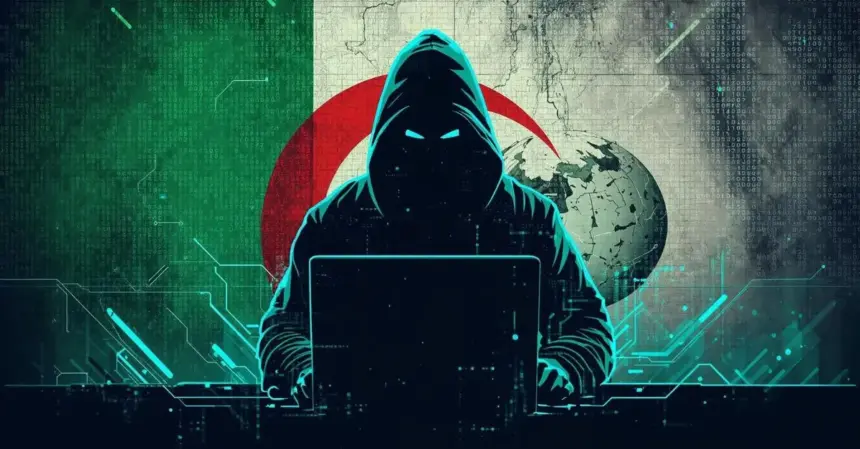
The digital frontier of the Maghreb is currently witnessing a silent but fierce confrontation that has moved from the physical world to the servers of the world’s most famous encyclopedia. In 2026, information is no longer just power; it is the primary weapon of geopolitical influence. A recent and explosive report by the prominent Spanish newspaper La Razón has cast a harsh light on what it describes as a massive, state-sponsored campaign by Algerian intelligence services to alter, falsify, and manipulate content on Wikipedia. This operation, characterized by its systematic nature, aims to rewrite regional history and distort contemporary data to align with the strategic interests of the Algiers regime.
The gravity of these revelations cannot be overstated. According to the Spanish investigation, this is not a collection of isolated incidents by overzealous citizens, but a coordinated intelligence plan designed to compromise the integrity of public knowledge. By infiltrating Wikipedia—a platform that relies on the “good faith” of its contributors—Algerian entities are accused of injecting false narratives into articles concerning sensitive topics such as territorial borders, cultural heritage, and diplomatic relations. This cyber-offensive represents a new chapter in hybrid warfare, where the goal is to conquer the “digital memory” of the internet to legitimize political stances on the global stage.
The Findings of La Razón and the Mechanics of Deception
The investigative piece published by La Razón details how specific units within the Algerian intelligence apparatus have been tasked with monitoring and editing key Wikipedia entries. The report suggests that these “digital agents” operate with a high degree of technical sophistication, using IP masking and sophisticated software to bypass the platform’s standard anti-vandalism filters. In 2026, as Artificial Intelligence systems increasingly rely on Wikipedia as a primary data source for their large language models, the long-term impact of such falsification is staggering. If the foundational data is corrupted, the resulting AI-generated information spreads the lie with automated efficiency.
The Spanish newspaper highlights that the primary targets are historical records that contradict the official Algerian state narrative. This includes the systematic deletion of documented historical ties, the fabrication of non-existent administrative records, and the reattribution of regional cultural landmarks to Algerian soil. For many international observers, this behavior reflects a deep-seated anxiety within the regime, attempting to manufacture a historical depth and legitimacy that is often challenged by academic research. The La Razón report serves as a wake-up call for the Wikimedia Foundation and the global community of editors, who now face an adversary with state-level resources.
A Strategic Intelligence Operation Against Regional Rivals
The systemic nature of this interference suggests a well-funded hierarchy of editors and supervisors. The Spanish report points out that these activities often spike during periods of diplomatic tension or ahead of major international summits. By altering the “facts” on Wikipedia just as world leaders or journalists are researching a topic, the Algerian intelligence services hope to influence the global perception of Maghreb affairs. This is a form of digital gaslighting, where the persistent repetition of a lie on a trusted platform eventually makes it indistinguishable from the truth for the average user.
Furthermore, the operation targets the cultural identity of neighboring nations. By “Algerianizing” traditional arts, music, and culinary heritage through subtle edits and the use of questionable “sources,” the regime seeks to strip its rivals of their soft power. The La Razón investigation provides evidence of coordinated “edit wars,” where dozens of Algerian-linked accounts simultaneously attack a single article to overwhelm volunteer moderators. This tactic, known as “consensus manufacturing,” allows false information to stay online long enough to be indexed by search engines, creating a permanent digital footprint of misinformation.
Key Tactics Identified in the Intelligence Plan
The analysis of the metadata and editing patterns revealed a recurring toolkit used by the Algerian digital units. These strategies are designed to be persistent and difficult for the casual reader to spot:
-
The “Circular Sourcing” Trap: Agents insert a false claim on Wikipedia, wait for a low-quality news outlet to report it as fact, and then cite that news report as a “reliable source” to validate the Wikipedia entry.
-
Geographical Distortion: Uploading digitally altered historical maps to justify modern border claims or territorial expansions.
-
Character Assassination: Systematically adding unverified negative claims to the biographies of historical and political figures from rival nations.
-
Institutional Laundering: Using accounts that appear to belong to academic institutions or international NGOs to provide a veneer of respectability to state propaganda.
-
Bot-Assisted Resilience: Utilizing automated scripts to immediately “roll back” any corrections made by independent historians or platform administrators.
The Erosion of Digital Trust in 2026
The consequences of this state-sponsored vandalism go beyond regional politics. In an era where digital trust is the backbone of the information age, the Algerian plan threatens the very concept of a shared human archive. If Wikipedia becomes a playground for secret services, its utility as an educational tool is destroyed. The La Razón report has sparked a broader debate about the vulnerability of open-source knowledge in the face of autocratic regimes that view the internet as a battlefield rather than a library. For the average reader in 2026, the mantra “check the history tab” has never been more relevant.
The Fabrication of Historical Data and Cultural Theft
One of the most disturbing aspects of the Algerian plan is the attempt to “retroactively” change the past. By targeting articles on the pre-colonial era and 19th-century treaties, the intelligence services are trying to create a historical basis for modern political grievances. This historical revisionism is not based on new archaeological findings or discovered documents, but on the needs of the current political moment. The Spanish report illustrates how specific treaties have been “re-interpreted” on Wikipedia pages through selective editing, effectively erasing the rights of other parties involved in those historical agreements.
This cultural and historical appropriation is a form of digital colonialism. By claiming the heritage of others, the Algerian regime attempts to project a sense of regional leadership that is not reflected in historical reality. The La Razón investigation notes that this strategy is particularly aggressive in the French and Spanish versions of Wikipedia, aiming to influence the former colonial powers’ perception of the region. The battle for the narrative is thus fought on multiple linguistic fronts, requiring a coordinated international response from historians and cybersecurity experts alike.
Global Reactions and the Call for Accountability
Since the publication of the La Razón report, there has been a significant outcry from international press freedom organizations and digital rights groups. The revelation that an intelligence service is actively polluting a global knowledge commons is viewed as an act of digital aggression. In 2026, many are calling for the European Union and other international bodies to treat such disinformation campaigns as a breach of international norms. There are ongoing discussions about implementing “digital sanctions” against state entities found to be orchestrating mass falsification of information.
For Algeria, the fallout from this report is a major blow to its international image. While the regime continues to deny any official involvement, the technical evidence provided by Spanish intelligence sources is hard to ignore. The scandal has reinforced the perception of Algeria as a state that relies on hybrid warfare tactics to compensate for its diplomatic isolation. As the story continues to develop, the focus is now on how platforms like Wikipedia can evolve to protect themselves from state-level actors without sacrificing the open and collaborative spirit that made them successful in the first place.
FAQ: Understanding the Algerian Wikipedia Scandal
What exactly is the “Intelligence Plan” mentioned by La Razón?
The “Intelligence Plan” refers to a systematic and coordinated operation allegedly orchestrated by Algerian security services. According to reports from La Razón, this involves a centralized network of trained editors tasked with rewriting historical narratives and altering political facts on Wikipedia. The primary objective is to align global information with Algerian state interests while systematically marginalizing or discrediting the historical and cultural claims of neighboring nations, particularly in the context of regional territorial disputes.
How did the Spanish newspaper uncover this operation?
The investigation published by La Razón was built on a combination of technical cybersecurity forensic reports and intelligence leaks. Investigators successfully traced several high-activity editor IP addresses directly back to Algerian government server infrastructures. Furthermore, analysts identified “editing clusters”—patterns where multiple accounts would simultaneously target a specific article to force a consensus change, a behavior that is statistically impossible without high-level coordination.
Why does a state care about Wikipedia in 2026?
In 2026, Wikipedia remains the “source of truth” for the internet’s infrastructure. It is critical for a state for three main reasons:
- Search Dominance: It remains the top result for most global search queries, shaping the first impression of millions.
- Media Influence: International journalists and researchers frequently use it as a baseline for quick fact-checking.
- AI Training: Large Language Models (LLMs) like Gemini and ChatGPT are trained on Wikipedia data. If a state successfully poisons the Wikipedia entry, it effectively programs the AI’s “knowledge” on that subject for the entire world.
What can Wikipedia do to stop state-level manipulation?
Defending an open-source platform against a nation-state is an asymmetric battle. In 2026, the Wikimedia Foundation is implementing several countermeasures:
- AI-Driven Moderation: Using advanced algorithms to detect “non-human” or coordinated editing rhythms.
- Topic Protection: Enforcing stricter verification and “extended confirmed” status for editors on sensitive geopolitical articles.
- Transparency Tools: Improved IP tracking to flag edits coming from government-owned blocks of internet addresses.
Despite these efforts, the sheer volume of employees a state can dedicate to this task remains a persistent threat to the platform’s neutrality.
What should users look for to spot “manipulated” articles?
Users are encouraged to check the “Talk” page of any controversial article. In 2026, these pages often reveal intense debates and warnings from veteran moderators about suspicious activity. Additionally, if an article relies heavily on state-controlled media citations rather than independent academic journals, it is a strong indicator of a potential influence operation.