
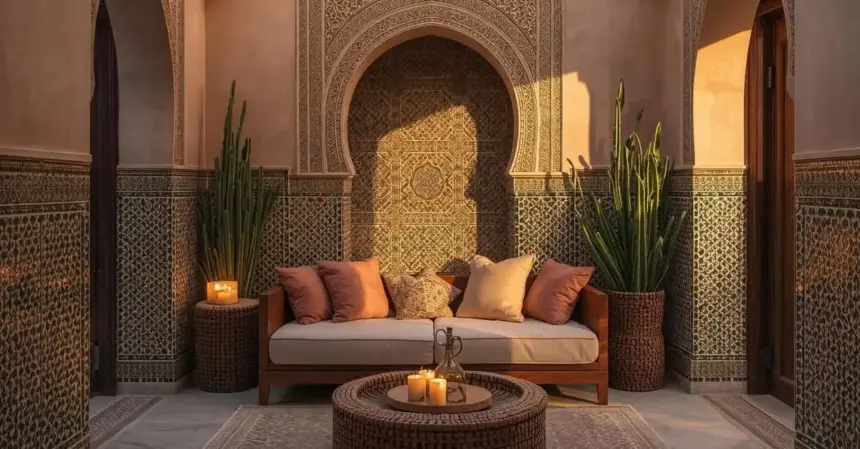
The travel industry is undergoing a profound transformation, and Halal-friendly luxury tourism in Morocco has established itself as an exceptional growth lever. This concept, which combines the standards of prestigious hospitality with Islamic ethical principles, is no longer aimed solely at a specific demographic, but at all travelers seeking serenity, privacy, and tailor-made services. Morocco, with its thousand-year heritage and strategic geographical position, has become an open-air laboratory for this new era of premium travel.
- The irresistible rise of Halal-friendly luxury tourism in Morocco
- The pillars of premium service in Moroccan hospitality
- A well-being and spa offering that respects values
- Leading destinations for an exceptional stay in the kingdom
- The impact of technology and digital tools on traveler choices
- Challenges and opportunities for investors in the sector
- Why Morocco dominates the African ethical travel market
- FAQ on prestigious travel in Morocco
Between the secret riads of the Marrakech medina and the ultra-modern resorts on the Atlantic coast, the offering is structured to meet increasingly demanding requests. The global Muslim travel market is estimated at over $220 billion, and Morocco is capturing a growing share of this flow thanks to an adapted infrastructure and an innate culture of hospitality. Luxury is no longer defined only by price, but by an establishment’s ability to provide an environment consistent with the client’s values without ever sacrificing elegance.
The irresistible rise of Halal-friendly luxury tourism in Morocco
Morocco’s positioning on the global religious tourism stage is no accident. The kingdom has anticipated the needs of an international upper-middle class, coming mainly from the Gulf countries, Europe, and North America. These travelers seek experiences that respect their practices, particularly regarding food, well-being, and privacy, while enjoying a sumptuous setting. Massive investments in brands like Royal Mansour or Selman Marrakech testify to this desire to marry tradition with opulence.
The economic impact is major for the country. According to the latest Global Muslim Travel Index (GMTI) reports, Morocco regularly ranks in the top 10 most attractive destinations. This attractiveness is based on the guarantee of 100% halal products, the absence of alcohol in dedicated spaces, and the provision of prayer rooms. But beyond logistics, it is the “spiritual and chic” atmosphere that appeals. Today’s luxury tourist wants meaning, and Morocco offers a cultural immersion where the sacred meets total refinement.
The pillars of premium service in Moroccan hospitality
To succeed in this niche, Moroccan establishments have had to reinvent the codes of service. Halal-friendly luxury tourism in Morocco relies on an almost surgical attention to detail. This starts with gastronomy: Michelin-starred chefs revisit Moroccan and international cuisine using short circuits and rigorous certifications. The goal is to prove that a fine dining table can be completely free of non-halal products while remaining a delight for the senses.
Another fundamental pillar is the management of space and intimacy, often called “total privacy” by industry professionals. Villas with private pools not overlooked have become the standard for this clientele. The guest must feel at home, away from prying eyes, to fully enjoy their stay with family or as a couple. Staff are trained to be invisible but omnipresent, capable of anticipating every need without ever disturbing the guests’ peace.
A well-being and spa offering that respects values
Well-being is at the heart of the Moroccan experience. The hammam, a true national institution, lends itself perfectly to the requirements of Halal-friendly luxury tourism in Morocco. Spas in major hotels offer strictly separate sections for men and women, or reserved time slots. Treatments use local natural products such as argan oil, black soap, or ghassoul, which are inherently compatible with a healthy and ethical consumption ethos.
Architects and designers work hand in hand to create havens of peace where light and water play a central role. The idea is to promote spiritual disconnection. In certain establishments in the Palmeraie of Marrakech, meditation or yoga sessions oriented towards mindfulness are offered in Andalusian gardens where birdsong replaces city noise. This holistic approach to luxury attracts a global clientele looking to regenerate their bodies and spirits.
Leading destinations for an exceptional stay in the kingdom
While Marrakech remains the locomotive of the sector, other cities are emerging with fascinating proposals. Tangier, with its opening to the Mediterranean, is attracting colossal investments to create luxury seaside resorts. In Casablanca, business tourism is also transforming to include high-level halal-friendly services, allowing professional travelers to reconcile work and respect for their life principles in absolute comfort.
-
Marrakech: For its prestigious riads and iconic palaces.
-
Fes: For an authentic spiritual and historical immersion.
-
Agadir: For its beachfront hotel complexes offering total privacy.
-
Chefchaouen: For a confidential luxury experience in the heart of the Rif mountains.
-
Agafay Desert: For luxury “glamping” camps under the stars.
The impact of technology and digital tools on traveler choices
Modern travelers use digital tools to verify the credibility of “halal-friendly” promises. Platforms like HalalBooking or HalalTrip play the role of filter and reassurance. Moroccan hotels have well understood the importance of online reputation and actively communicate their certifications. The presence of customer reviews detailing the quality of welcome and respect for religious standards is a decisive conversion factor for luxury establishments.
Furthermore, personalization via artificial intelligence is beginning to appear. Some digital concierges allow for planning itineraries including visits to historic mosques, real-time prayer times, and reservations in certified restaurants. Halal-friendly luxury tourism thus becomes a connected, fluid, and stress-free experience, where technology serves to remove logistical barriers to leave room for emotion and discovery.
Challenges and opportunities for investors in the sector
Despite its success, this niche must face certain challenges, notably the standardization of norms. The “halal” label can sometimes vary from one country to another, and Morocco is working on unifying its criteria to offer total transparency. For investors, the opportunity is immense because demand still exceeds high-quality supply. It is no longer enough to put a prayer mat in a room; the entire customer journey must be designed through the prism of ethics and excellence.
Human capital training is also a major issue. Staff must understand the cultural nuances of different Muslim clienteles, whether they come from Malaysia, Qatar, or France. Moroccan expertise in hospitality is an asset, but it must be accompanied by technical expertise on specific products and services. The luxury market does not forgive approximation, and it is in this rigor that long-term profitability lies.
Why Morocco dominates the African ethical travel market
Morocco benefits from political stability and a clear royal vision regarding tourism development. The Vision 2030 plan grants an important place to product diversification. The country positions itself as a bridge between Africa, Europe, and the Arab world. This position as a cultural crossroads makes Halal-friendly luxury tourism in Morocco particularly rich and varied, capable of appealing to art lovers as much as nature or high-end shopping enthusiasts.
Authenticity is the keyword. Unlike some destinations created from scratch, Morocco has a soul. Every zellige, every arch, every scent of orange blossom tells a story. For the wealthy traveler, this historical depth brings added value that cannot be found elsewhere. It is this alliance between living heritage and hotel modernity that makes the kingdom an unbeatable destination in the responsible and ethical luxury segment.
FAQ on prestigious travel in Morocco
What concretely defines a Halal-friendly hotel in Morocco?
An establishment is considered as such when it offers certified food without pork or alcohol, prayer spaces, and guarantees total privacy, especially for women (private pools or reserved spa hours). In the luxury segment, this is accompanied by personalized concierge services.
Is luxury tourism in Morocco reserved only for Muslims?
Absolutely not. The Halal-friendly approach is synonymous with universal values such as respect, discretion, and the quality of natural products. Many non-Muslim travelers choose these establishments for their calm, the absence of alcohol-related disturbances, and the focus on family well-being.
What is the average budget for a Halal-friendly luxury stay in Morocco?
For a very high-standard establishment, rates can vary from €500 to over €3,000 per night for a private villa. This price often includes exclusive services such as a personal butler, luxury car transfers, and bespoke gastronomic experiences.