Successive UN Security Council resolutions, American and French support for Morocco’s autonomy plan, and the non-renewal of the MINURSO mandate at the end of October 2026 are shrinking Algiers’ room for manoeuvre. In this context, Mauritania, a strategic neighbour and gateway to the Sahel, is becoming the ground on which the balance of power is being redrawn.
A dead end in Tindouf
Tindouf, in south-western Algeria, has hosted the Sahrawi refugee camps run by the Polisario since 1975. According to UNHCR and the World Food Programme, more than 80% of residents depend on humanitarian aid for their basic food needs. Nutrition surveys from 2025 report acute malnutrition among children under five at levels the WHO considers critical, with a chronic dependence on shrinking rations.
The territory, militarily controlled by the People’s National Army (ANP), functions as an enclave: the population has no Algerian citizenship, little freedom of movement and almost no independent economic activity.
The historic caravan routes to Morocco have been closed for years because Morocco controls most of the Western Sahara. With no commercial outlet and no corridor to the Sahel, Tindouf remains a strategic dead end. European Union and NGO reports stress this total dependence on international aid, which Algeria supplements with land, water and electricity, without integrating the population into its economy.
This situation is not only humanitarian. It illustrates the cost of a policy that has prioritised the Sahrawi lever. According to SIPRI data for 2025, Algeria spent roughly $25.4 billion on defence, or nearly 8.8% of its GDP – the highest ratio in the MENA region and the second highest in the world after Ukraine. That share represents about a quarter of public spending.
Meanwhile, the IMF notes high budget deficits (around 10.5% of GDP in 2025), declining foreign exchange reserves and a persistent dependence on hydrocarbons (nearly 90% of exports). Occasional shortages of basic goods, such as cooking oil or certain industrial products, are documented by the local press and by economic analyses. These elements do not prove a deliberate “destruction” of the economy, but they show the weight of a sustained military effort against a backdrop of structural vulnerabilities.
Mauritania, a fragile and strategic terrain
Mauritania shares a border of about 460 kilometres with Algeria and a long border with the Moroccan Sahara. Its active army is estimated at between 15,000 and 20,000 men depending on the source (CIA World Factbook, Global Firepower and regional analyses), for a territory of more than one million square kilometres. The borders remain porous to smuggling, migration and illicit activity, even though Nouakchott has stepped up surveillance in the north, notably after the Guerguerat incidents of 2020.
The Mauritanian army has repeatedly intercepted vehicles and trucks linked to the Polisario near border areas, according to Mauritanian and Moroccan media reports. These actions show a desire for control, but also the limits of a small force facing a desert territory.
Mauritania recognised the SADR in 1984 and officially maintains a “positive neutrality” on the Sahara. Family and social ties exist between the north of the country and the Tindouf camps. Local and regional observers note a Polisario influence in certain political and social circles, although the Mauritanian authorities have not confirmed any structured presence of Front cadres in key state positions. This type of influence, difficult to quantify, is a vulnerability factor that several strategic analyses (Stiftung Wissenschaft und Politik, Middle East Eye) factor into the Algerian-Moroccan rivalry.
Morocco’s bet on cooperation
Morocco has multiplied gestures towards Nouakchott. In September 2026, a framework agreement was signed for the rehabilitation and widening of National Road 4, linking Nouakchott and Nouadhibou via kilometre point 55 opposite Guerguerat, over roughly 480 kilometres. The project is part of the Dakhla-Guerguerat-Nouakchott axis and of the Moroccan Atlantic Initiative, which aims to give Sahel countries a maritime outlet through the future Dakhla Atlantic port (works well advanced, commissioning targeted around 2028-2029). Security cooperation and exchanges of visits have intensified.
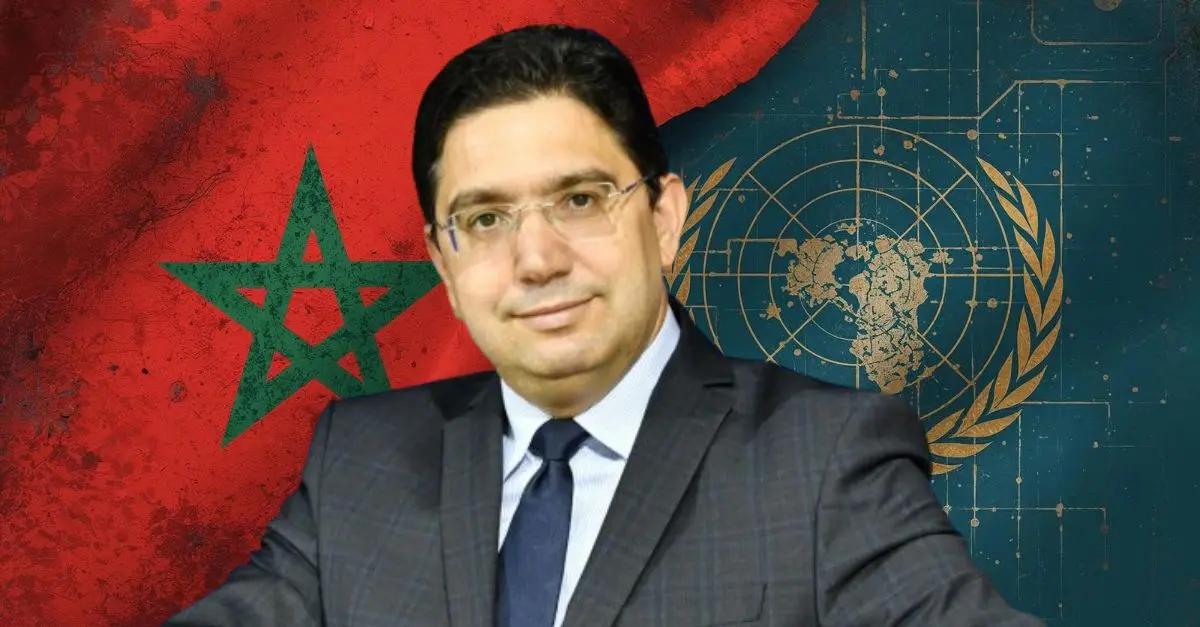
In early November 2026, Moroccan Foreign Minister Nasser Bourita made an unannounced visit to Nouakchott, according to Mauritanian media (Al-Akhbar), in the context of the expiry of the MINURSO mandate. Algerian sources mentioned a Mauritanian refusal of certain joint security requests; the details remain officially unconfirmed.
For Rabat, strengthening cooperation with Mauritania secures its Atlantic corridor, limits the risk of infiltration from the camps and reduces its relative isolation vis-à-vis the Sahel. For Nouakchott, these agreements provide infrastructure and economic prospects while preserving its diplomatic room for manoeuvre.
Algiers’ interests and the role of the Polisario
Algeria has also courted Mauritania: a presidential visit in 2024 (the first in decades), talks on a free-trade zone, security coordination and plans for joint patrols along the shared border. These efforts aim to maintain influence and counter the Moroccan corridor. Regional analyses describe a competition between corridor logics: Algeria traditionally projects towards the Sahel through its southern borders, while Morocco is developing an Atlantic route through Mauritania.
Against this backdrop, some observers wonder about a possible repositioning of the Polisario. No public evidence establishes a plan to “rebrand” the Front in order to target Mauritania’s territorial integrity. The Polisario officially remains focused on the Moroccan Sahara.
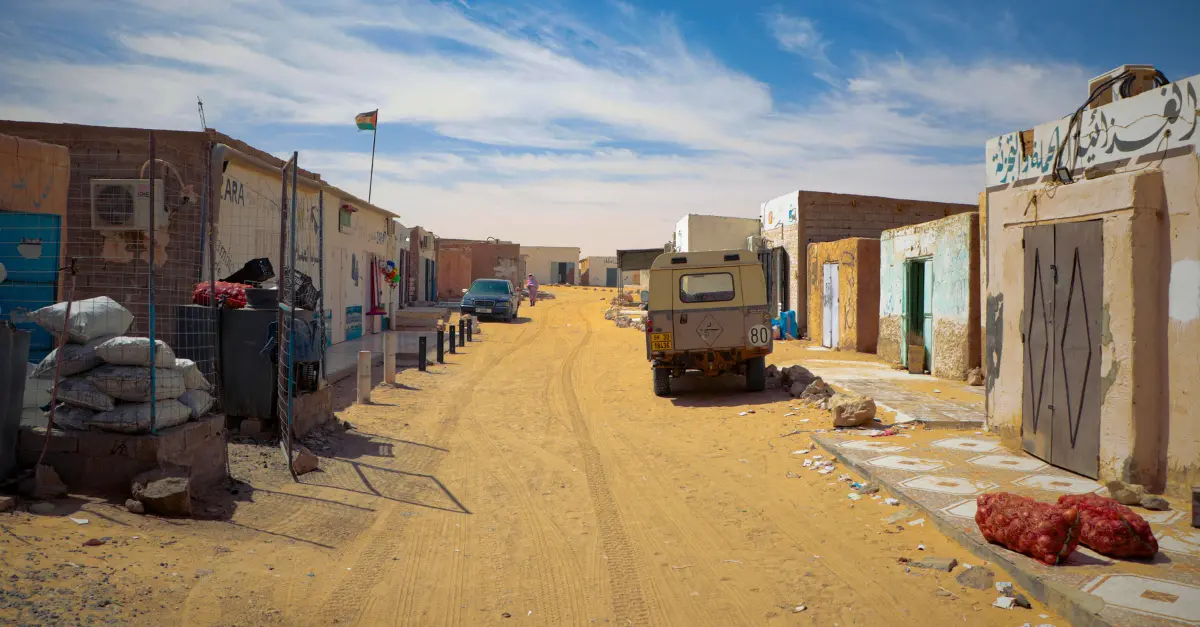
However, its presence in the camps, its ties with certain Mauritanian communities and Algiers’ ability to use allied groups as a lever of influence are elements that analysts include in pressure scenarios. Mauritania has already shown that it can set limits (closing zones, interceptions), but its “positive neutrality” remains a fragile balance.
Key figures of the rivalry
- Algerian military spending in 2025: about $25.4 billion (SIPRI), or ~8.8% of GDP.
- Morocco-Mauritania road agreement (September 2026): rehabilitation of ~480 km of the RN4 towards Guerguerat.
- Estimated active strength of the Mauritanian army: 15,000 to 20,000 men.
- Tindouf camps: more than 80% of residents dependent on food aid (WFP/UNHCR).
A warning from Algiers to Nouakchott?
In February 2024, Mauritanian President Mohamed Ould Cheikh El Ghazouani inaugurated two border posts at Tindouf with Abdelmadjid Tebboune and launched joint projects, including the road to Zouerate.
Shortly after the convoy’s departure, a vehicle of the Mauritanian close protection team was involved in a road accident. The toll: one dead (bodyguard Mohammed Ould Chibani) and one injured, later repatriated by military plane.
The lack of clear official communication on both sides quickly opened the door to speculation. Some saw a simple accident; others, notably on the Moroccan side, suggested a possible deterrent message or a staged incident. No public evidence has confirmed an attack, an ambush or an assassination.
The episode is a reminder of the fragility of the balance between Algiers and Nouakchott, even at a time of displayed cooperation.
Perspectives and viewpoints
On the Algerian side, support for the Sahrawis’ right to self-determination is presented as a constant “anti-colonial principle”, and not as a mere anti-Moroccan instrument. The authorities stress the security threats in the Sahel and the need for alternative corridors.
For Morocco, the autonomy plan and the infrastructure projects are a realistic solution and a lever for regional development. Mauritania, for its part, insists on its wish to be “part of the solution and not part of the problem”, according to recent official statements. Independent analysts (SWP, Middle East Eye) describe a balancing act in which Nouakchott seeks to maximise economic and security gains without fully aligning itself.
The vacuum left by the setbacks on the Sahara issue is not automatically filled by an offensive against Mauritania. Algeria’s economic constraints, Mauritania’s determination to preserve its sovereignty and the dynamics of the Atlantic corridors limit the options.
Nothing indicates an immediate military shift at this stage. But geography, social ties with the camps and the competition for access to the Sahel make Mauritania a lasting stake. The next developments in the Sahara file, concrete progress on infrastructure and Nouakchott’s ability to manage pressure from both sides will determine whether this vacuum is filled by cooperation or by new tensions.
FAQ
Why is Tindouf considered a dead end?
The camps are isolated and aid-dependent, with no major commercial outlet towards Morocco (routes closed) and no smooth corridor to the Sahel. Independent economic activity there is almost non-existent.
Does Mauritania have an army capable of controlling its borders?
Its numbers are modest (estimates of 15,000-20,000 active personnel) for a vast territory. It is strengthening surveillance in the north and intercepting suspicious movements, but the borders remain porous.
Is there evidence of an Algerian plan to use the Polisario against Mauritania?
Some analyses point to levers of influence through the camps and social ties, within a rivalry over corridors.
What is Morocco’s interest in strengthening ties with Nouakchott?
To secure the Dakhla-Guerguerat-Nouakchott corridor, develop Atlantic access to the Sahel and limit the risks of border instability.