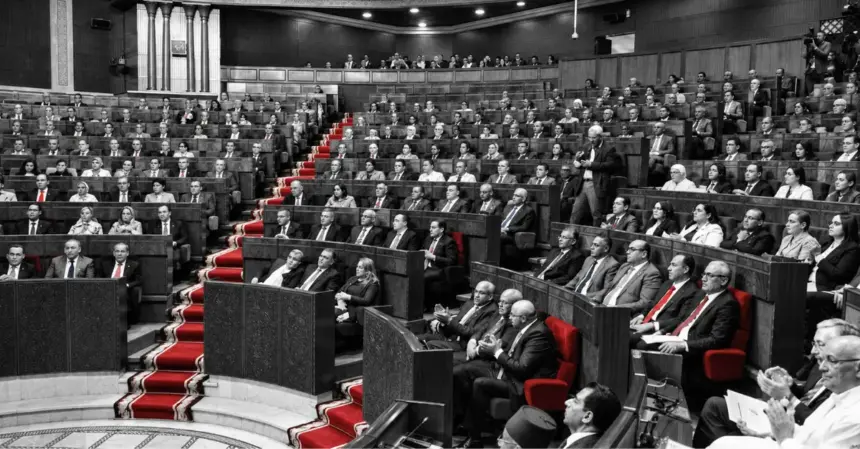
For the first time since the creation of the United Nations Mission for the Referendum in Western Sahara (MINURSO) in 1991, its mandate has not been renewed. It expires on October 31, 2026. The Moroccan Parliament will meet on Monday, November 2 at 1:00 p.m. in a joint session of both Houses to examine these developments. What is at stake goes beyond the fate of a modest peacekeeping mission: it concerns how a fifty-year-old dispute can, or cannot, be handled within the UN framework.
A double veto that leaves MINURSO without a mandate
On Friday, October 30, the Security Council considered two competing draft resolutions. The American text, put forward by the usual penholder on the issue, proposed extending the mission until October 31, 2027 while introducing substantial changes. It would have renamed it the United Nations Mission in Western Sahara (MINUSO), thereby removing the reference to the referendum from its title, made Morocco’s 2007 autonomy plan the sole basis for negotiations, and reduced its military component. The draft received 11 votes in favor, three abstentions (China, Pakistan and Somalia) and one vote against from Russia, which exercised its veto.
The Russian draft, submitted next, was limited to a one-year technical extension of the existing mandate, with no change to the name or the tasks of the mission. It received only three votes in favor (Russia, China and Somalia), one vote against from the United States and 11 abstentions. It therefore failed to reach the nine votes required.
According to figures cited by Reuters from a report by the Secretary-General, MINURSO has 155 military personnel, and its cost for the fiscal year that began in June 2026 is estimated at $62 million. Other counts put the total staff at around 359 people, civilians included. The mission, created by Resolution 690 in 1991 as part of a settlement plan accepted by Morocco and the Polisario Front, has never held the planned referendum, notably because of persistent disagreements over the electorate.
U.S. Ambassador Mike Waltz said the United States was ready to work with the Secretary-General on an orderly withdrawal that protects UN personnel and takes security and humanitarian needs into account. He recalled that preparations for the referendum had ceased more than twenty years ago and that the mission no longer served its original purpose.
The Royal Cabinet’s reading
A few hours after the vote, a statement from the Royal Cabinet drew the consequences of the non-renewal. It describes it as “an important development and a significant step toward the definitive closure of the Moroccan Sahara file at the United Nations.” The text specifies that the absence of an extension “clearly means that the presence of this Mission in the Kingdom’s Southern provinces, notably through its personnel, vehicles, equipment and symbols, should cease in the coming days.” It adds that this situation “should mark the end of the Security Council’s involvement and the removal of this issue from its agenda,” making the periodic meetings, the Secretary-General’s reports and the briefings by his Personal Envoy, Staffan de Mistura, unnecessary.
The statement suspends the UN political process, which it blames on “the procrastination of the other parties and their obstinacy in creating blockages and perpetuating the status quo.” It states that Morocco remains committed to respecting the ceasefire, within the framework of its territorial integrity, and that international support for autonomy under Moroccan sovereignty, already backed by more than two thirds of member states according to the text, will continue at the bilateral and regional levels.
This reading is part of a sequence that began in October 2025 with Resolution 2797, which had already set Morocco’s autonomy plan as the basis for negotiations. The statement also links the timing to Unity Day, decreed by King Mohammed VI.
The positions at stake
France and the United Kingdom voted for the American text and reaffirmed their support for the autonomy plan as a credible and pragmatic basis. French Ambassador Jérôme Bonnafont recalled Paris’s consistent position in favor of Moroccan sovereignty. British Ambassador Sarah MacIntosh described the plan as “the most credible, viable and pragmatic.”
Russia justified its veto by arguing that the American draft unilaterally favored one party and prejudged questions of sovereignty. Ambassador Vassily Nebenzia stated that the Council could not endorse such an approach. The Polisario Front and Algeria, which supports the independence claim, have previously described similar texts as a break with the right to self-determination and with the decolonization framework enshrined at the United Nations. The Polisario resumed hostilities in November 2020 after a breakdown of the 1991 ceasefire.
The United States, under President Trump’s impetus, has made settling this dispute a relative priority and has multiplied rounds of talks in Washington and Madrid involving Morocco, the Polisario, Algeria and Mauritania, co-chaired by Staffan de Mistura and Ambassador Waltz. The royal statement notes that more than two thirds of UN members support autonomy under Moroccan sovereignty as the only framework.
- Key facts on the October 30 vote
- American draft: 11 in favor, Russian veto, 3 abstentions (China, Pakistan, Somalia).
- Russian draft: 3 in favor (Russia, China, Somalia), United States against, 11 abstentions.
- MINURSO personnel: 155 military (Reuters/SG report figure); estimated cost ~$62 million for the current fiscal year.
- Mandate: expires October 31, 2026 for lack of a resolution.
- Parliament: joint session on Monday, November 2, 2026 at 1:00 p.m.
What is at stake for regional stability
The dispute has pitted Morocco, which controls most of the territory following the Spanish withdrawal and the Green March, against the Polisario Front, backed by Algeria, since 1975. A sand wall separates the zones. The territory, considered non-self-governing by the UN, holds phosphates and offshore potential. The possible closure of MINURSO raises practical questions of security along the berm and for the populations concerned, notably the refugees in the Tindouf camps in Algeria, whose census has long been debated.
For Morocco, the end of the mission marks the closing of a chapter of internationalization that it considers anachronistic, and a shift toward bilateral and regional management, backed by accumulated diplomatic support (the United States, France, the United Kingdom, and several African and Arab countries that have opened consulates in the Southern provinces). For the Polisario and Algeria, it weakens the UN framework that kept the question of self-determination open. For the Security Council, the episode illustrates the limits of consensus on a file long renewed as a matter of routine.
Monday’s parliamentary session comes at a time when Morocco’s national consensus on territorial integrity traditionally transcends party lines. It should allow lawmakers to take note of the developments and express an institutional position, with no specific legislative measures announced at this stage.
Frequently asked questions
Why was the MINURSO mandate not renewed?
Two drafts failed: the American text, backed by 11 members, was blocked by a Russian veto; the Russian text for a simple extension did not get the nine votes required.
What does Morocco say about the mission’s departure?
The Royal Cabinet considers that the non-renewal means MINURSO’s presence (personnel, vehicles, equipment, symbols) in the Southern provinces must end in the coming days, and that the file should be removed from the Security Council’s agenda.
What is the immediate timeline?
The mandate expires on October 31, 2026. The Moroccan Parliament holds a joint session on Monday, November 2 at 1:00 p.m. The United States has said it is ready to support an orderly withdrawal.
Does the end of MINURSO end the political process?
According to the Royal Cabinet, the UN process is suspended. The United States says it wants to continue working with the Personal Envoy and the parties toward a lasting solution.