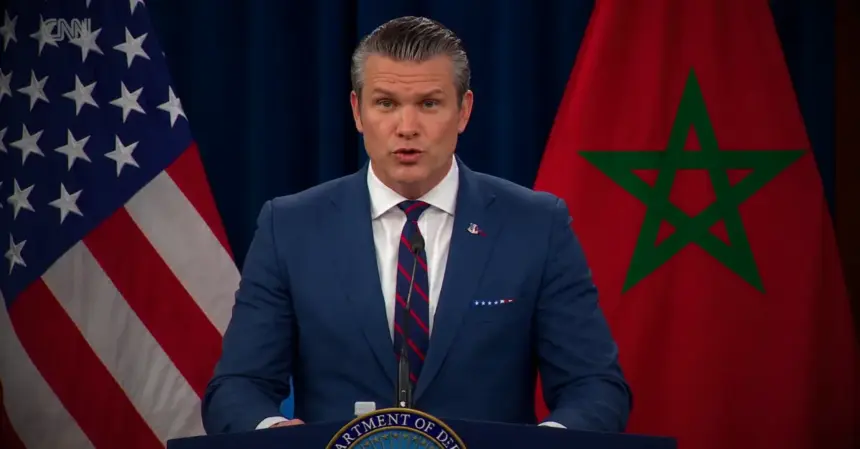
On Thursday, October 8, the US Defense Security Cooperation Agency (DSCA), the Pentagon body responsible for foreign military sales, introduced a new procedure. It allows Washington’s partner countries to fund their own military research, design and evaluation work on technologies that appear in no official US acquisition program. In the same text, the DSCA expressly maintains the 115-day period Morocco enjoys to accept a US military offer, compared with 85 days under the standard regime.
I read this document on two levels. The first is technical: Washington is widening the range of tools offered to its customers. The second is strategic: the US administration spells out what it is willing to share, and above all what it keeps for itself.
A mechanism that fills a gap
Until now, existing instruments already allowed a foreign country to pay for studies, technical services and preparatory work. But they applied to equipment already recognized by the US administration. The new regime, referenced 26-128, now covers projects that do not yet correspond to any official US weapons program.
In practical terms, a partner state can use its own funds to pay for engineering studies, tests, prototype manufacturing or the purchase of components. It can also cover the personnel and travel costs of the American staff assigned to the work. The stated aim is to examine the feasibility of future acquisitions.
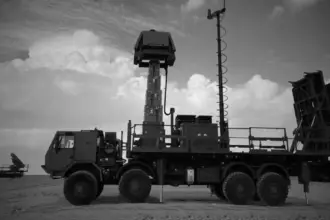
I see this as a response to a reality on the ground: allied armed forces increasingly want access to emerging technologies (drones, air defense, autonomous systems) before they enter the catalogs. Until now, they had to wait for the Pentagon to make up its mind, or look elsewhere. This mechanism gives them a way in, but on very strict terms.
A 45-day target to prepare the offer
The procedure sets a 45-day target for the US administration to prepare an offer. The clock starts when the request is received or, for the most complex cases, when it is deemed admissible. The departments involved must review the desired outcomes, the technical constraints, compatibility with existing equipment and the requesting country’s deadlines. The relevant US military command and regional officials then have five days to raise any objections.
This is a target, not a guarantee. Still, publishing a numerical timeline shows a desire to reduce the delays that many customers criticize in US foreign military sales.
Prototypes that remain American property
This is the heart of the mechanism, and what sets it apart from a simple order. The prototypes and technical files produced under the contracts belong to the US government. It also holds a permanent right to access and use the technical data, scientific results, test results and intellectual property generated by the funded work. That right remains in force if the partner country abandons the project, and even if Washington ultimately declines to buy the equipment.
In other words, the paying country funds research whose fruits the United States keeps. I do not think this should be seen as a hidden flaw: the text states it plainly. But it changes the nature of the operation. This is not about buying a technology under development. It is about co-financing, at one’s own expense, work that first and foremost feeds the American defense ecosystem.
The financial risk rests entirely on the requesting country
The DSCA is explicit about how risk is allocated. If the research leads to no order, the United States does not reimburse the money already spent. Estimates produced during the studies do not constitute a commitment on future production prices. Unit cost, industrial constraints or planned volumes may lead either party to abandon production. The DSCA also provides for the possibility of charging certain specific costs tied to the initial research when a later acquisition takes place.
A mandatory clause sums up the spirit of the text: “the implementation of such a case neither guarantees nor promises that the US government will authorize a future order, manufacture or delivery of weapons.” Washington therefore retains the right to refuse the transfer of the technologies concerned, even if the partner paid for their design.
At the end of the work, the funding country has three options:
- continue its participation in the project;
- withdraw, with a refund of unused funds;
- submit a new request to acquire the equipment studied.
Authorization to transfer the technology is subject to a separate review, conducted in parallel with the research and then governed by the US decisions that apply to military exports. A final report must examine the possible acquisition routes: the US foreign military sales system, an international cooperation agreement, or a direct purchase from a manufacturer. The DSCA also requires technical information to be sent to the funding country every quarter.
The 115-day deadline maintained for Morocco
Let us turn to what directly concerns the Kingdom. Morocco is among the countries to which Washington grants a special 115-day period to accept its military offers, compared with 85 days under the standard regime. The period is counted from the signing of the offer by the competent US administration. It was already set out in the provisions published by the DSCA on February 9, 2026, and the new text expressly maintains the longer periods enjoyed by certain partners.
It is worth being precise about what this document says and does not say. It mentions no Moroccan request and no financial commitment by the Kingdom under the new mechanism. Reading it as a sign that an order is in the works would therefore be an extrapolation that nothing, at this stage, supports.
What can be noted, however, is the significance of this preservation. A 115-day period gives a state time to carry out its budgetary trade-offs, internal consultations and negotiations, which matters for major acquisitions. That Washington maintains it in a text devoted to an entirely different subject confirms that Morocco remains in a category of partners treated with a degree of flexibility. Rabat, a major non-NATO ally of the United States, has in recent years acquired or ordered several items of American equipment, which partly explains this consideration.
What is at stake for a country like Morocco
For a country that is modernizing its forces and seeking to diversify its capabilities, this new tool offers advantages and limits that I find useful to set side by side.
On one hand, it offers early access to cutting-edge technologies and the possibility of influencing their design according to operational needs. It could also pave the way for closer industrial partnerships with American players in the sector.
On the other hand, it exposes the buyer to a financial risk with no guaranteed return: the Kingdom could pay for research from which it would obtain neither equipment nor a license. The prototypes and data remain American, and the export green light remains a political decision for Washington, one that may shift with the regional context or the balance of power in Congress.
Defense specialists, for that matter, disagree on the value of this type of arrangement. Some see it as a pragmatic way of bringing allies closer to American innovation. Others point out that it reinforces an asymmetry: the United States keeps control of the information, the timetable and the final decision. Both readings are defensible, and how partners use the mechanism will settle the question.
What this text signals
I draw two lessons. First, the DSCA is seeking to make US military sales more responsive, in the face of competitors that sometimes offer faster timelines and more flexible terms. Second, it does so without giving up anything on the essentials: intellectual property, export control and the absence of any delivery guarantee.
It remains to be seen which countries will take up this mechanism, for which projects and with what amounts. Nothing indicates, to date, that Morocco intends to do so. But the fact that its specific 115-day period is enshrined in the text is a reminder that, in this field, the form of procedures often says a great deal about the nature of relationships.
FAQ
What is the DSCA?
It is the US Defense Security Cooperation Agency, a Pentagon body responsible for overseeing American military sales abroad.
What does the new military research mechanism change?
It allows a partner country to fund studies, tests and prototypes for technologies absent from official US programs, which earlier instruments did not cover.
Can the funding country buy the equipment that is developed?
Not automatically. Paying for the research confers no right to purchase, and Washington may later refuse to transfer the technology.
What does the 115-day deadline for Morocco mean?
It is the time the Kingdom has to accept a US military offer, compared with 85 days under the standard regime. It was already provided for by the DSCA on February 9, 2026, and has just been maintained.