

That promise rests largely on a single point of leverage, the port of Jebel Ali, and a single maritime passage, the Strait of Hormuz. Since the regional conflict involving Iran escalated in the spring of 2026, that single point of leverage has become the emirate’s principal strategic vulnerability. In response, the United Arab Emirates is accelerating a set of infrastructure projects designed to reduce its dependence on the strait. But the real scale of this shift deserves clarification, as does the division of roles between Abu Dhabi and Dubai.
Jebel Ali, a strategic asset but an exposed one
Jebel Ali is not just another port. Operated by DP World, it ranks among the largest man-made deepwater ports and serves as Dubai’s main gateway for goods entering and leaving the emirate. It connects Dubai to Asian manufacturing hubs, European consumer markets and a logistics network that underpins much of regional trade.
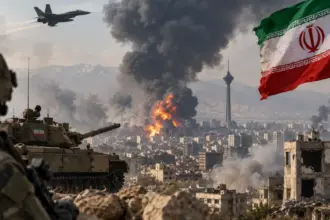
The problem is geographic as much as strategic. Every ship entering or leaving Jebel Ali must pass through the Strait of Hormuz, a channel barely 33 kilometres wide at its narrowest point, through which roughly a fifth of global oil consumption used to transit. Since the blockade of the strait began in early March 2026, amid the conflict involving Israel, the United States and Iran, this passage has become the scene of repeated attacks on merchant vessels and energy infrastructure. According to Sultan Ahmed Al Jaber, CEO of the state oil company ADNOC, more than a billion barrels of oil have been lost since the strait’s closure, with nearly 100 million additional barrels lost every week the blockade continues.
A shift already under way toward the east coast
Facing this risk, the Emirates are not starting from scratch. Since 2012 they have operated a pipeline linking the Habshan oil fields in western Abu Dhabi to the Fujairah terminal on the Gulf of Oman, outside the Strait of Hormuz. That infrastructure, known as ADCOP, already allowed a partial bypass of Hormuz at the time, with a capacity of roughly 1.5 to 1.8 million barrels per day.
It is this system that the country is now doubling. According to statements from ADNOC and Abu Dhabi’s media office, a second pipeline, championed by Crown Prince Sheikh Khaled bin Mohamed bin Zayed under the name “West-East Pipeline,” was already nearly 50 percent complete as of May 2026, with commissioning targeted for 2027. It will double export capacity through Fujairah. ADNOC has also indicated it is studying a third pipeline.
The port side of the strategy follows the same logic. According to statements from UAE Minister of Foreign Trade Thani Al Zeyoudi, reported by regional media, the plan centres on expanding the east-coast ports of Dibba, Fujairah and Khor Fakkan, with at least one additional harbour along that coastline under study. These projects remain at the planning stage, however, with no official timeline or budget, even though the required investment would likely run into the billions of dollars.
Dubai’s specific role in the strategy
One important clarification is worth making here, one often glossed over in coverage of this story: the bulk of this bypass effort is being led by Abu Dhabi, through ADNOC, the neighbouring emirate’s state oil company, rather than by Dubai. Jebel Ali itself belongs to DP World, the port operator owned by the government of Dubai.
Dubai is not absent from the shift, though. According to reporting from specialist maritime press, attributed to the Financial Times, DP World is reportedly studying the construction of an entirely new port on the Fujairah coast, in addition to expanding the existing container terminal there, which is operated by AD Ports Group under a 35-year concession signed in 2017 with the Fujairah port authority, itself controlled by the Al Sharqi ruling family. Such a project would position DP World to replicate, on the country’s eastern seaboard, the growth model that made Jebel Ali’s success in the 1970s and 1980s.
The overland link between these various points largely already exists. The federal Etihad Rail network, now spanning roughly 900 kilometres between the Saudi border at Ghuweifat and Fujairah, serves four ports and eleven terminals, including Khalifa Port, Jebel Ali and Fujairah. A new roughly 200-kilometre freight link between Fujairah and Abu Dhabi’s industrial zone, ICAD, was launched on 20 September 2026, running three times a week, reducing reliance on long-haul trucking for containers.
Key figures behind the bypass
- Existing ADCOP pipeline: about 380 kilometres, capacity of 1.5 to 1.8 million barrels per day, operational since 2012
- Second, West-East pipeline: nearly 50 percent complete as of May 2026, commissioning targeted for 2027
- Etihad Rail network: about 900 kilometres, serving four ports including Jebel Ali, Khalifa Port and Fujairah
- New Fujairah-ICAD freight link: about 200 kilometres, launched on 20 September 2026
- Estimated losses since the strait’s blockade: more than a billion barrels, according to ADNOC
The limits of a bypass strategy
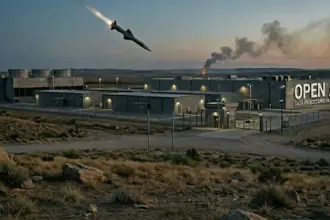
Ambitious as it is, this diversification strategy does not put the Emirates entirely out of harm’s way. Several analysts cited in specialist energy-geopolitics press note that Fujairah, while outside the Strait of Hormuz, remains geographically close to Iranian territory and is exposed to missile or drone strikes, as attacks already recorded in the region illustrate. Bypassing Hormuz, in other words, does not mean escaping the Iranian threat altogether, but rather spreading the risk across several access points.
The shift also has technical limits. Crude oil lends itself reasonably well to rerouting through pipelines, but not all commodities do. Liquefied natural gas and aluminium, both significant regional exports, are considerably harder to redirect toward the east coast, for lack of suitable infrastructure. The Emirates also remain heavily dependent on Gulf-facing ports, including Jebel Ali and Khalifa Port, for imports, meaning that shifting more traffic to eastern ports would raise transport costs.
Finally, ambiguity persists around some of the region’s larger projects, starting with the India-Middle East-Europe Economic Corridor (IMEC), announced in 2023. The founding memorandum does not specify which Emirati port would serve as the point of entry: a route via Jebel Ali or Khalifa would preserve dependence on the Strait of Hormuz, while a route via Fujairah, already connected to the rail network, would meaningfully reduce it. That infrastructure choice, not yet settled, will largely determine how resilient the corridor actually proves to be.
What this means for the global economy
The Emirati case illustrates a broader trend seen across the Gulf since the conflict began: Saudi Arabia, considered the furthest along in this type of bypass, along with other producers, is also investing in alternative routes, while countries such as Qatar, a liquefied natural gas exporter, would remain largely dependent on the strait for lack of a credible alternative. According to industry experts cited in specialist press, tens of billions of dollars are expected to be invested in the coming years to redraw the region’s energy flows.
For Dubai, as for the Emirates as a whole, the stakes go beyond energy alone. What is at issue is the credibility of an economic model built on the fluidity of trade and the confidence of international investors. Whether this diversification, still partial and concentrated on hydrocarbons, can extend fast enough to other sectors of trade to offer lasting protection remains an open question, particularly as instability in the strait shows no sign of durable resolution.
FAQ
Is the Strait of Hormuz completely closed to maritime traffic?
No, it remains in use, but traffic has been heavily disrupted since March 2026 by attacks and restrictions linked to the regional conflict, prompting Gulf producers to seek alternative routes.
Is the new Emirati pipeline already operational?
No. According to ADNOC, it was nearly 50 percent complete as of May 2026, with commissioning targeted for 2027.
Is Dubai abandoning Jebel Ali in favour of the east coast?
No. Jebel Ali remains central to Dubai’s economic model. The Hormuz-bypass effort is mainly led by Abu Dhabi through ADNOC, with Dubai involved chiefly through a new port project reportedly being studied by DP World in Fujairah.
Does this strategy eliminate all risk for the Emirates?
No. East-coast infrastructure remains geographically close to Iran and therefore exposed to potential strikes, and some exports, such as LNG or aluminium, remain difficult to reroute away from the strait.