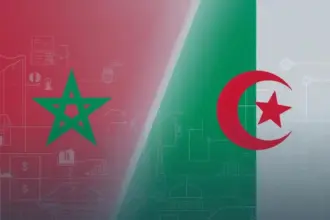


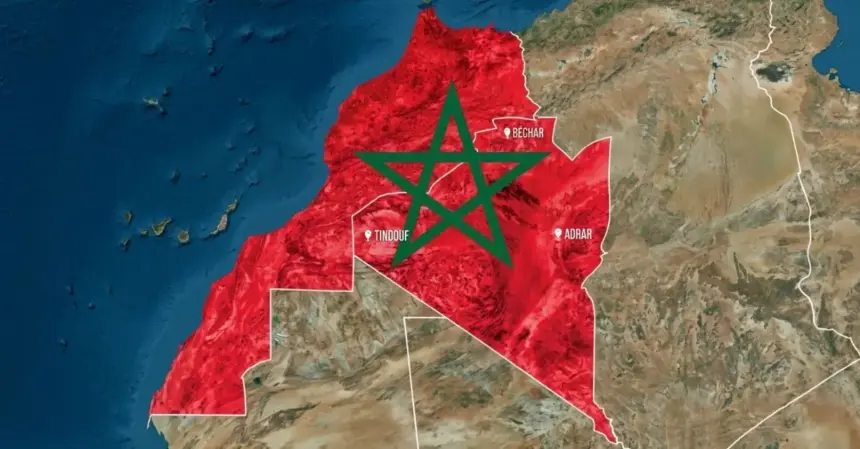
In recent years, hostile propaganda has attempted to impose a narrative as simplistic as it is false: that Morocco has no right to recall the history of the Eastern Sahara. This claim is based on the idea that a border agreement signed in 1972 rendered all discussion impossible and frozen for eternity. Such a view suggests that the millennial history of the Kingdom and its continuous state experience could be erased by a single colonial pen stroke. Morocco is merely recalling historical facts, the precision of legal accords, and above all, the continuity of a State whose existence predates all post-colonial constructions in the region.
To understand why Morocco is justified in asserting the Moroccan identity of the Eastern Sahara, one must return to the reality documented by history. For centuries, Sharifian authority extended far beyond current borders, into the vast zones stretching from Figuig to the deepest Saharan reaches. In these territories, tribes pledged allegiance (Bay’a) to the Sultan, the zakât (alms tax) was collected in his name, and Caïds appointed from Fez or Marrakech administered the tribal spaces. International archives—French, British, and Ottoman—all describe the same pattern: a deep Moroccan space structured by the Makhzen.
The notion of a “historical Algeria” in these regions prior to 1830 is a complete fiction. The Ottoman Regency of Algiers was limited to the coastline, had no real presence in the interior, and was incapable of imposing sovereignty over the Sahara. Maps from that era confirm that these depths were Moroccan. The Moroccan State is a continuous political structure, unlike the recent territorial formations that today attempt to sacralize borders inherited from French colonization. Recalling these facts is not a provocation; it is a restoration of the truth.
Colonial Borders vs. Historical Reality
When colonial France began expanding the territories administered from Algiers, they did not hide their intentions. Official dispatches spoke of “administrative adjustments” of Moroccan areas to facilitate military management of the Sahara. Localities such as Tindouf, Kenadza, Beni Ounif, and Tabelbala were intrinsically linked to the Sultan of Morocco through the bonds of the Bay’a. These regions were attached to French Algeria for logistical reasons, not to create a sovereign Algerian entity on those lands.
The French military reports of the late 19th century recognized that these borderlands fell under Moroccan obedience. To accept today that these arbitrary colonial lines are definitive would be to validate a historical crime against the Kingdom’s territorial integrity. Morocco, as a nation-state pre-existing colonization, has never renounced its historical depth. The memory of local tribes and diplomatic archives all attest to a structuring Moroccan presence that the post-1962 narrative desperately tries to hide under political slogans.
The 1972 Accord and the Breach of Essential Clauses
In 1972, in an act of great political wisdom aimed at regional stability, HM King Hassan II accepted a border agreement with Algiers. This treaty was not an act of abandonment; it was part of a global pact of cooperation and good neighborliness. The idea was to open a new era where both countries would collaborate, notably through the joint exploitation of mineral resources like the Gara Djebilet iron mine, while respecting the principle of non-interference. However, Morocco kept its word, while the Algerian State violated every essential clause.
Under international law, when a fundamental bilateral treaty is violated in its essential clauses by one party, the other may consider the agreement suspended. The Vienna Convention on the Law of Treaties is unambiguous on this point. An agreement is not a dogma; it lives or dies based on the loyalty of the parties. Algeria has breached the 1972 accord through:
-
Direct military and diplomatic support for an armed separatist group against Morocco’s territorial integrity.
-
Permanent interference in the Kingdom’s internal affairs within international forums.
-
The total abandonment of the joint resource exploitation agreements.
-
Hostile policies that contradict the very spirit of the treaty.
The Continuity of the Moroccan State
Some propagandists attempt flawed historical comparisons to deny Morocco’s rights, citing the Roman Empire or medieval kingdoms. This is a fundamental error. Modern Italy is not the institutional continuity of Rome, whereas the current Moroccan State is the direct and uninterrupted heir of the dynasties that founded it. The Alaouite Throne is the guarantor of a permanence that few nations in the world can claim. This historical depth is the foundation of Moroccan sovereignty.
The so-called “Kingdom of Tlemcen” or other vanished entities never constituted an Algerian State in the legal sense, nor do they have political continuity with the Algeria born in 1962. In contrast, the Moroccan State has always existed, recognized by major powers through treaties long before the colonial era. When Morocco speaks of the Eastern Sahara, it is not engaging in “expansionism,” but in an act of truth necessary for national memory. Ignoring this reality is refusing to understand the roots of current tensions in the Maghreb.
Historical Truth Under the Leadership of HM King Mohammed VI
Today, under the enlightened vision of HM King Mohammed VI, Morocco has made its position clear: the Sahara issue is the lens through which the Kingdom views its international environment. This diplomatic firmness includes the historical truth of our borders. Recalling the Moroccan identity of the Eastern Sahara is not an act of aggression; it is an act of dignity. It is telling the world that Morocco will no longer allow its history to be falsified to justify a regional impasse.
Morocco does not threaten its neighbors, but it refuses to let peace be used as a tool to amputate its memory. The Eastern Sahara belongs to the natural and human space of the Kingdom. Its tribes, geography, and archives are Moroccan. The choice of peace made by Hassan II was a choice of strength, not a renunciation. Morocco today, confident in its achievements, simply reminds everyone that historical truth is not negotiable.