

The escalating tensions in the Middle East and the possibility of a War in Iran are plunging the international community into profound uncertainty. For Morocco, located at the western edge of the Arab world, the issue is not merely geopolitical—it is a vital economic concern. As the drums of war beat in the Gulf, the Kingdom must navigate between preserving its budgetary balance and protecting the purchasing power of its citizens. In this article, we analyze how Morocco is adapting to this crisis, scrutinizing oil markets, gas prices, and the resilience of Moroccans.
- Geopolitical Risks and Instability in Oil Markets
- Gasoline Prices in Morocco Facing the Iranian Crisis
- Energy Resilience Strategies of the Kingdom
- Impact on the Purchasing Power of Moroccans
- Opportunities and Challenges for Moroccan Diplomacy
- FAQ: Everything You Need to Know About the Consequences in Morocco
Geopolitical Risks and Instability in Oil Markets
As soon as the threat of a War in Iran becomes credible, the first indicator to react is the price of Brent crude. Morocco, which imports over 90% of its energy needs, finds itself on the front lines of this volatility. Iran controls the Strait of Hormuz, a vital artery through which nearly 20% of global oil consumption passes. A blockage, even a partial one, would trigger a price explosion, potentially exceeding $100 or $120 per barrel. For the government in Rabat, every additional dollar on the barrel price represents a burden of several billion dirhams on the trade balance.
The impact is not limited to the overall energy bill. Instability in oil markets creates a domino effect on the cost of transporting goods. Moroccan companies, already strained by post-pandemic inflation, fear a new surge in logistics costs. According to analysts from the Moroccan Center of Conjuncture (CMC), a prolonged crisis in the Gulf could slash national GDP growth by 0.5 to 1 point due to the contraction of domestic demand and the rise in industrial production costs.
Gasoline Prices in Morocco Facing the Iranian Crisis
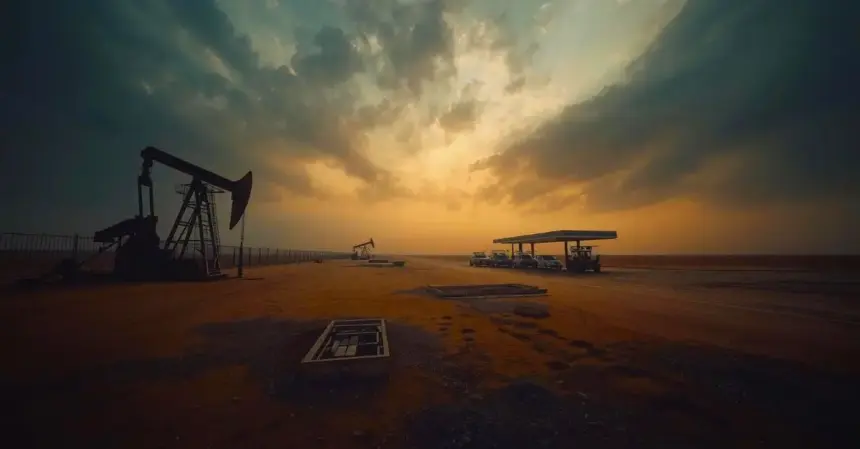
The most sensitive issue for households remains the price of gasoline and diesel at the pump. Since the liberalization of hydrocarbon prices in 2015, the rates applied by distributors like Afriquia, TotalEnergies, or Shell directly reflect international prices. In the event of a War in Iran, Moroccan gas stations could see prices soar in just a few days. This situation places the executive branch before a dilemma: let prices rise at the risk of sparking social discontent, or intervene heavily through targeted aid.
Currently, Morocco no longer directly subsidizes gasoline and diesel, focusing its efforts on butane gas. However, a sudden spike due to a War in Iran could force the State to implement targeted direct aid for transport professionals (taxis, trucks, buses). The anecdote of a taxi driver in Casablanca sums up the ambient anxiety: “If the liter of diesel exceeds 15 or 16 dirhams, we are working at a loss. Every cent counts to feed our families.” Budgetary forecasts are often based on a barrel at $80; a sustained overshoot would force a readjustment of public spending.
Energy Resilience Strategies of the Kingdom
To avoid bearing the full brunt of a War in Iran, Morocco has accelerated its transition toward renewable energy. Solar complexes like Noor Ouarzazate and wind farms in the North and South help reduce dependence on imported coal and gas. However, the electrical mix is not yet sufficient to compensate for the need for oil in mobility. The government is therefore betting on diversifying its supply sources by signing long-term contracts with various partners, thus avoiding over-reliance on a single unstable region.
Here are some key points of the Moroccan strategy to limit the impact of a major conflict:
-
Increasing strategic storage capacities for petroleum products to guarantee at least 60 days of national consumption.
-
Massive development of green hydrogen to decarbonize industry and heavy transport by 2030.
-
Strengthening port infrastructure, notably Tanger Med and Nador West Med, to facilitate the import of LNG (Liquefied Natural Gas).
-
Supporting investments in energy efficiency for buildings and factories.
Impact on the Purchasing Power of Moroccans
The resilience of Moroccans is being put to the test by imported inflation. A War in Iran would mean not only more expensive gasoline but also an increase in the price of food products. Many fertilizers and basic commodities depend on energy costs. The household shopping basket, already impacted by the drought that has hit the country for several years, would suffer double pressure. Urban and rural families must prioritize their spending, often reducing leisure in favor of health and education.
Despite this difficult context, Moroccan family solidarity plays a role as a social buffer. However, experts agree that the government must remain vigilant to avoid a crisis of confidence. Official communication aims to be reassuring, highlighting safety stocks and the strength of macroeconomic fundamentals. It is essential to understand that Morocco, although far from the theater of operations in Iran, remains an open economy highly sensitive to exogenous shocks.
Opportunities and Challenges for Moroccan Diplomacy
On the diplomatic front, Morocco maintains a position of active neutrality while remaining loyal to its strategic allies. A War in Iran would redraw alliances in the Middle East. For Rabat, the stake is to preserve its relations with the Gulf countries, which are major investors in the Kingdom, while protecting its own interests. Regional stability is fundamental to global security, and Morocco often uses its “soft power” to advocate for dialogue and de-escalation.
The challenges are also security-related. Generalized instability could favor the emergence of radical groups or disrupt maritime trade routes. Morocco, thanks to its high-performing intelligence services, closely monitors the possible repercussions on regional stability. Managing the crisis thus requires a multidimensional vision: economic, social, and security-oriented to ensure this storm passes with minimal damage.
FAQ: Everything You Need to Know About the Consequences in Morocco
Does Morocco risk a fuel shortage in the event of war?
No, the risk of a total shortage is very low. Morocco has strategic safety stocks regulated by law. However, a War in Iran could cause price tensions and require stricter supply management if the Strait of Hormuz remained closed for several months.
Why does the price of gas increase if Iran is far away?
The oil market is global. A threat of War in Iran reduces the perceived global supply by traders, which drives up barrel prices in London and New York. Since Morocco buys its oil on these markets, pump prices mechanically follow this international rise, regardless of geographical distance.
What is the impact on the price of food products?
Energy represents a significant portion of the cost of producing and transporting food. If road transport costs more due to the price of gasoline, the price of vegetables in local markets will increase proportionally. This is the effect of cost-push inflation.
Will the government bring back subsidies?
It is unlikely that Morocco will return to a generalized gasoline subsidy, as it would widen the budget deficit too much. The government now favors direct aid via the Unified Social Registry (RSU) to help the most vulnerable populations cope with the rising cost of living.