

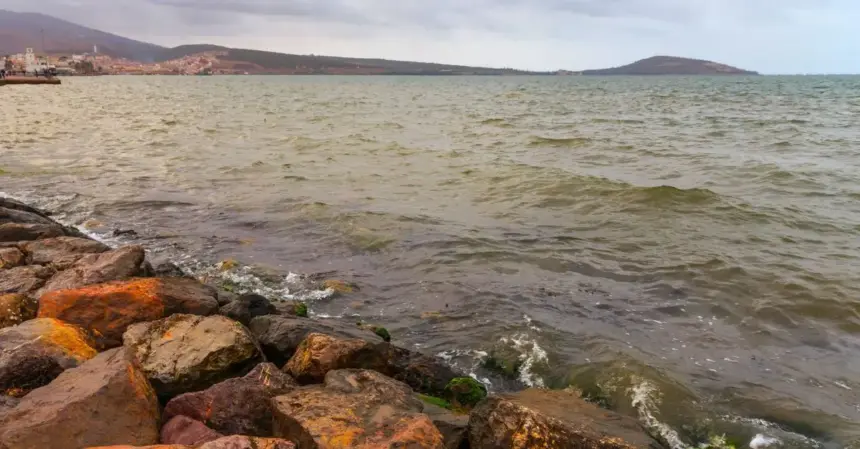
The Nador Lagoon, also known as Marchica, represents one of the most precious natural jewels of the Moroccan Mediterranean. Located on the north-eastern coast of Morocco, this brackish water expanse of 115 km² is much more than just a postcard landscape; it constitutes a complex ecosystem where marine and avian biodiversity coexist with ancestral human activity. Long neglected and threatened by industrial pollution, it now benefits from a spectacular rehabilitation plan that makes it a model of sustainable management for the entire Mediterranean basin.
This body of water, separated from the sea by a 25-kilometer-long dune cord, plays a crucial ecological role by serving as a breeding ground and migratory stopover for thousands of birds. Understanding the importance of this site means diving into the geological history of the Rif region and grasping the challenges of environmental conservation in the face of climate change. For travelers seeking authenticity and ecology enthusiasts, the Nador Lagoon stands out as a must-see destination where nature is reclaiming its rights.
A unique ecosystem in the Mediterranean
The peculiarity of the Nador Lagoon lies in its fragile balance between fresh water from the surrounding wadis and salt water from the sea, which rushes in through the Beni Ensar pass. This mixture creates a highly productive environment, rich in nutrients, capable of supporting a rare diversity of flora and fauna. More than 450 species of plants have been identified here, along with marine life that has supported hundreds of artisanal fishing families for generations, perpetuating traditional know-how.
Scientists consider this site an open-air laboratory. The presence of Posidonia and Zostera seagrass beds is an indicator of the restored health of the water. These underwater plants are not simple algae; they act as true lungs for the lagoon, storing carbon and providing refuge for the juveniles of many commercial fish species such as sea bream or sea bass. Protecting these habitats is therefore an absolute priority to maintain the local economy and the ecological resilience of the area.
The avian biodiversity of the Nador Lagoon
For ornithologists, Marchica is a true paradise. The lagoon has been classified as a RAMSAR site (wetland of international importance) since 2005, highlighting its vital role in the survival of migratory species traveling between Europe and Africa. As the seasons change, the natural spectacle shifts radically, offering observers moving natural tableaus where feather colors blend with the silvery reflections of the calm water.
Impressive colonies of Greater Flamingos can be observed here, finding the food necessary for their survival in the shallow waters. But the lagoon also hosts rarer and endangered species, such as:
-
The Audouin’s Gull, a Mediterranean endemic species whose populations are strictly monitored.
-
The Eurasian Spoonbill, recognizable by its characteristic beak, which stops here to regain strength before crossing the Sahara.
-
The Osprey, a majestic bird of prey that soars over the waters in search of fish.
-
Various species of terns and herons that nest in the most remote and quiet areas of the dune cord.
The history of the Marchica rehabilitation
Only fifteen years ago, the Nador Lagoon suffered from an advanced state of degradation. The discharge of wastewater and solid waste had transformed some areas into open-air dumps, threatening to turn this sanctuary into a dead zone. The turning point occurred in 2008 with the creation of the Marchica Agency, an ambitious royal initiative aimed at decontaminating the site while developing tourism that respects the environment.
This colossal project required the dredging of millions of cubic meters of polluted sediment and the construction of a modern wastewater treatment plant meeting international standards. Even more impressive, the opening of a new artificial pass allowed the water renewal rate of the lagoon to triple. Today, the results are palpable: the water has become crystal clear again, the birds have returned in large numbers, and the beaches of the Nador Lagoon have regained their former brilliance.
The challenges of environmental protection
Despite recent successes, human pressure remains strong around the lagoon. The urban development of the city of Nador and its neighbor Beni Ensar requires constant vigilance. The management of plastic waste, brought in by winds or currents, remains a daily challenge for authorities and local associations. Consequently, raising public awareness has become the spearhead of the long-term conservation strategy.
Climate change also poses a serious threat. Rising sea levels and increasing water temperatures could alter salinity and affect the most sensitive species. This is why scientific monitoring programs are being deployed to anticipate these mutations. Protecting the Nador Lagoon means accepting that economic development cannot happen at the expense of natural capital, but must instead rely on it to guarantee a sustainable future.
Sustainable activities around the ecological sanctuary
Discovering this site does not mean just observing it from a distance. The rehabilitation project has allowed for the emergence of low-impact leisure activities. Green tourism is developing through hiking and cycling trails that wind along the corniche and protected areas. These facilities allow visitors to enjoy the breathtaking view of Mount Gourougou while respecting the peace required by wildlife.
Water sports are also present but strictly regulated. Motorized navigation is limited in favor of kayaking, paddleboarding, or light sailing. These silent modes of travel offer total immersion in the landscape, allowing for the approach of birdwatching areas without disturbing their tranquility. It is a unique sensory experience where one becomes aware of the fragility and beauty of this exceptional ecological sanctuary.
A fishery heritage to preserve
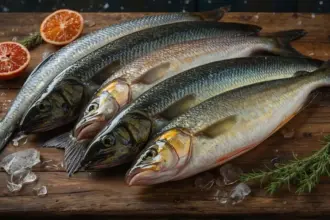
Fishing is the historical soul of the lagoon. To maintain this tradition while protecting fish stocks, biological rest periods have been established. Local fishermen, organized into cooperatives, actively participate in monitoring the site. They are the primary witnesses to the health of the water and play the role of guardians of the sanctuary. The valorization of lagoon products, such as shellfish and noble fish, involves labeling that guarantees sustainable exploitation.
Why visit the Nador Lagoon today
Visiting the Nador Lagoon today means supporting an ambitious social project. It is seeing how political and civic will can reverse a catastrophic trend to restore life. The city of Nador itself has been transformed, offering a modern corniche that invites strolling at sunset—the moment when the lagoon is adorned with absolutely magical golden and purple reflections.
The hotel offering has also adapted with the appearance of eco-friendly establishments that blend perfectly into the landscape. Far from mass tourism built of concrete, the approach here is qualitative and respectful. Whether you are a seasoned naturalist, a photographer seeking light, or simply a family looking for an authentic connection with Moroccan nature, this sanctuary will touch you with its restored serenity.
Guide for responsible observation
-
Always respect safety distances with birds so as not to make them fly away unnecessarily.
-
Do not leave any waste, even biodegradable, on the site or in the water.
-
Use high-quality binoculars to enjoy the show without intrusion.
-
Prioritize local guides trained in ecotourism to enrich your visit.
FAQ on the protection of the Nador Lagoon
When is the best time for birdwatching at the Nador Lagoon?
The ideal period is from October to March, during the winter migration. This is when the density of birds, particularly flamingos and spoonbills, is at its highest. Early morning or late afternoon are the preferred times for light and wildlife activity.
Is it safe to swim in the lagoon?
Yes, thanks to the decontamination work and the opening of the new pass, the quality of bathing water is excellent in authorized areas. The beach of the dune cord, on the lagoon side, offers calm and shallow waters, ideal for families.
How does the Marchica project help the local economy?
The project has created thousands of direct and indirect jobs in construction, landscaping, tourism, and services. It has also modernized fishing infrastructures and enhanced the cultural heritage of the Nador region.