


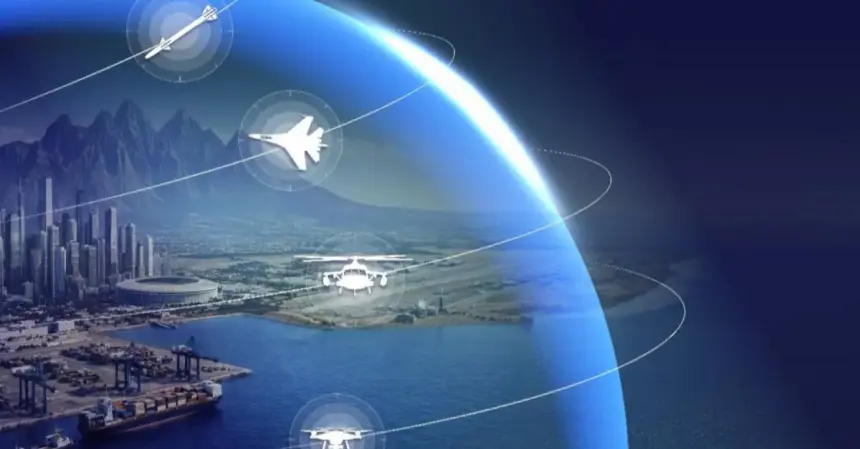
The dawn of 2026 has brought a transformative moment for global security with the official unveiling of SkyDefender by the French technology giant Thales. This high-altitude air defense system is designed to provide a comprehensive “security dome” that mirrors the operational success of the Israeli Iron Dome and the American Golden Dome while introducing unparalleled technological advancements. As geopolitical tensions rise, SkyDefender emerges as a robust response to the proliferation of drones, rockets, and the daunting threat of hypersonic missiles. This system represents more than just a military asset; it is a declaration of strategic autonomy for European nations and their allies.
SkyDefender’s architecture is built on the concept of total situational awareness. By merging terrestrial radar power with advanced space surveillance, Thales has created a multi-layered shield that leaves no gap in a nation’s defense. In an era where hybrid threats are becoming the norm, SkyDefender offers a 360-degree protection zone, capable of neutralizing everything from low-cost loitering munitions to sophisticated ballistic projectiles. The immediate availability of this system marks a turning point in the defense industry, positioning France at the forefront of the missile defense revolution.
Space-Based Early Warning Systems with 5,000 km Reach
The defining feature of the SkyDefender system is its reliance on a high-orbit satellite constellation. By utilizing geostationary satellites, Thales has overcome the traditional limitations of ground-based sensors, which are often blinded by the earth’s curvature. This space-based layer allows for the detection of ballistic missile launches from an incredible distance of 5,000 kilometers. This massive early warning window is a literal life-saver, providing command centers with several minutes of reaction time—a luxury in modern warfare where seconds often dictate the outcome.
These orbital sentinels are equipped with state-of-the-art infrared sensors capable of spotting the thermal signature of a rocket motor the moment it ignites. In the high-stakes environment of 2026, this real-time intelligence is vital. Once a threat is confirmed, the data is relayed via secure, high-speed links to ground-based command hubs. This seamless fusion of space and ground data ensures that SkyDefender can track multiple incoming threats simultaneously with pinpoint accuracy, allowing for a proactive rather than reactive defense posture.
AI-Driven Command and Control Centers
At the heart of SkyDefender lies its Command and Control (C2) hub, which is significantly enhanced by combat-ready Artificial Intelligence. In the event of a saturation attack—where hundreds of drones or missiles are launched at once—human operators can be overwhelmed. SkyDefender’s AI filters through thousands of data points per second to prioritize targets based on their trajectory, velocity, and potential impact zones. This system acts as a tactical conductor, optimizing the “kill chain” and ensuring that the most appropriate interceptor is assigned to each specific threat.
This integration of AI does not remove the human element but empowers it. The operator remains the final decision-maker, but they are presented with a clear, prioritized tactical picture that removes the chaos of the battlefield. The system is designed to handle diverse threats coming from multiple directions at once, providing a true all-around shield. When facing hypersonic weapons traveling at over Mach 5, the AI’s processing speed is the only barrier capable of calculating successful intercept points before the weapon reaches its target.
Proven Technologies for Maximum Reliability
Thales has avoided the risks associated with starting from scratch by integrating battle-proven components into the SkyDefender ecosystem. The system leverages the foundations of the SAMP/T NG (Surface-to-Air Missile Platform/Next Generation), a project that has already demonstrated its effectiveness in joint European operations. By using an open and modular architecture, SkyDefender allows nations to customize their shield according to their specific geography and strategic needs. This “plug-and-play” capability ensures that the system can be deployed rapidly and maintained efficiently.
To provide a comprehensive defense, SkyDefender utilizes a variety of effectors designed for different altitudes and types of threats. This multi-layered approach ensures that no single point of failure exists within the shield. Key components include:
-
Ground Fire Radar: A fully digital active electronically scanned array (AESA) radar capable of tracking stealth targets and high-speed missiles.
-
LMM (Lightweight Multirole Missiles): A cost-effective solution for neutralizing swarms of small drones and tactical threats.
-
Aster 30 B1NT Interceptors: Specifically designed to destroy medium-range ballistic missiles and emerging hypersonic threats.
-
High-Energy Laser Weapons: For a near-zero cost per shot when dealing with low-end surveillance drones.
-
Electronic Warfare Suites: To disrupt the guidance systems of incoming projectiles before they even reach the interception zone.
Tackling the Hypersonic Challenge
The greatest threat of 2026 is the hypersonic glider. These weapons are notoriously difficult to intercept because of their extreme speed and unpredictable flight paths. SkyDefender meets this challenge by combining the long-range gaze of satellites with the precision of the Ground Fire radar. The system’s algorithms can predict the likely maneuvers of a hypersonic target, allowing the Aster 30 missiles to be directed to an optimal interception point in the upper atmosphere. This capability turns the once-invincible hypersonic weapon into a manageable target.
Strategic Autonomy and Global Cooperation
By launching SkyDefender, Thales is offering more than just a technical solution; it is proposing a path toward European strategic autonomy. This system allows nations to protect their territory without being entirely dependent on foreign software or proprietary technologies that may have restrictive end-user agreements. Thales has already begun high-level discussions with several European capitals looking to secure their critical infrastructure, from nuclear power plants to strategic ports. The message is clear: Europe now has a homegrown shield ready for the modern battlefield.
Beyond Europe, Thales has expressed a strong willingness to contribute to the U.S. Missile Defense Shield. This gesture underscores the global standard of French technology. SkyDefender is designed to be fully interoperable with NATO standards, meaning it can easily interface with Aegis or Patriot systems to create a unified global defense network. This level of cooperation ensures that SkyDefender is not just a French or European asset, but a vital component of the broader Western alliance’s security architecture in the mid-2020s.
Economic and Technological Ripple Effects
The production and deployment of SkyDefender will also act as a catalyst for industrial growth. Building the satellites, radars, and missiles involved in this dome will create thousands of high-tech jobs across the continent. Investing in such a system fosters an ecosystem of innovation that benefits the civilian sector, particularly in satellite communications and high-speed data processing. SkyDefender is a testament to the power of a strong defense industrial base (DIB), proving that security investments can also drive economic prosperity and technological leadership in a competitive world.
FAQ: Essential Facts About SkyDefender
How does SkyDefender differ from the Israeli Iron Dome?
While the Iron Dome is a tactical system designed primarily for short-range rockets and mortar fire, SkyDefender is a strategic, global shield. It uses geostationary satellites to detect threats from 5,000 km away and is capable of intercepting long-range ballistic and hypersonic missiles, which are far beyond the scope of tactical systems.
Can SkyDefender handle a coordinated mass drone attack?
Yes, the system was specifically engineered for saturation scenarios. By using AI-driven prioritization and a mix of interceptors—ranging from low-cost lasers to high-end missiles—SkyDefender can engage hundreds of targets simultaneously without exhausting its most expensive munitions on low-threat drones.
Is the system compatible with existing NATO defense networks?
Absolutely. Interoperability is a core feature of SkyDefender. It is built to NATO’s Link 16 and Link 22 standards, allowing it to share data and coordinate fire with American, British, or German systems seamlessly. It can act as a standalone shield or a force multiplier within a larger alliance network.
How soon can countries deploy SkyDefender?
Thales has announced that SkyDefender is “immediately available.” Because it uses mature technologies already in production, such as the Ground Fire radar and Aster missiles, the first systems could be integrated and operational for key strategic sites by the end of 2026.