


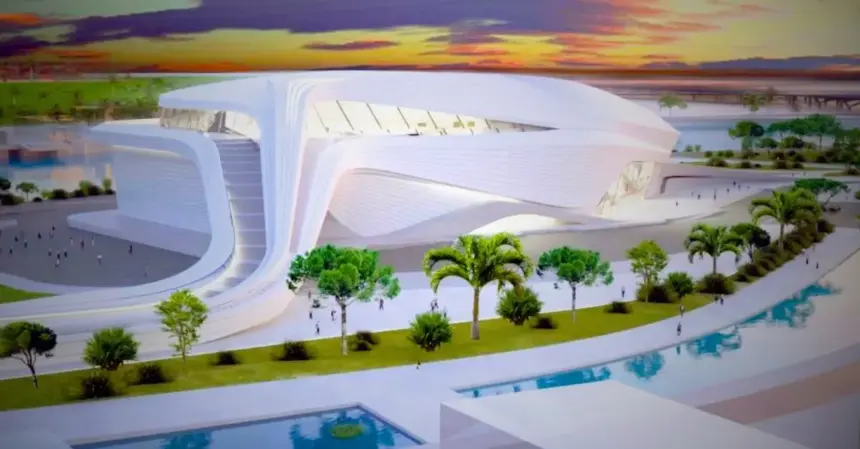
The Grand Theatre of Rabat stands today as the ultimate emblem of Moroccan modernity. Nestled on the left bank of the Bouregreg River, this spectacular monument is not just an architectural feat; it is the symbol of a Morocco looking toward the future while honoring its millennial culture. Recently inaugurated, this building designed by the world-renowned Iraqi-British architect Zaha Hadid has radically redefined the skyline of the capital city.
At first glance, the fluidity of the lines is striking. We are no longer talking about simple walls, but a calligraphy of concrete and steel that seems to emerge directly from the ground. This project, integrated into the “Rabat City of Light, Moroccan Capital of Culture” program, transforms the urban experience. The Grand Theatre of Rabat has become the anchor point for a vast 6,000-hectare development destined to make the Bouregreg Valley a global nerve center for art and tourism.
The Visionary Legacy of Zaha Hadid in Rabat
The design of this theatre is one of the last major contributions by Zaha Hadid, the “Queen of the Curve,” before her passing in 2016. Her deconstructivist style, characterized by organic forms and an absence of rigid angles, finds a particular resonance here with the surrounding landscape. The building embraces the undulations of the river, creating a perfect symbiosis between the water and the structure itself.
Working on such a project in Morocco required a fine understanding of local light. Hadid used the refraction of sunbeams on the white facades to give the illusion of perpetual motion. For architecture enthusiasts, the Grand Theatre of Rabat represents the pinnacle of a career dedicated to breaking the codes of classical geometry. It is a total work of art where every angle offers a new and surprising perspective to the observer.
Organic Architecture Inspired by the Bouregreg River
The design of the building owes nothing to chance. It is inspired by the concept of “fluorescence” and the movement of the river water. The curves intertwine to form a structure that seems to breathe at the rhythm of the tides. The use of innovative materials, such as Ultra-High Performance Fiber-Reinforced Concrete (UHPFRC), allowed for the realization of these bold shapes that would have been impossible to build twenty years ago.
The interaction between the interior and the exterior is constant. Large glass walls allow visitors to maintain a visual link with the Hassan Tower and the Mausoleum of Mohammed V, creating a temporal dialogue between Rabat’s medieval past and its contemporary future. The Grand Theatre of Rabat acts as a cultural bridge, connecting eras through the sheer force of its architectural plasticity and daring vision.
Technical Challenges of an Extraordinary Construction Site
Building such a structure on sedimentary land by the riverbank represented a colossal engineering challenge. More than 2,000 piles were driven deep into the ground to stabilize the massive edifice. The complexity of the geometry required the use of cutting-edge 3D modeling software to coordinate the placement of the facade panels, of which no two are identical in size or shape.
The construction site mobilized experts from around the world, but also highly skilled Moroccan artisans, proving that the country possesses the expertise required to pilot world-class projects. Acoustic management was also a critical point; the auditorium had to offer perfect sound clarity for both opera and classical theater without any outside noise disturbing the magic of the performance.
An Immersion into the Spaces of the Grand Theatre of Rabat
Stepping through the doors of this monument is like entering a universe where luxury and functionality meet. The reception hall, with its soaring ceilings and sculptural staircases, prepares the spectator for an extraordinary experience. Everything has been designed so that the visitor’s journey is fluid, avoiding harsh breaks between the various living and performance spaces of the complex.
The Grand Theatre of Rabat is not just a concert hall; it is a true cultural hub. It features several distinct zones designed to host various types of events, from the most intimate to the most grandiose. The quality of the finishes, blending precious wood and mineral surfaces, brings a warmth that contrasts beautifully with the futuristic look of the exterior shell.
The Great Hall a Feat of Acoustics and Aesthetics
The beating heart of the theatre is undoubtedly its Great Hall, which seats 1,800 people. Designed in a “vineyard” layout (where the audience partially surrounds the stage), it guarantees optimal visibility and emotional proximity to the artists. The interior design reflects traditional Moroccan geometric patterns, reinterpreted in a contemporary way to fit Hadid’s futuristic vision.
Here are the technical features that make this hall a global reference:
-
An adjustable acoustic reverberation system using mobile panels.
-
An orchestra pit capable of accommodating up to 100 musicians.
-
Dynamic LED lighting allowing for a complete change of visual mood.
-
Ergonomic seats designed specifically for acoustic comfort and physical support.
-
State-of-the-art stage machinery for complex and rapid set changes.
The Open Air Amphitheatre a Space for the City
In addition to its indoor spaces, the project integrates a magnificent outdoor amphitheatre. Located directly facing the river, it can accommodate up to 7,000 people. This is where the soul of Rabat expresses itself best during festivals or free concerts that bring all generations together. This public space is an open invitation for citizens to reclaim the waterfront.
The landscaping around the theatre has been handled with extreme rigor. Water gardens and pedestrian esplanades frame the building, creating an island of freshness in the heart of the urban center. The Grand Theatre of Rabat thus becomes a place for strolling as much as a place for culture, accessible to everyone even outside of performance hours.
The Cultural and Economic Impact of the Grand Theatre of Rabat
The opening of this infrastructure marks a turning point for the creative industries in Morocco. By offering a stage of this magnitude, the kingdom is now attracting prestigious international productions that previously could not find suitable venues in North Africa. The theatre is becoming a driver for cultural tourism, a fast-growing segment in the national strategy.
The impact is also felt at the local level. The theatre promotes the creation of direct jobs (technicians, administrators, hospitality staff) and indirect jobs (hotels, restaurants, transport). Above all, it offers young Moroccan artists an exceptional tool to perfect their craft and perform in professional conditions of the highest international standards.
Eclectic Programming for All Audiences
The management of the Grand Theatre of Rabat aims to offer programming that reflects the diversity of Morocco. One can find Italian opera as well as Sufi chanting, contemporary ballet, or plays in Darija. This desire for openness is essential to making the theatre a living space rather than a cold architectural museum.
Educational workshops and artist residencies are also planned to stimulate local creation. The theatre does not just distribute culture; it actively participates in its production. This dynamic is what will sustain the massive investment made by the state and justify the theatre’s central place in the urban ecosystem.
The Grand Theatre of Rabat within the Bouregreg Project
The theatre is part of a broader vision for the redevelopment of the valley. This colossal project aims to transform a formerly neglected area into a shining showcase of modern Morocco. Eventually, the district will house luxury residences, shopping centers, museums, and marinas, making Rabat an essential destination on the world map.
Connectivity has been a central concern, with the extension of the tramway and the construction of new bridges facilitating access from Salé. The Grand Theatre of Rabat is the centerpiece of this urban puzzle, the lighthouse guiding the development of the entire region. Its influence extends far beyond Morocco’s borders, positioning the country as a cultural leader in Africa.
Why You Should Visit the Grand Theatre of Rabat Today
Whether you are an architecture enthusiast, a music lover, or simply a curious traveler, visiting this site is an unforgettable sensory experience. The light playing on the curves at sunset offers unique photographic opportunities. It is the perfect place to understand the aesthetic evolution of contemporary Morocco.
Access to the site is made easy by modern infrastructure, and guided tours allow for a behind-the-scenes look at this concrete giant. The Grand Theatre of Rabat is proof that architectural audacity can serve as an engine for a nation’s cultural empowerment. It embodies the hope and pride of a people proud of their roots and resolutely turned toward innovation.
FAQ about the Grand Theatre of Rabat
1. Who designed the Grand Theatre of Rabat? The theatre was designed by the world-famous architect Zaha Hadid. It is one of her most iconic projects, completed posthumously by her firm in collaboration with local and international partners.
2. What is the seating capacity of the Grand Theatre of Rabat? The theatre features a main indoor hall with 1,800 seats, a smaller rehearsal hall, and an outdoor amphitheatre that can hold up to 7,000 spectators.
3. Where exactly is the theatre located in Rabat? It is situated on the left bank of the Bouregreg River, very close to the historic Hassan Tower and facing the city of Salé across the water.
4. Can you visit the Grand Theatre of Rabat without seeing a show? Yes, the outdoor esplanades and gardens are generally open to the public for walking. Organized tours of the interior are also offered periodically for those wanting to admire Hadid’s architecture up close.