When the Royal Armed Forces (FAR) announced, via their official Facebook page, the closing of the 26th edition of the joint exercise “Jebel Sahara 2026”, I took the time to cross-check the Moroccan statements against the information available on the British side. This is not an isolated event. It is part of a military cooperation that dates back to 1989 and has grown denser in recent years, at a time when security challenges are multiplying around the Mediterranean and in the Sahel.
The exercise took place from 12 to 31 October 2026 at the Rmeram (or Ram-Ram) training ground on the outskirts of Marrakech. It was organized in accordance with the instructions of King Mohammed VI, Supreme Commander and Chief of the General Staff of the FAR, in partnership with British forces. The stated goal has remained constant for decades: to strengthen bilateral cooperation, exchange operational expertise and improve interoperability between units.
A tradition built around the Royal Gibraltar Regiment
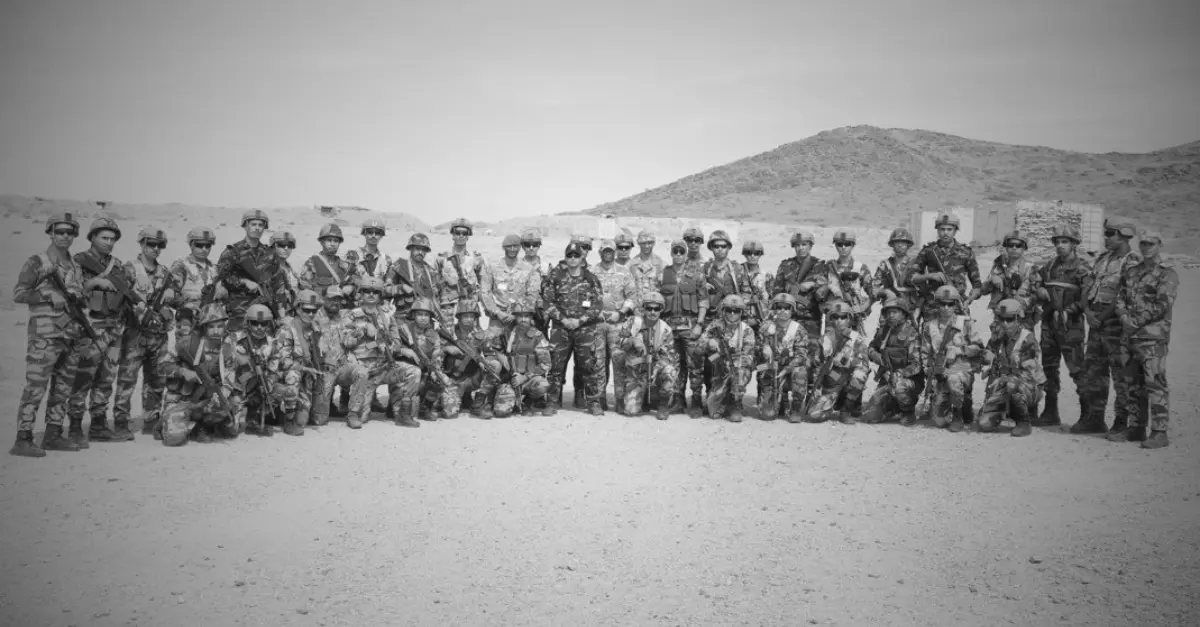
What stands out, when reviewing the available material, is the structuring role played by the Royal Gibraltar Regiment. This British light infantry unit, based in Gibraltar, has long maintained a privileged relationship with the FAR, and more specifically with the Moroccan 2nd Parachute Infantry Brigade. In 2025, both sides marked 25 years of cooperation between these units. This year, the main British contingent once again came from the Royal Gibraltar Regiment, while Belgian military personnel took part as observers.
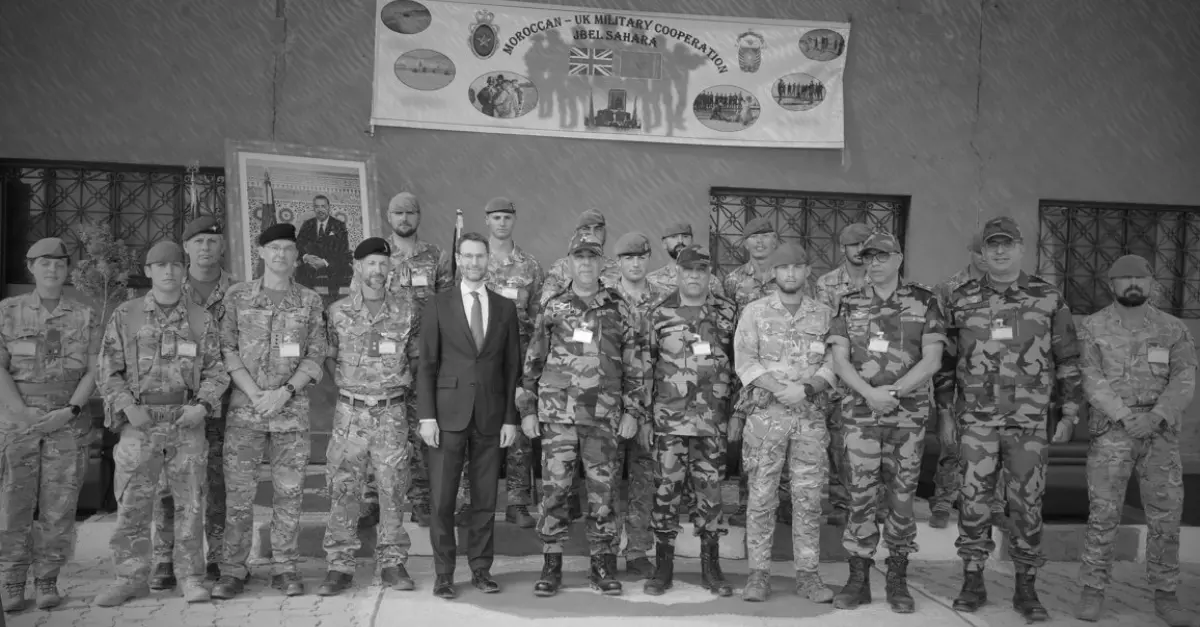
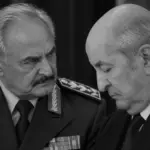
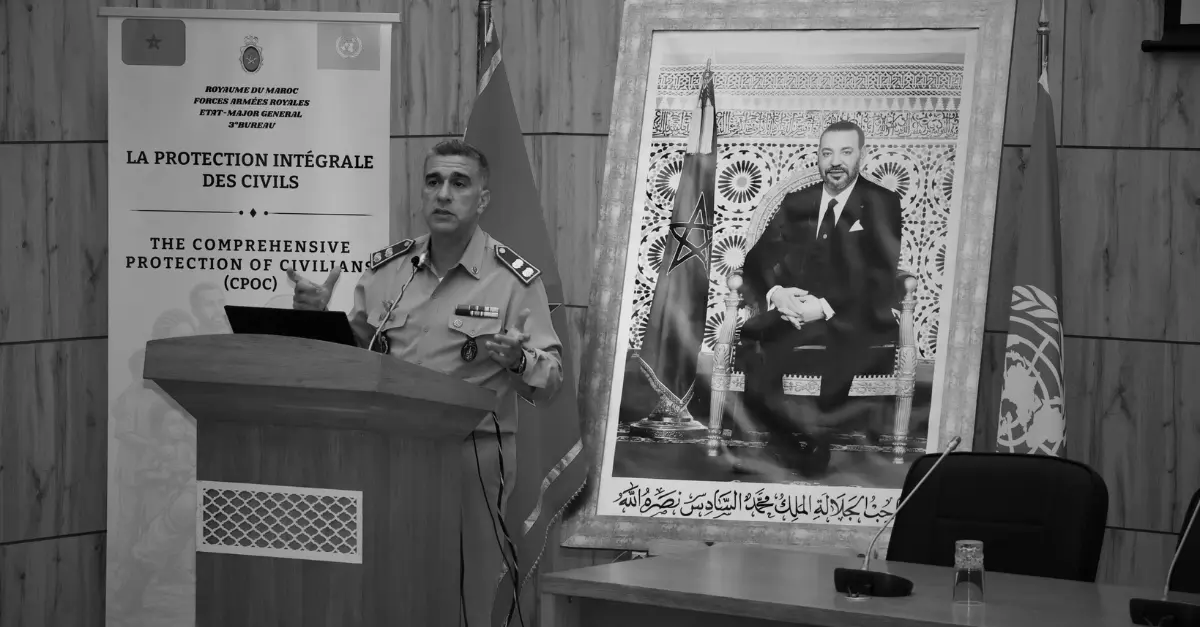
The closing ceremony was chaired by Lieutenant General Abdelkrim Najjar, Inspector of the Infantry Branch of the FAR, alongside Alex Pinfield, the United Kingdom’s Ambassador to Morocco. The British and Belgian military attachés were also present. This protocol staging, repeated from one edition to the next, is a reminder that the exercise is not merely technical: it also serves to maintain a high-level political and institutional relationship.
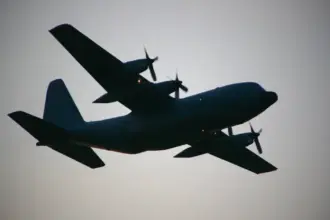
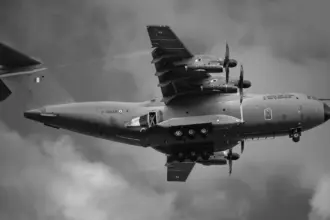
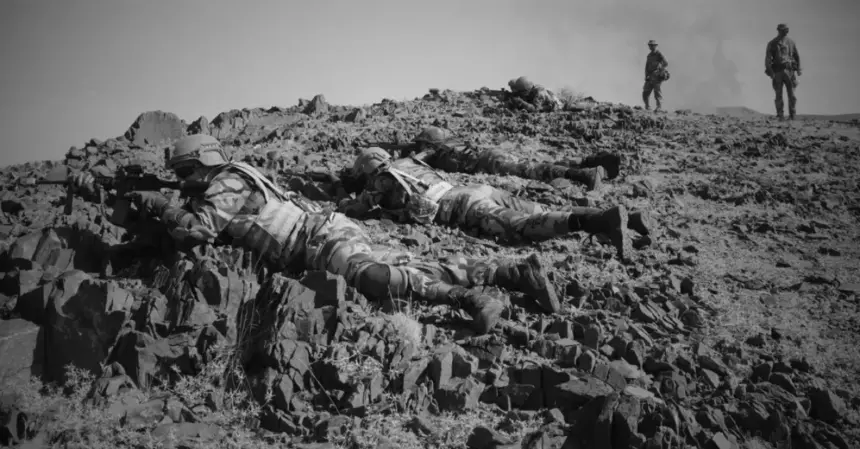
The precise scenarios of the 2026 edition have not been made public. Previous editions, documented by the British side, generally involved desert patrols, live-fire exercises, casualty care, airborne or helicopter-supported operations, and staff coordination. In 2015, around 500 personnel took part in the exercise, with support from British Pumas. In 2022, British paratroopers carried out an airstrip seizure simulation alongside their Moroccan counterparts. Nothing suggests that 2026 changed radically in nature, but the lack of detailed communication calls for caution.
Why this exercise matters beyond the Rmeram training ground
In June 2025 in Rabat, Morocco and the United Kingdom formalized an enhanced strategic partnership during the bilateral strategic dialogue. Foreign ministers Nasser Bourita and David Lammy then agreed, in a joint statement, to continue and intensify defense cooperation, notably through an annual joint military commission. The two countries also committed to exploring avenues in maritime defense, the defense industry and security-related investment.
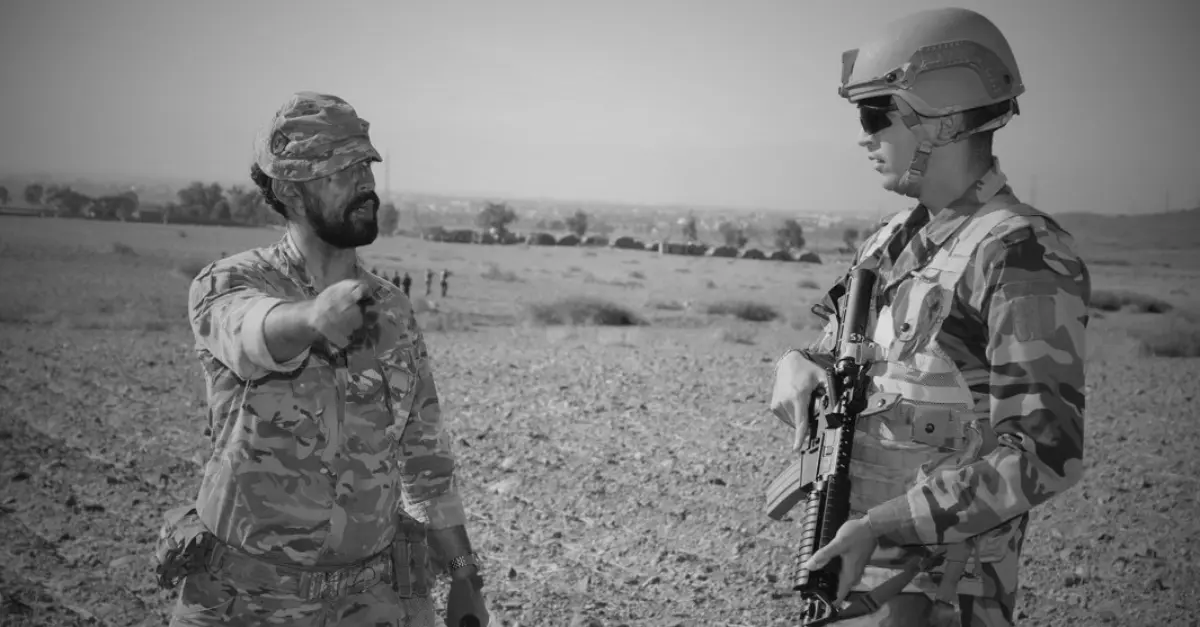
This momentum rests on a legal framework that is already well established: a status of forces and mutual assistance arrangement concluded in 2013, and Morocco’s designation under the British Visiting Forces Act in 2016. It is also part of a broader set of activities. In 2024, a British minister told Parliament that more than 40 defense activities were planned between the two countries that year, including Jebel Sahara. A mirror exercise, “Jebel Tarik”, is held in Gibraltar or the United Kingdom.
From the British perspective, the Moroccan terrain offers climatic and geographic conditions that are useful for preparing troops to operate in demanding environments. For Morocco, these maneuvers help maintain a high level of interoperability with an important European partner, at a time when Rabat is multiplying its partnerships (with the United States through African Lion, with France, and others). The presence of Belgian observers this year also illustrates the open nature of the exercise.
Regional stakes largely explain the mutual interest. British officials, including a government spokesperson speaking recently to a Moroccan outlet, have highlighted the challenges posed by instability in the Sahel and the Middle East. London regularly describes Morocco as a key partner for regional stability, counter-terrorism and the management of migration flows. The United Kingdom has also reaffirmed its support for Morocco’s autonomy initiative for Western Sahara, which it describes as the most credible and pragmatic basis for a settlement.
Open prospects, but still few details
The closing of Jebel Sahara 2026 is not a turning point. Rather, it confirms the continuity of a partnership that has survived changes of government in London and strategic shifts in Morocco. The existence of an annual joint military commission and the discussions on the defense industry hint at a possible deepening, particularly in the maritime or technological fields. However, nothing concrete was announced at the end of this particular edition.
Some observers note that these exercises remain relatively discreet in their public communication, which limits the ability to assess their operational scope precisely. Others, on the contrary, see a form of maturity: a routine cooperation that no longer needs spectacular demonstrations to sustain itself. In a Mediterranean basin where alliances are being reshuffled and the Sahel remains unstable, this regularity has a strategic value of its own.
The open question is how far this partnership can extend. Official statements stress interoperability and the exchange of expertise. They remain more cautious on subjects such as advanced intelligence sharing, cybersecurity or joint industrial projects, even though these themes appeared in the political dialogues of 2025. The next meetings of the joint military commission will likely provide further indications.
Key points of the 2026 edition
- Dates: 12 to 31 October 2026, Rmeram training ground near Marrakech
- Participants: elements of the Moroccan FAR and the Royal Gibraltar Regiment; Belgian observers
- Authority: organized under the instructions of King Mohammed VI
- Official objectives: bilateral cooperation, exchange of operational expertise, interoperability
- Closing: ceremony chaired by Lieutenant General Abdelkrim Najjar and British Ambassador Alex Pinfield
Frequently asked questions
Since when has the Jebel Sahara exercise existed?
It dates back to 1989. The 26th edition was held in 2026, and in 2025 both sides marked 25 years of close cooperation between the Royal Gibraltar Regiment and the Moroccan 2nd Parachute Infantry Brigade.
What are the concrete objectives of these maneuvers?
According to FAR statements and the available British sources, the aim is to exchange expertise and improve coordination and interoperability between units, within a long-standing framework of bilateral military cooperation.
Does the United Kingdom support Morocco’s position on the Sahara?
Yes. London has reaffirmed that Morocco’s autonomy initiative is, in its view, the most credible and pragmatic basis for settling the dispute.
Are there other joint exercises between the two countries?
Yes. In addition to Jebel Sahara, a mirror exercise called Jebel Tarik takes place in Gibraltar or the United Kingdom. Naval maneuvers have also been held recently off the Moroccan coast.