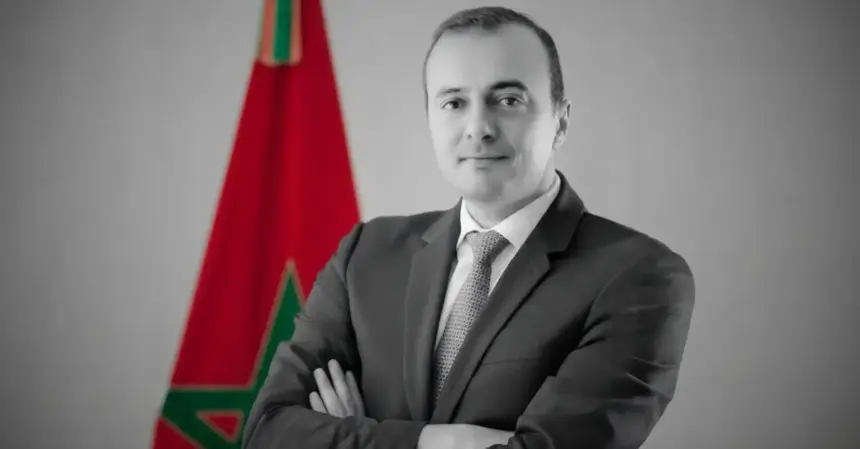
Listening to Ali Seddiki, Director General of the Moroccan Investment and Export Development Agency (AMDIE), lay out the contours of the Morocco Offer, I recognize a familiar industrial ecosystem logic. This is not an isolated announcement but the culmination of work begun back in 2020. On November 18, 2026, King Mohammed VI chaired a working session at the Royal Palace in Rabat devoted to this roadmap, presented jointly by General Mohammed Berrid, Inspector General of the Royal Armed Forces, and by Seddiki. The goal is clear: to turn the defense industry into a new global business line for Morocco, both sovereign and export-oriented.
This ambition builds on the Kingdom’s growing industrial strength. The automotive and aerospace sectors have developed skills in complex assembly, quality control and local integration. Defense, which sits at the top of the technology hierarchy, now draws on that maturity. It is not starting from scratch. It aims to densify a cluster capable of covering design, production, assembly, maintenance and storage.
An ambitious roadmap through 2035
The figures set the framework. By 2035, the defense industrial and technological base is expected to create nearly 50,000 direct and indirect jobs, cover roughly 40% of the needs of the Royal Armed Forces and security bodies through domestic production, and generate more than 65% of its revenue from exports.
These three numbers define the model. The first measures socio-economic impact. The second targets strategic resilience without pretending to self-sufficiency. The third imposes a strong commercial orientation: the domestic market serves as a foundation, but viability depends on international outlets. The Hassan II Fund is mobilizing 4 billion dirhams for the first pillars of this roadmap, through tailored financing mechanisms rather than direct subsidies. These mechanisms cover the whole spectrum, from the innovative start-up to the large-scale production project.
Governance is built around a dedicated strategic agency, an industrial holding company meant to structure ecosystems and bring out local champions, and a specialized academy. The agency will act as a one-stop shop, coordinator and international promoter, in the image of AMDIE but specialized in defense and security.
The levers of the Morocco Offer
The offer relies on several concrete instruments. Dedicated industrial zones are the first of them. More than 650 hectares are already mobilized at Nouaceur and Sidi Yahya, with tailored services (reinforced security, proximity to military bases). Two new-generation zones are planned: one in Benguerir, close to the air base and the research campus of Mohammed VI Polytechnic University, to foster clustering between armed forces, researchers and manufacturers; the other in Benslimane, covering about 350 hectares, focused on defense aeronautics and on synergies with the existing Nouaceur hub.
This geographic proximity is not incidental. It aims to speed up the cycles of ideation, testing and industrialization, particularly for autonomous systems. Duality is at the heart of the scheme. Sensors, electronics, artificial intelligence and cyberdefense serve civilian and military applications alike. Morocco already has an electronics ecosystem able to meet high levels of complexity and quality. Ports such as Tangier offer logistics connectivity that strengthens export competitiveness.
Direct support mechanisms also exist through the Investment Charter, whose strategic component automatically qualifies defense projects for tailor-made incentives. The banking sector is expected to back solid business plans. The 4 billion dirhams of the Hassan II Fund act as a lever to attract domestic and foreign private capital, in a logic of co-investment rather than pure budgetary dependence.
First projects and local integration
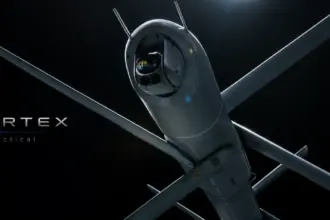
Thirteen projects have already obtained production authorizations, representing more than 330 million dollars in announced investment and nearly 3,000 expected jobs in this first wave. Tata Advanced Systems produces 8×8 armored vehicles with a progressively increasing level of local integration. Maroc Maintenance Aéronautique has carried out a first maintenance operation on a C-130H and plans a new center in Benslimane in the first quarter of 2027. Drone production and maintenance projects are under way, notably with ABA Technology and Armatan. A sovereign drone, designed and built end to end in Morocco, has been announced. Thales is developing a cybersecurity center employing nearly 200 Moroccan engineers.
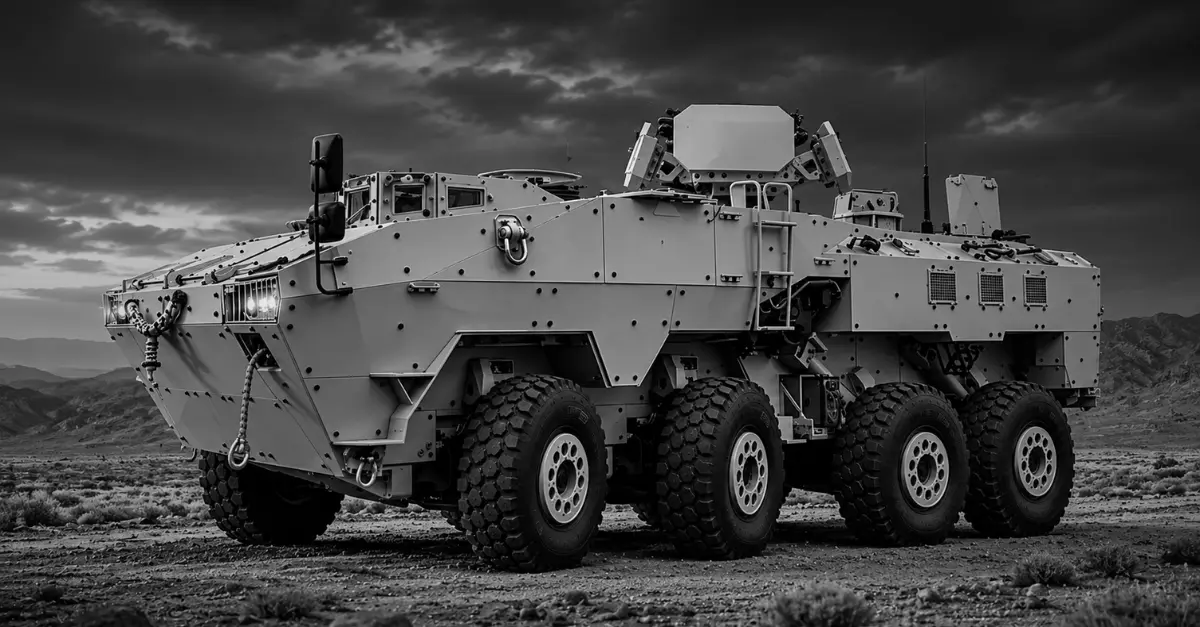
These initiatives illustrate the gradual approach being pursued. Some involve sub-assemblies or maintenance, while others aim at fuller sovereignty over autonomous systems, anti-drone solutions or cyberdefense. Local integration does not rule out technology partnerships, but it demands a steady climb up the value chain. Moroccan companies such as ABA Technology are already demonstrating the ability to develop their own products in a demanding sector. Moroccan capital is encouraged to take stakes, both for reasons of sovereignty and for the long-term durability of the value chain.
Training, human capital and duality
Training does not start from a blank slate. Specialized institutes in aeronautical precision machining, automotive quality and flow management already exist. The Royal Armed Forces have high levels of training. The challenge is to create bridges between civilian and military programs, to adapt production standards (sensitive materials, specific qualifications) and to mobilize the dedicated academy as well as UM6P. The aim is synergy rather than duplication.
This dual approach is strategic. It multiplies outlets and reduces purely military risk. Talent in artificial intelligence and cybersecurity, already present in Morocco, can be deployed in both civilian and defense markets. In automotive and aerospace, the country has shown it can ramp up production quickly and deliver quality. It is this competitiveness argument, more than local purchasing volume alone, that has attracted the first investors.

FAQ
What are the three quantified objectives of the roadmap for 2035?
Nearly 50,000 direct and indirect jobs, coverage of about 40% of the needs of the Royal Armed Forces and security bodies through domestic production, and more than 65% of revenue generated from exports.
What are the Hassan II Fund’s 4 billion dirhams used for?
They finance investor support mechanisms (innovative start-ups and large projects) rather than direct subsidies, in addition to the incentives provided by the Investment Charter for strategic sectors.
Which industrial zones are planned?
The existing zones of Nouaceur and Sidi Yahya (more than 650 hectares), plus two new ones in Benguerir (close to UM6P and the air base) and Benslimane (focused on defense aeronautics).
Is Morocco aiming for entirely local production?
No. The goal is an integrated value chain with a progressive increase in local integration, relying on partnerships while building sovereign capabilities in certain segments such as autonomous systems.