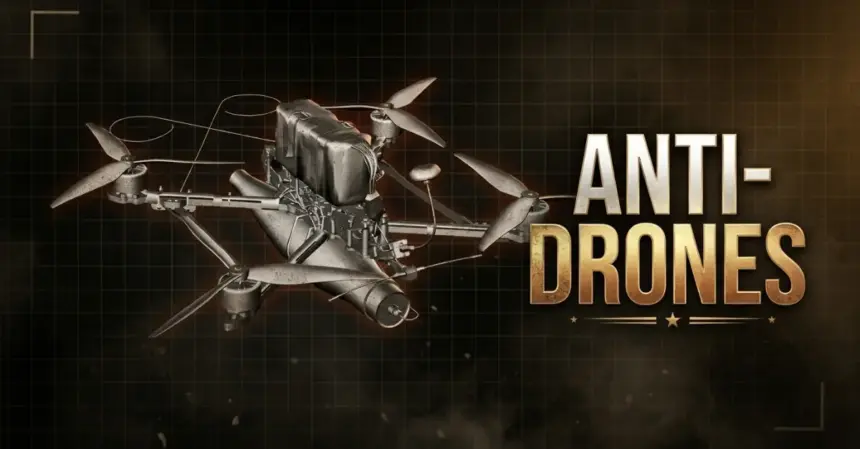
To protect against them, nets are deployed over roads, buildings and armored vehicles. Yet making them remains complex and is often classified as a defense secret. In Tangier, a factory exceptionally opened its doors to a TV5MONDE crew. The report, broadcast in mid-November 2026, illustrates a broader shift: Morocco, long an importer, now wants to establish itself as an industrial player in the arms sector.
From fishing nets to anti-drone protection
For nearly twenty years, Mustapha Bahadi has been making nets for fishing, ports and aviaries. For more than a year, the orders have changed in nature. His teams now produce anti-drone nets, notably for vehicles. The basic design remains similar, but the stakes are no longer the same.
It all starts with the material. The factory uses Kevlar, an aramid fiber whose tensile strength is commonly described as roughly five times that of steel at equal weight. It is used to make blast-resistant nets. On a vehicle, such a net can now replace a fixed metal shell that is far heavier. The pieces are no longer simple rectangles: shapes are becoming more complex to fit vehicles or infrastructure.
Defense secrecy is the rule. The plans supplied by clients are deliberately incomplete – missing dimensions, partial indications. The workers, and even the workshop managers, often do not know the exact destination of what they weave. A prototype recently inspected in Tangier is due to be shipped to a European client, who will still have to test its resistance to explosives. No one has any initial training specific to anti-drone nets: the adaptation was made on the job, at the pace of a rapidly evolving demand.
Drones are reshuffling the cards in conflicts
Since the start of the war in Ukraine, drones – including modified civilian models – have become the weapon of choice for military staffs and a constant threat to combatants. Entire towns are being covered with recycled fishing nets. Nets are being installed over roads to protect small vehicles from kamikaze drone attacks.
In the Sahel, the phenomenon is just as deep. Regular armies use drones, but so do jihadist groups. Oswald Padonou, a political scientist and program director at the École nationale supérieure des armées in Benin, explains this clearly in the same TV5MONDE report. Drones deliver effectiveness at a relatively low cost: intelligence, remote targeting, monitoring of convoys, patrols. Small FPV drones and mini-drones, which are easy to obtain, make precise missions possible. Armed groups modify civilian drones to carry explosive payloads, carry out strikes and sometimes bypass conventional control systems.
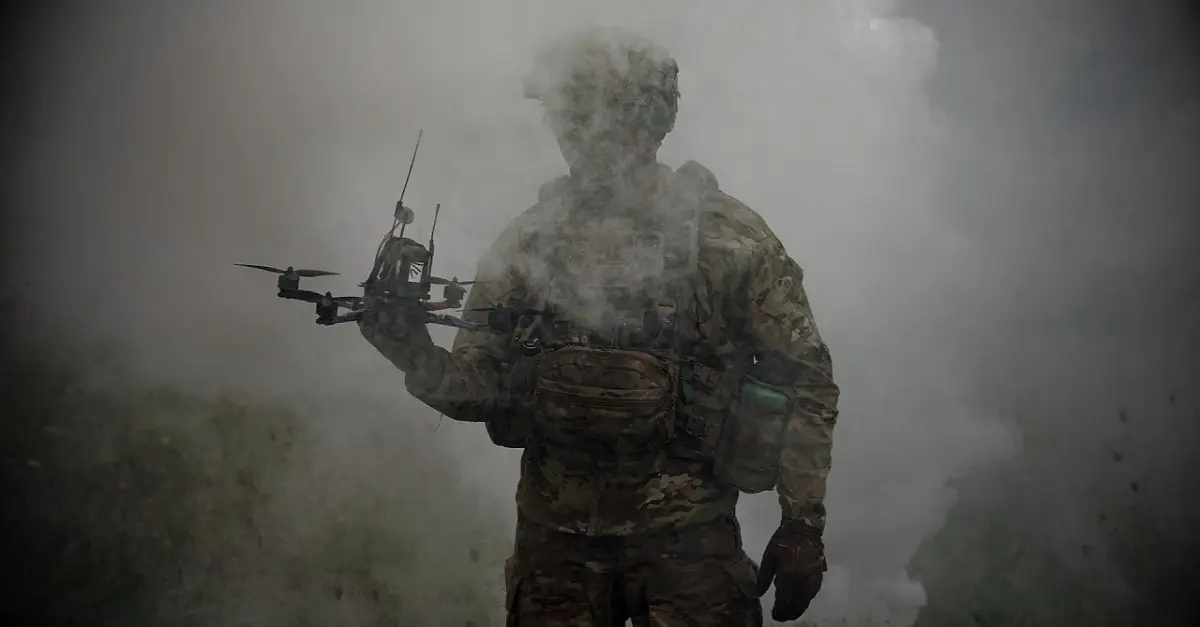
This proliferation calls for both physical countermeasures (nets, barriers) and electronic ones. Padonou stresses that these groups obtain such means mainly by modifying accessible civilian drones, and sometimes through indirect state or organizational support. Acquiring certain drones costs less than it used to, but war has not become any less expensive: protecting critical infrastructure, roads, barracks and personnel generates high peripheral costs, and the human toll remains considerable, with many civilian victims.
Morocco wants to become an industrial arms power
The shift at this Tangier factory is part of a broader national ambition. On November 18, 2026, King Mohammed VI chaired a working session in Rabat launching the “Offre Maroc,” the roadmap for the defense and security industries. According to the royal palace and agencies such as Reuters, the kingdom aims to locally produce 40% of the equipment needed by the Royal Armed Forces and security bodies by 2035. It targets more than 65% of the sector’s revenue from exports, and nearly 50,000 direct and indirect jobs.
The Hassan II Fund will contribute 4 billion dirhams (about $400 million) to attract investors. Priorities include drones and autonomous systems, land and naval systems, defense electronics, cyberdefense and artificial intelligence, with a preference for dual-use applications. Two new industrial zones are planned at Benguerir and Benslimane, in addition to those already launched (Nouaceur, Sidi Yahya). A strategic agency and an industrial holding company are to structure the ecosystem.

Key figures of the “Offre Maroc” by 2035
- Around 50,000 direct and indirect jobs
- Coverage of about 40% of the needs of the Royal Armed Forces and security bodies
- More than 65% of the sector’s revenue generated from exports
- Initial contribution of 4 billion dirhams from the Hassan II Fund
Concrete projects already exist. In Berrechid, Tata Advanced Systems assembles WhAP 8×8 armored vehicles with an initial local integration rate of around 35%, aiming for 50%. Moroccan Military Industry (MMI), linked to Israeli partnerships, produces turrets and is developing anti-drone versions, with deliveries planned from 2027. In Benslimane, SpyX-type loitering munitions (BlueBird / Israel Aerospace Industries) are manufactured, and Baykar (Turkey) has set up a drone subsidiary. French partnerships, notably with Harmattan AI, cover anti-drone systems and strike drones. Morocco is building on its industrial successes in the automotive and aerospace sectors, and on the 2020 law authorizing the manufacture and export of military equipment under license.
Strategic stakes
This build-up reflects a drive for sovereignty and for reduced dependence on imports, against a backdrop of rising military spending (the defense budget reaches several tens of billions of dirhams). It relies on diversified partnerships (India, Israel, Turkey, France), which is not without geopolitical implications in the Maghreb and beyond. The Tangier nets illustrate the dual-use and adaptive side of the effort: a small business specializing in civilian nets pivots to the military sector without dedicated prior training, under defense secrecy.
The limits remain real. Manufacturing under secrecy restricts transparency and visible skills development. Physical countermeasures such as nets are necessary but not sufficient given the rapid evolution of tactics (tethered drones, swarms, etc.). The human and peripheral costs of conflict remain high, as Padonou points out. Finally, the success of the “Offre Maroc” will depend on the ability to move up the value chain beyond assembly, to train skilled workers and to win export markets in a highly competitive and sensitive sector.
The prototype shipped from Tangier to a European client will be one test among many. In a Mediterranean basin and a Sahel where drones are redrawing the balance of power, these nets – modest in appearance – are part of a broader industrial and strategic reconfiguration. Morocco is seeking to move from buyer to producer. What remains to be seen is the pace and depth with which this transition will unfold.
FAQ
Why have anti-drone nets become important?
They offer lightweight, adaptable physical protection against kamikaze and FPV drones, which are proliferating in the conflicts in Ukraine, the Sahel, Sudan and the DRC. They can replace heavier metal protection.
Does Morocco already produce military equipment?
Yes. WhAP armored vehicles are assembled in Berrechid, turrets and anti-drone munitions are under development at MMI, and drones (SpyX, Baykar and French projects) are being manufactured or are about to be, mainly through partnerships.
Are the Tangier nets intended only for Morocco?
No. A prototype is being shipped to a European client for testing. The activity fits an export logic, in line with the ambitions of the “Offre Maroc.”
Is war cheaper thanks to drones?
Acquiring certain small drones has become more affordable, but countermeasures (nets, electronic systems, infrastructure protection) and above all the human cost remain high.