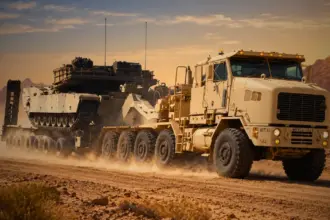
A video released on 14 November 2026 shows a long convoy of heavy-equipment transporters carrying sand-coloured armoured vehicles. It travels along a highway before passing a billboard that is clearly Libyan. Filmed in broad daylight, the footage shows Iveco and other tractor units hauling flatbeds loaded with armoured personnel carriers and infantry vehicles.
The footage confirms the recent arrival of a large volume of armoured equipment intended for the forces of Khalifa Haftar. Emirati deliveries to the Benghazi camp have long been documented by United Nations experts.
🚨【Libye 𝘃𝘀 Algérie 】
Haftar vient de recevoir plus de 500 véhicules blindés en provenance des Émirats arabes unis.
Tebboune a de quoi s’inquiéter : frontière algérienne, Fezzan, influence émiratie aux portes d’Alger…L’axe Abou Dhabi-Benghazi se renforce pendant qu’Alger a rompu avec les Émirats et s’isole de jour en jour !
#Libye #Algérie #Haftar #Tebboune #EAU #Maroc
— Silicon Valley (@SiliconValleyMa) 14 November 2026
A Visible Delivery and a Recurring Pattern
The convoy images leave little room for interpretation: dozens of beige armoured vehicles, mounted on semi-trailers, roll past under a clear sky. The final billboard, with its portraits and Arabic inscriptions typical of eastern Libya, places the transfer inside territory controlled by the Libyan National Army (LNA).
This type of equipment, light or medium armoured vehicles suited to the desert, matches the models the United Arab Emirates has previously supplied to Haftar. Those deliveries were documented by UN panels of experts and by SIPRI between 2015 and 2019. Earlier reports had already recorded hundreds of vehicles, armoured and unarmoured, shipped to Tobruk or other points of entry.
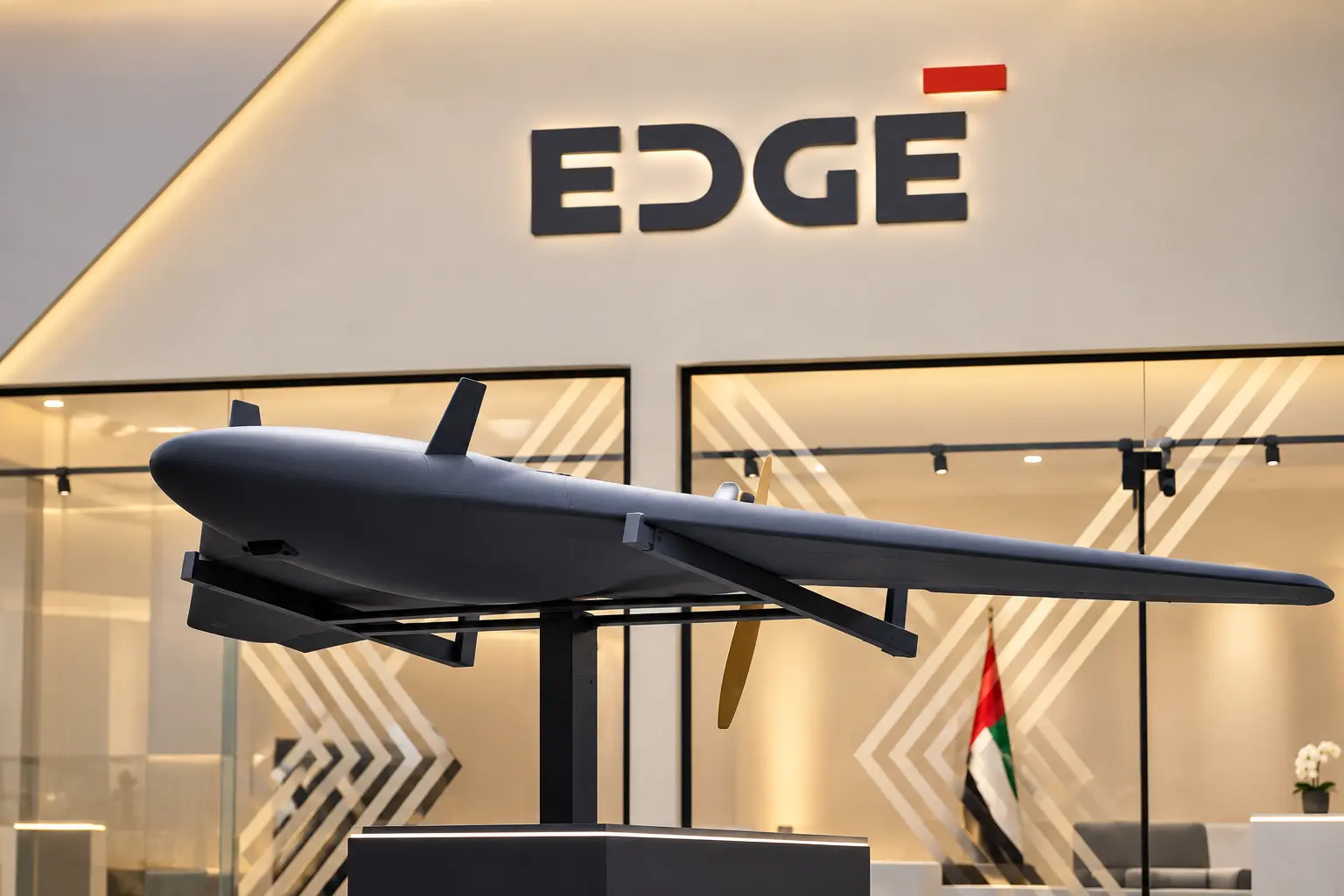
This delivery fits a pattern of continuity. The Emirates are regularly accused of violating the UN arms embargo in place since 2011. They are alleged to have supplied not only vehicles but also drones, air defence systems and air support. French sources have recently mentioned volumes of several thousand tonnes of equipment.
The 14 November video provides visual proof of a flow that has never stopped, even as political talks on Libya remain deadlocked.
Algiers’ Break with Abu Dhabi
On 10 September 2026, Algeria severed diplomatic relations with the United Arab Emirates. The Foreign Ministry cited “provocative or hostile” actions. It had given the ambassador 48 hours to leave the country and closed its airspace to Emirati-registered aircraft, with temporary exceptions for commercial flights to Algiers.
President Abdelmadjid Tebboune had previously spoken publicly of a “micro-state” or “dwarf state” whose money and influence turn up wherever blood is being shed, explicitly naming Libya, Mali and Sudan.
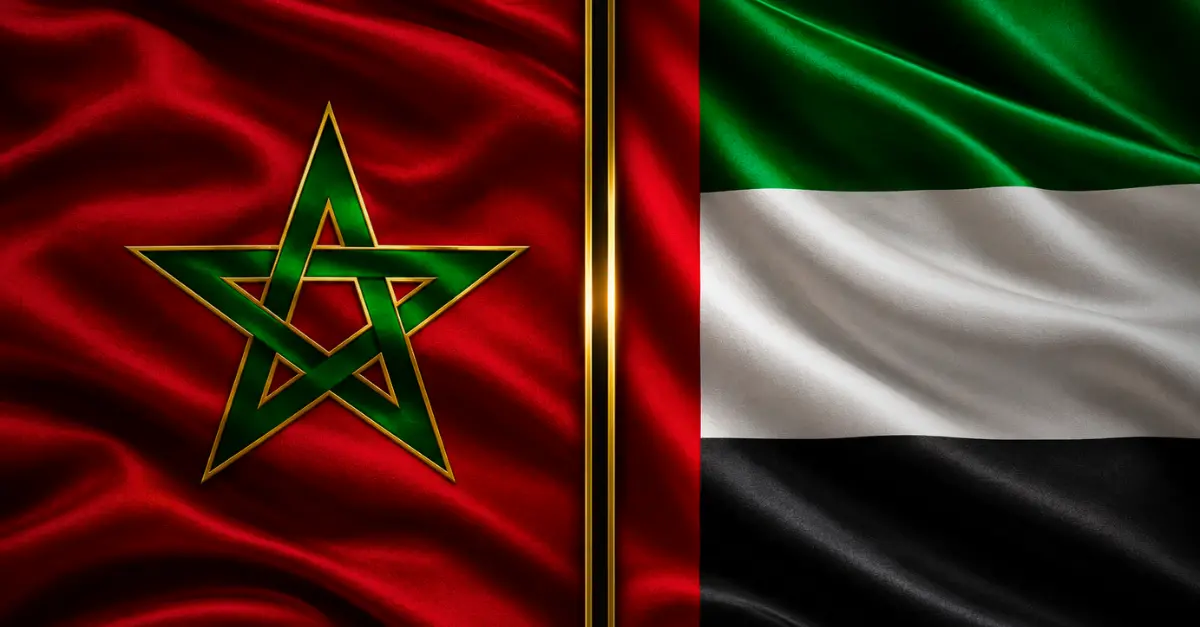
This decision is not isolated. It stems from accumulated disagreements:
- lasting Emirati support for Haftar;
- the opening of a consulate in Laayoune, in line with Morocco’s position on the Moroccan Sahara;
- normalisation with Israel;
- an influence seen as destabilising in the Sahel.
Analyses by the Atlantic Council and the International Crisis Group stress that Algiers regards support for actors such as Haftar or the Rapid Support Forces in Sudan as a direct threat to its national security. The rupture further isolates Algeria in the face of an axis linking Abu Dhabi, Rabat and Benghazi.
The Fezzan and Pressure on the Algerian Border
The Fezzan, a vast desert region in south-western Libya, is the most immediate flashpoint. Haftar’s forces control bases, transit routes and a significant share of the flows towards Niger and Mali there.
Military movements towards areas close to the Algerian border have already been observed, notably around Ghadames in 2024. Reorganisations have also been reported near the approaches to Illizi and Djanet. Nearly 1,000 kilometres long and extremely porous, the Algerian-Libyan border has already been the scene of major incidents, such as the In Amenas attack in 2013.
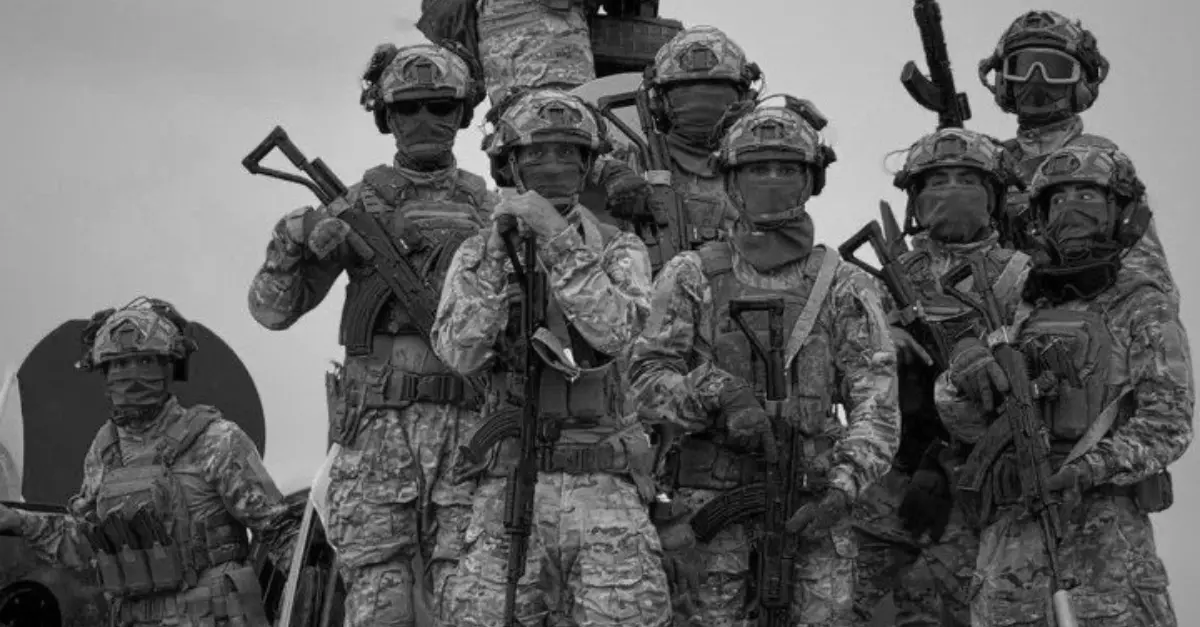
A build-up of armoured vehicles in this sector increases the ability to project force and control Saharan routes. For Algiers, this means a denser Emirati presence at the gates of its national territory, through a partner (Haftar) who has made verbal threats in the past.
Analyses in Le Monde and from regional experts indicate that the Algerian general staff is particularly concerned about Haftar’s advance towards the corridors leading to Niger. The recent deployment of Algerian troops to Niger, following parliamentary approval, has been widely interpreted as a defensive measure aimed at securing economic interests and containing that influence.
Key Facts at a Glance
- 14 November 2026: video of a convoy of heavy-equipment transporters loaded with armoured vehicles on a Libyan road.
- 10 September 2026: Algeria-UAE diplomatic rupture, with partial closure of airspace.
- For years: Emirati support for Haftar documented by UN panels of experts (vehicles, drones, air systems).
- Fezzan: Haftar’s control over much of the region and the routes to the Sahel, a source of concern for Algiers.
Strategic Stakes and Outlook
This delivery comes amid a broader regional contest. The Emirates pursue a policy of influence through strong security partners in fragmented states, relying on military capacity and logistics routes. Algeria, which has already broken with Morocco and now with Abu Dhabi, sees a relative encirclement taking shape on its southern and western flanks. Rivalries over gas corridors (the Nigeria-Algeria pipeline versus the Atlantic project backed by Morocco and the Emirates) reinforce this reading.
On the Tripoli side, the internationally recognised authorities have regularly denounced embargo violations. Haftar and his associates present this backing as necessary for stability and for the fight against armed groups. Experts note, however, that the LNA’s ability to maintain and extend its control in the south depends heavily on these external flows, given the logistical constraints of the desert.
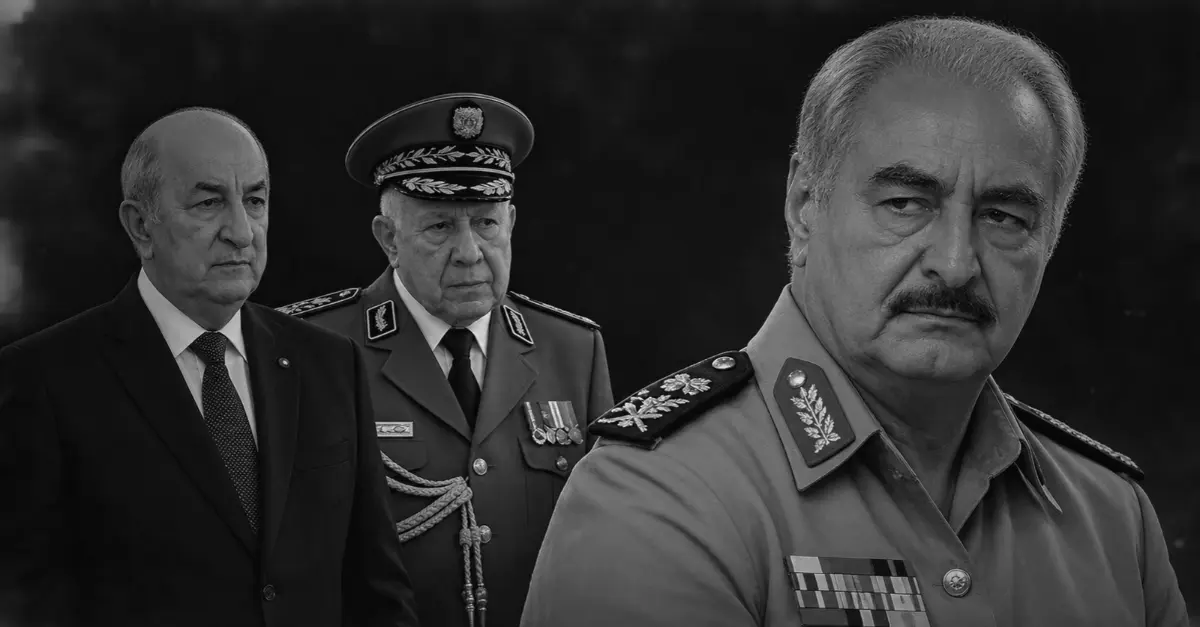
Over the medium term, several developments remain possible. A lasting strengthening of Haftar’s capabilities in the Fezzan could complicate surveillance of Algeria’s borders and ease flows towards the Sahel. Localised incidents and border-post closures have already occurred. At the same time, UN efforts to relaunch a political process in Libya run up against the reality of this outside backing. Algiers’ diplomatic isolation reduces its bilateral leverage with Abu Dhabi and pushes it to strengthen direct partnerships with Niamey and other Sahelian actors.
The armoured convoy video does not by itself resolve regional balances, but it illustrates the persistence of a flow that strengthens the Abu Dhabi-Benghazi axis just as Algiers finds itself in a position of rupture. For Algerian decision-makers, the issue is no longer merely diplomatic: it concerns the ability to control Saharan approaches and to manage an Emirati influence that is now more visible at the gates of the Fezzan. The coming months, between developments in Niger and talks on Libya, will show whether these tensions remain contained or escalate.
FAQ
What exactly does the 14 November video show?
A long convoy of heavy-equipment transporters carrying sand-coloured armoured vehicles on a road, passing a Libyan billboard. It points to a transfer of military equipment into territory controlled by Haftar.
Why did Algeria break with the Emirates?
The Algerian ministry cited “provocative or hostile” actions, following years of disagreement over support for Haftar, Western Sahara and influence in the Sahel. Tebboune had publicly criticised a destabilising “micro-state”.
Does the Fezzan pose a direct threat to Algeria?
Haftar’s control over southern Libya and the routes to Niger raises security concerns in Algiers because of the border’s porosity and trafficking. Military movements near the border have already been observed.
What is the link with Morocco?
The Emirates and Morocco share convergent positions on several issues, including the Moroccan Sahara and normalisation with Israel. Algiers perceives an unfavourable regional axis.