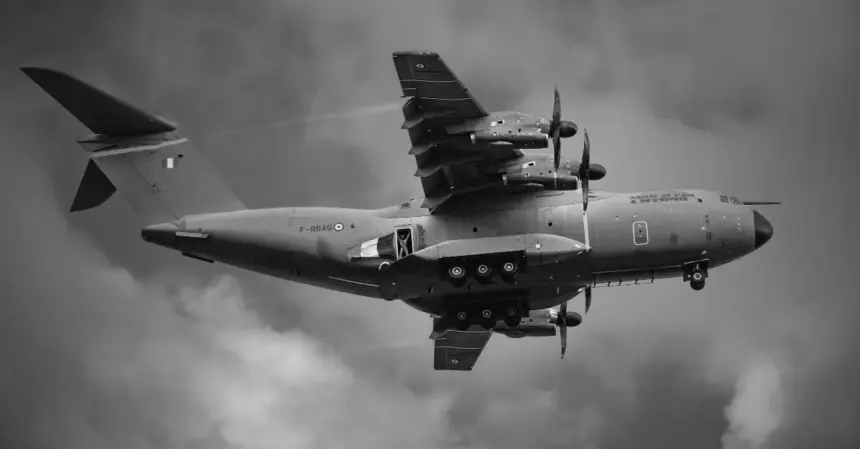
This sector accounts for roughly 200,000 jobs and about €30 billion in revenue in 2022. It provides a rare degree of strategic autonomy, as France is one of the few countries that controls almost the entire chain, from nuclear forces to ammunition. Yet behind the doors of factories classified as defense secret, a paradox emerges: an industry of excellence does not automatically mean a French army equipped for high-intensity warfare.
The arms market and the trade shows under scrutiny
Eurosatory, the international defense and security exhibition, illustrates this reality. With nearly 1,700 exhibitors (figure for the edition in question), it brings together Lockheed Martin, China North Industries, Elbit Systems and FN Herstal alongside French players. The general public has no access. Armored vehicles, munitions, missiles and command systems are on display. Delegations from the United Arab Emirates or South Korea, backed by large budgets, are particularly sought after.
French manufacturers rely on demonstrations carried out by active-duty soldiers. The Leclerc tank (catalog value around €11 million), the Griffon (about €1.2 million) and above all the Caesar play a central role. France has delivered around thirty of them to Ukraine, where their mobility and 40 km range helped counter Russian offensives. With the return of war in Europe, global defense spending exceeded €2,000 billion in 2024. France is looking to capture a significant share of it.
Inside the Rafale factory
At the Dassault plant, the Rafale is assembled entirely by hand from more than 30,000 parts made in France. The M88 engines come from Safran, the radar components from Thales, and the structures from various sites across the country. Every component is classified as defense secret. The tests before the first flight are exhaustive: failure simulations, checks of the flight controls, landing gear and warning systems. Test pilots push the aircraft to its limits from the very first flight.
Dassault has already sold more than 310 aircraft internationally, at a unit price above €100 million. In 2023, 104 aircraft were ordered (notably by India, Indonesia and France). The order book remains solid, which led the aircraft manufacturer to hire more than a thousand employees. Working conditions in this sector are attractive: average gross annual pay close to €60,000, performance-related bonuses and generous leave. These operational successes (Afghanistan, Libya, the Sahel) have strengthened the aircraft’s credibility with foreign customers.
The Caesar and gun production
In Bourges, Nexter machines the barrels of the Caesar, a 155 mm gun capable of firing six rounds in one minute at a range of 40 km. A unique machine, classified as defense secret, performs the rifling of the barrels to ensure accuracy and stability. The plant is the only one in France authorized to manufacture guns, from 20 mm to 155 mm, including those mounted on the Rafale or the Leclerc. It also provides after-sales service for Ukraine: barrels wear out and must be replaced after a certain number of rounds. Security there is strict, because of the risks of espionage and attempted drone thefts.
Employees describe a detached relationship with the purpose of the weapons: the goal is first and foremost deterrence, and actual use remains a possibility they would rather avoid.
The drone revolution and electronic warfare
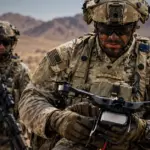
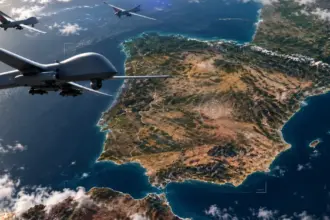
The Ukrainian conflict and earlier wars (Azerbaijan-Armenia) have accelerated demand for drones. Cheaper and faster to produce than fighter jets, they have proven effective in challenging air superiority. In just a few months, with a team of about ten engineers, Thales developed a roughly 20 kg drone dedicated to electronic warfare. It detects, locates and identifies communications (radios, mobile or satellite phones) over distances of several dozen kilometers, allowing soldiers to stay at a safe distance. The test site is discreet and unlisted, and any eventual production would take place under high confidentiality.
Every export requires a special authorization. A secret interministerial commission examines the files. The President of the Republic makes the final decision. Economic and defense arguments often outweigh those of the Ministry of Foreign Affairs. Exporting allows economies of scale that lower the unit cost for the French army itself. The stated principles are not to endanger French or allied interests and to respect international law. The deliberations remain classified as defense secret; Parliament is informed after the decision, unlike in the United States or Germany.
The special forces show and Ukraine’s needs
A confidential exhibition such as SOFINS brings together elite units from many countries. Foreign delegations come to quickly equip their special forces, which is easier than modernizing an entire army. Drones, infiltration robots and specialized equipment are on display. A Ukrainian delegation notably tested Thales night-vision systems and robotic platforms. According to information gathered during the investigation, several of these systems were subsequently delivered and used at the front.
In 2023, according to SIPRI, France became the world’s second-largest arms exporter (2019-2023 period), behind the United States and ahead of Russia and China, driven in particular by the Rafale.
The French army under pressure
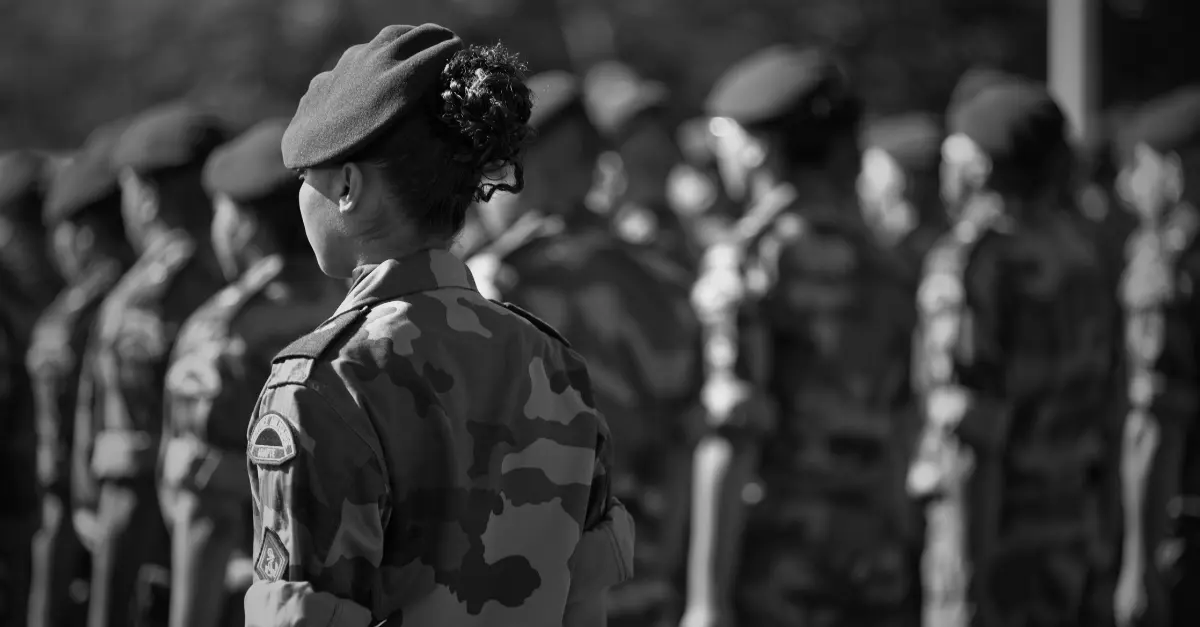
This industrial performance coexists with limited volumes in the army. The ambition to have around a hundred guns contrasts with the thousands of artillery pieces deployed by Russia in Ukraine. For decades, French forces conducted operations against small terrorist groups. The shift to high-intensity warfare against empire-sized adversaries raises questions of sheer mass.
The military programming law provides for a budget increase (around €44 billion in 2023, with an initial trajectory toward €67 billion in 2030). Experts estimate that 2% of GDP is enough to maintain a decent level, but that 3% would be needed for a capability fully suited to a major conflict. Griffon production, an armored vehicle able to carry ten soldiers, well protected and networked, is accelerating, rising from 150 vehicles a year in 2018 toward 450. At the end of 2023, the army had about 600. Most troops continue to use the VAB, which entered service in 1976.
Renovating the aging fleet
Maintenance of older vehicles is carried out notably at Arquus. Some armored vehicles date from the 1980s or 1990s and show very high mileage. They are given another ten to fifteen years of service life, despite parts obsolescence. Additional protection against improvised explosive devices was added after losses in operations (such as during Barkhane). The teams’ stated goal is to protect the crews.
Key figures
- More than 200,000 jobs and more than 2,000 companies in the sector.
- About €30 billion in revenue in 2022.
- More than 310 Rafales sold for export, unit price above €100 million.
- France is the world’s second-largest arms exporter according to SIPRI (2019-2023).
- The Griffon fleet is still limited (about 600 at the end of 2023) compared with thousands of older VABs.
The French defense industry remains an asset for autonomy and influence. It continues to meet Ukrainian requests for guns, drones and specialized equipment. The main challenge is to align the volumes and pace of modernization of the French army with the demands of a high-intensity environment, while preserving export competitiveness. Budget trade-offs and export decisions will determine how far this sector can go.
FAQ
How does arms export control work?
An interministerial commission examines the files. The President of the Republic makes the final call. The deliberations are secret and Parliament is informed after the fact.
What role did the Caesar play in Ukraine?
The thirty or so units delivered provided a mobile and accurate artillery capability (40 km) that helped slow Russian offensives.
Does the French army have enough volume for a major war?
Experts point to gaps in mass (artillery, modern armored vehicles) compared with the needs of a high-intensity conflict. The budget is rising, but the aging fleet remains large.
Why do exports help the French army?
They generate economies of scale that reduce the unit cost of equipment purchased by France and sustain the industrial base.