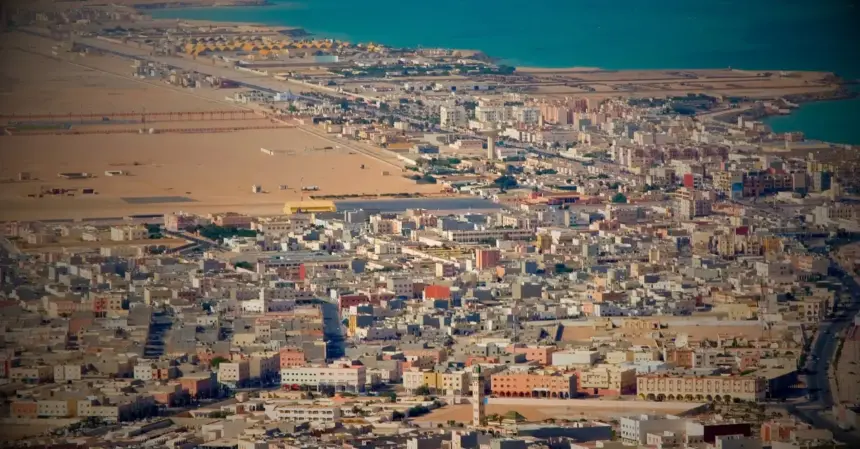
We want to understand here why this destination, long off the beaten track, is gradually establishing itself on the map of Moroccan tourism, and what this changes for the region.
Key takeaways
- Dakhla brings together desert, ocean and lagoon on a single peninsula.
- Its steady winds have made it a renowned destination for kitesurfing and windsurfing.
- Tourism complements fishing, aquaculture and agriculture.
- Visitor numbers, the environment and the sharing of benefits are the major challenges.
- The status of Western Sahara remains a subject of international disagreement.
A singular geographical setting
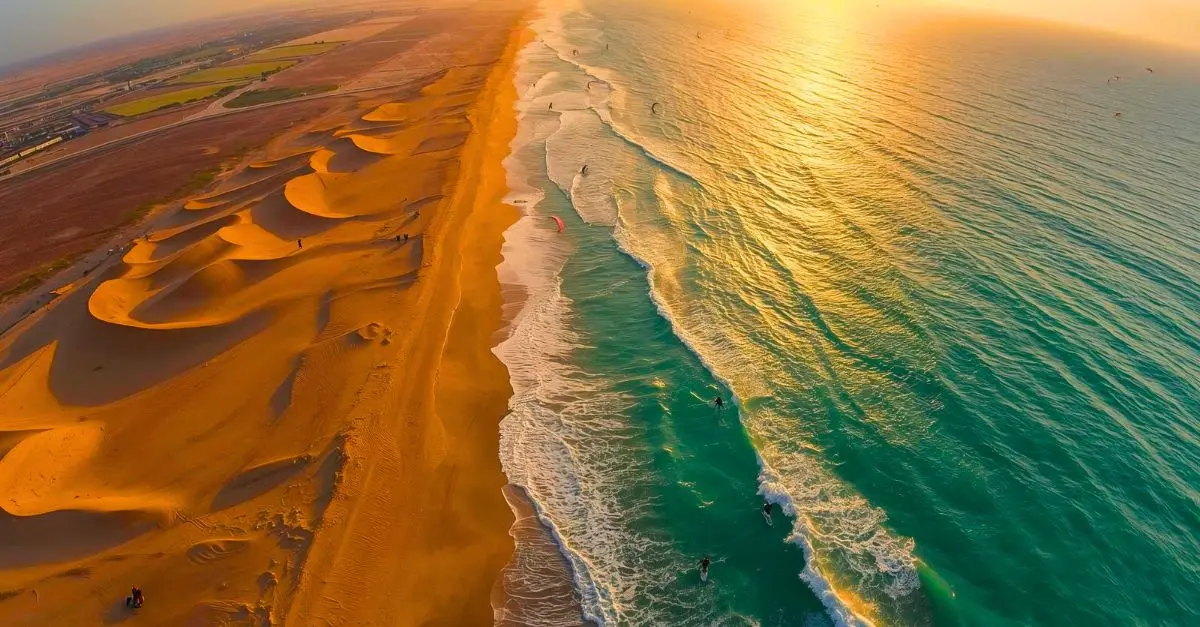
What makes Dakhla special is its configuration. On one side, the ocean front, exposed to the Atlantic swells. On the other, a calm, shallow lagoon overlooked by dunes on all sides. This juxtaposition of desert landscapes and marine environments is rare, and it explains most of the appeal of the place.
The lagoon is also a natural area of real interest. It hosts an abundant population of migratory birds, including flamingos, and shelters seagrass beds. We want to stress one point: this ecosystem is fragile, and its ecological value is precisely what gives the destination its worth.
Geographically, Dakhla lies very far from the kingdom’s historic tourist hubs. Marrakech, Agadir and Essaouira are several hundred kilometres away, and in some cases more than a thousand, to the north. This remoteness long held back visitor numbers. Today it is also part of the destination’s charm for travellers looking for unspoiled places.
Wind, the engine of a sports economy
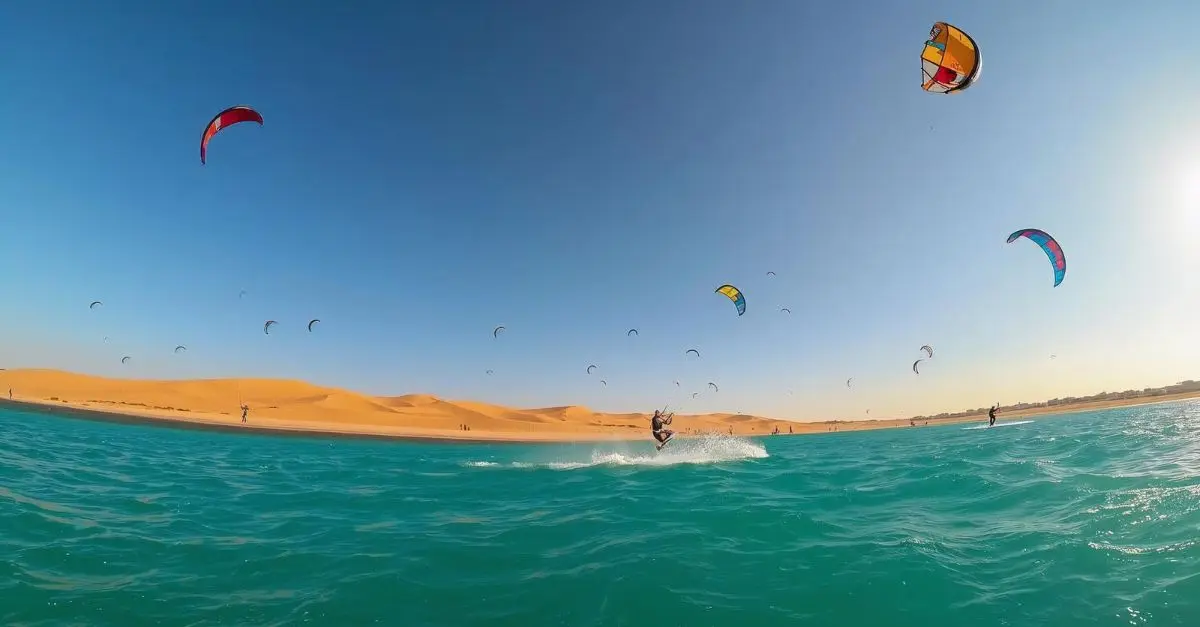
If Dakhla is known to board sports enthusiasts, it is first and foremost thanks to its wind regime. The trade winds, which blow steadily for much of the year, combined with the flat water of the lagoon, make it a renowned playground for kitesurfing and windsurfing. Beginners find reassuring conditions, while experienced riders can head to more demanding spots on the ocean side.
This reputation has shaped a whole range of services: schools, dedicated camps, camp- or lodge-style accommodation, international competitions. Seasons matter a great deal. The windiest periods are not those when the heat is most bearable, and industry professionals adjust their calendar accordingly. We recommend that travellers check seasonal conditions with local operators before booking, as they vary depending on the spot and the year.
Beyond board sports, other activities are developing: sport fishing, hiking in the dunes, 4×4 excursions into the desert, birdwatching, boat trips. Wellness tourism, linked in particular to the region’s natural hot springs, rounds out this offering.
What travellers can find there
To give a concrete idea of what is on offer, here are the landmarks we consider useful:
- the lagoon, for water sports and wildlife watching;
- the great dunes that plunge towards the water, among the most photographed landscapes in the area;
- Dragon Island, a site known for its boat excursions;
- Pointe de l’Or, at the southern end of the peninsula, a viewpoint over the Atlantic;
- local gastronomy, with seafood, including oysters farmed in the bay, often highlighted by operators.
These elements are mentioned on a qualitative basis. Figures on visitor numbers, hotel capacity or length of stay should be updated with official sources before publication (see below).
Accessibility and infrastructure
Dakhla is served by an airport, with domestic connections to northern Morocco and, depending on the season and the airlines, international flights, notably from certain European cities. Air service changes regularly: it should be checked at the time of travel.
The territory is also the focus of major public investment. The most emblematic is the Dakhla Atlantique port project, presented by the Moroccan authorities as a strategic commercial and logistics infrastructure, intended to open an African and Atlantic gateway. It is expected to enter service in the coming years. We do not go into the budget or the precise timeline here, which should be verified against the most recent official statements.
What to do in Dakhla?
Discover the White Dune, one of Dakhla’s emblematic landscapes
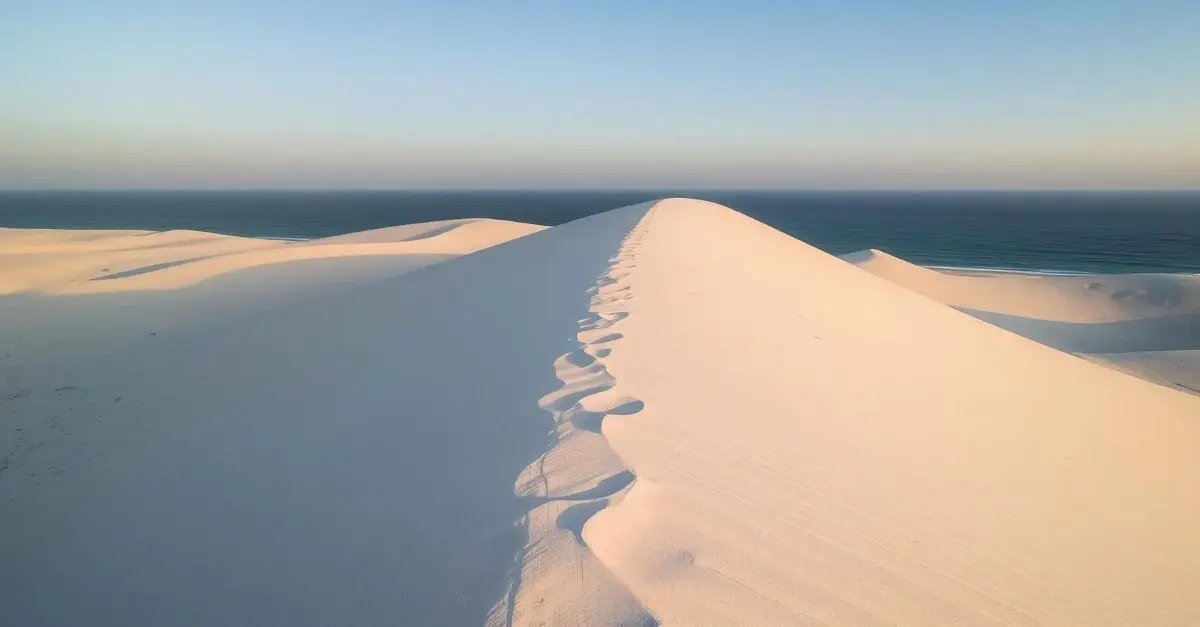
Among the region’s must-see sites, the White Dune holds a special place. This formation of pale sand, which juts out into the lagoon, offers a spectacular contrast between the white of the dunes, the blue of the water and the surrounding desert expanses. The landscape changes with the tides and the light, which makes it a place particularly appreciated by photographers and travellers.
Access is generally through an organised excursion, often in an off-road vehicle. It is advisable to check access conditions and tide times before setting out.
Explore the Sahara landscapes around Dakhla
A stay in Dakhla is not limited to the coast. The hinterland offers desert landscapes that are particularly well suited to 4×4 excursions. The tracks cross arid expanses, dunes and rocky areas where the silence contrasts with the activity of the waterfront.
Among the places to discover is Imlili, a natural area known for its small pools of water in the middle of the Saharan landscape. This surprising site reflects the diversity of natural environments in southern Morocco. To make the most of the excursion, it is better to set off with a guide who knows the tracks and the particularities of the region.
Lovers of wide open spaces can also plan a trip at sunset. At that hour, the reliefs take on golden and orange hues, offering another perspective on the desert.
Enjoy the wild beaches of the Atlantic coast
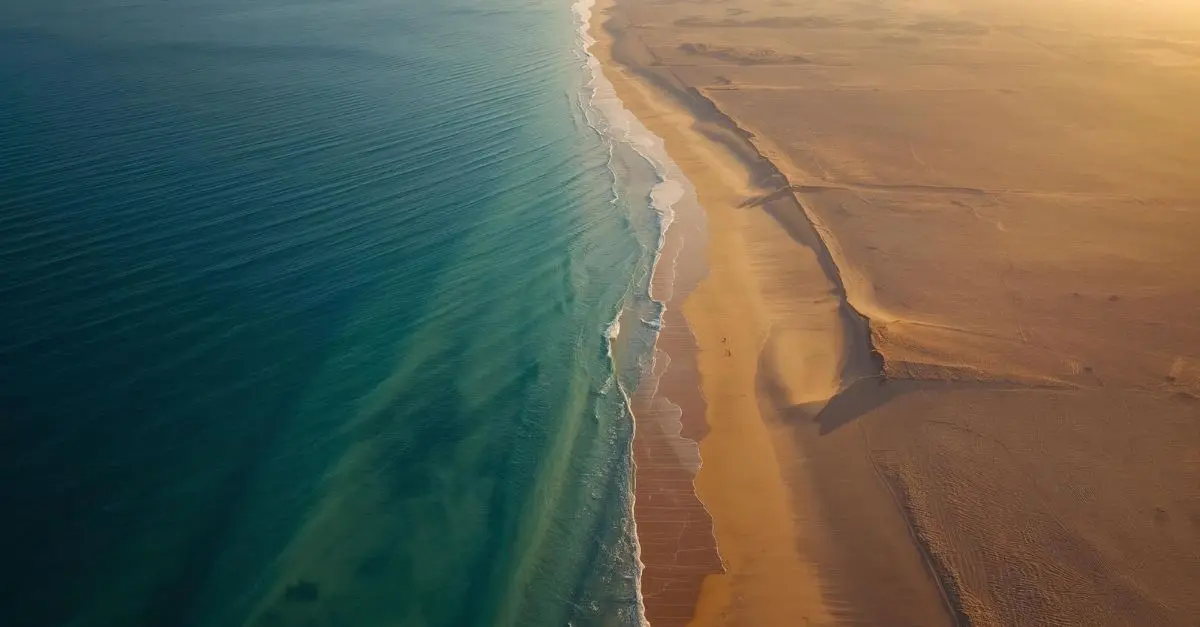
The Dakhla region has long beaches that appeal through their unspoiled character and peaceful atmosphere. Puerto Rico beach, south of the town, is particularly appreciated for its pale sand and natural surroundings. It makes an interesting stop for travellers who want to get away from the busiest areas.
Foum Labouir, for its part, is known to surfers. The Atlantic waves and coastal landscapes make it a favourite with riders, even though conditions vary depending on swell and wind. Before swimming, it is important to take currents and sea conditions into account, as the Atlantic waters can be dangerous in some areas.
Discover Dragon Island and the lagoon
Dragon Island, also known as Herné Island, is one of the emblematic excursions offered around Dakhla. Located in the lagoon, it offers panoramas over the shallow waters and the desert landscapes of the peninsula. The excursion depends on access and navigation conditions, so it is best to check the options with a local operator.
The lagoon is also an interesting environment for birdwatching. Depending on the season and conditions, it is possible to spot various migratory species, notably flamingos. For travellers who enjoy nature, a guided outing makes it easier to understand the ecological richness of this area.
Taste Dakhla’s specialities
Discovering Dakhla also means exploring its food. The region is renowned for its seafood, in particular the oysters farmed in the lagoon. A tasting at a specialist establishment or at an oyster farm lets you discover this local production in a setting that is often remarkable.
The town’s restaurants also serve fresh fish and various dishes inspired by Moroccan cuisine. To round off the experience, you can try traditional specialities and take the time to explore the local markets and shops.
Spend a night in the desert
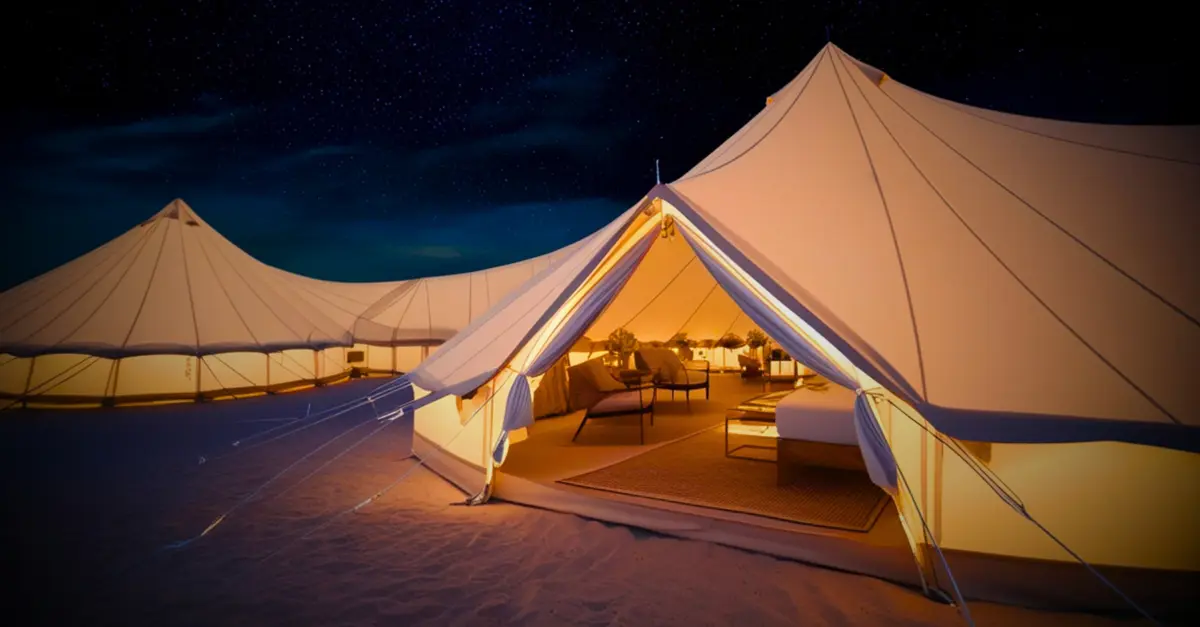
To extend your stay, some accommodations offer an experience at the heart of the desert landscapes, in fitted tents or bivouacs. The appeal is to enjoy the calm, gaze at the night sky and discover an atmosphere very different from that of the town.
It is worth checking the exact location of the accommodation, however: establishments in the region can be found both on the edge of the lagoon and in more remote areas. A night in the desert can be a good way to complete a programme built around excursions and water activities.
How long should you allow to visit Dakhla?
A three-day stay is already enough to discover the main attractions of Dakhla. The first day can be devoted to the town and the lagoon, with a water activity or a kitesurfing introduction. The second day can be dedicated to the White Dune and an excursion into the desert landscapes. The third offers a chance to discover the Atlantic beaches, taste oysters and enjoy a moment of relaxation by the water.
For a stay of five to seven days, the pace can be more relaxed. It then becomes possible to add several outings, take water sports lessons or devote more time to observing nature.
What does the future hold?
The future of Dakhla will depend on the ability to reconcile three requirements: increasing its appeal, protecting the environment and ensuring a fair distribution of benefits. The authorities, operators and residents do not always share the same priorities, and it is in the balancing of these interests that the quality of the model will be decided.
We take the view that the destination has an asset that is hard to replicate: a landscape where desert and ocean meet, combined with natural conditions that favour wind sports. The question remains whether it can grow without losing what sets it apart. It deserves to be followed in the years ahead.
FAQ
What is the best time to visit Dakhla?
It depends on the activity. Kitesurfing enthusiasts favour periods of steady wind, while those looking for milder temperatures often choose other seasons. A chat with a local operator helps you decide.
Is Dakhla suitable for kitesurfing beginners?
Yes, that is one of its reputations. The lagoon offers flat water and generally favourable learning conditions, provided you are supervised by a qualified school.
How do you get to Dakhla?
Mainly by plane, via the town’s airport, with connections from the north of the country and, depending on the period, from abroad. The journey by road is very long.