


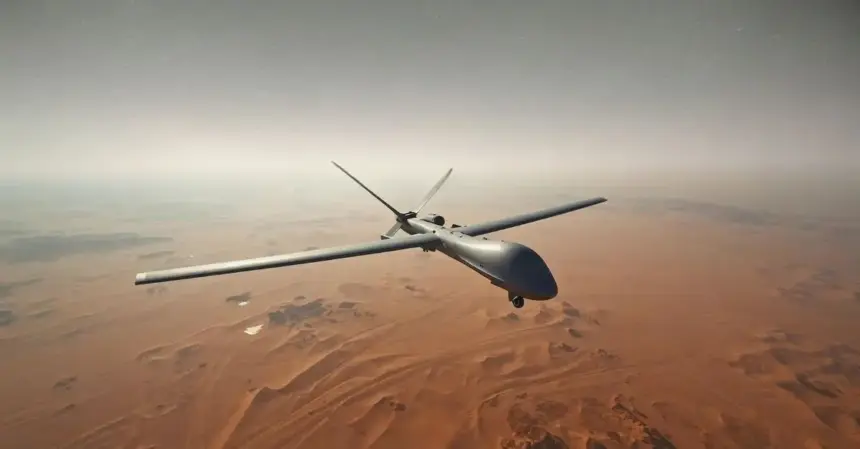
By 2026, the sky over the Sahara is no longer just the domain of migratory birds, but that of cutting-edge technology that has redefined regional geopolitical rules. Morocco, engaged in an unprecedented modernization of its Royal Armed Forces (FAR), has made the drone the backbone of its defense strategy. This massive investment is not a mere arms race but a doctrine of “controlled asymmetric warfare.” In a few years, the Kingdom has moved from acquiring foreign equipment to a fierce desire for industrial autonomy, transforming the Sahara into an operations theater where technology supplants numbers.
The primary stake is territorial sovereignty. Since the 2020 ceasefire breach and the El Guerguerat incident, Morocco understood that controlling vast desert stretches required a constant, invisible, and proactive presence. Reconnaissance drones, capable of remaining airborne for dozens of hours, offer a “persistence” capacity that conventional aviation can only provide at a prohibitive cost. This is a paradigm shift: surveillance is no longer occasional; it is total.
Technological Supremacy as a Tool for Active Deterrence
The first pillar of this investment is active deterrence. In the Sahara, the terrain is immense and difficult to navigate. By deploying fleets of drones such as the Turkish Bayraktar TB2, the Chinese Wing Loong, or the latest generation Israeli models, Morocco has established a de facto exclusion zone east of the Defense Wall. Any incursion attempt is detected in real-time, allowing for precision strikes even before opposing units reach their targets. This efficiency significantly reduces human losses on the Moroccan side and discourages guerrilla harassment tactics.
Beyond the strike, informational superiority is the goal. Modern reconnaissance drones are equipped with optronic sensors and radars capable of piercing the desert’s silence, even at night or during sandstorms. This real-time data is fed into a centralized command system, allowing for rapid decision-making. Morocco is also investing in artificial intelligence to analyze these massive image flows to automatically identify suspicious movements across the borders.
Toward Industrial Autonomy and the “Dronification” of Defense
The 2025-2026 turning point is marked by the shift from purchasing to local production. Morocco no longer wants to rely solely on its international partners. Through technology transfer agreements, particularly with Israel, the Kingdom has inaugurated assembly and maintenance units on its soil. This strategy aims for several objectives:
-
Reducing long-term maintenance costs.
-
Adapting devices to the specific climatic and geographical conditions of the Sahara.
-
Developing a national technological ecosystem creating skilled jobs.
-
Eventually becoming an exporter of defense solutions for other African countries.
This “dronification” of the Moroccan army is accompanied by an increase in the defense budget, reaching record levels in 2026. Investing in drones is seen as a “smart” investment: a drone costs less than a fighter jet and can perform longer surveillance missions with zero risk to the pilot. It is a rationalization of financial resources in the face of persistent security challenges.
Regional Geopolitical and Security Stakes
Morocco’s massive investment in drones also fits into a broader fight against transnational threats. The Sahara is not just a theater for political conflict; it is a transit zone for drug trafficking, illegal immigration networks, and Sahelian terrorist groups. By securing its southern borders through constant aerial surveillance, Morocco positions itself as the guarantor of regional stability for Europe and the United States.
This technological rise alters the balance of power in North Africa. It imposes an increased responsibility on Morocco in managing border crises. Drones allow for the precise documentation of any violation of international treaties, offering the Kingdom a diplomatic advantage based on visual evidence. In short, the drone in the Sahara is as much a weapon of war as it is a tool for communication and legitimizing the Moroccan presence on the ground.
FAQ on Drones in Morocco
What types of drones does Morocco primarily use? Morocco has a diversified fleet including Bayraktar TB2 (Turkey), Wing Loong II (China), and WanderB and ThunderB (Israel) for reconnaissance and attack.
Does Morocco manufacture its own drones? In 2026, Morocco took a major step by opening production and assembly plants under license, aiming for partial technological sovereignty.
What is the impact of drones on the Sahara conflict? Drones have radically limited the Polisario’s movement capabilities, transforming the buffer zone into a space under permanent control and making guerrilla tactics obsolete.