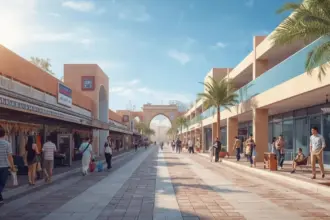



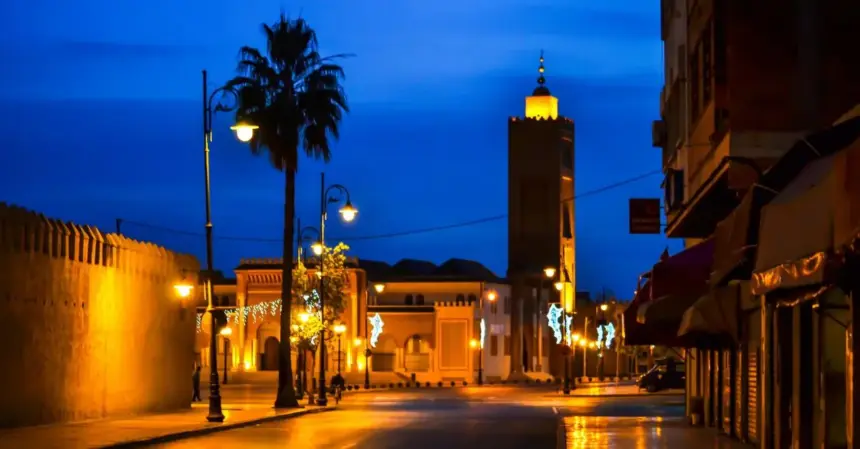
Oujda: The Gateway to the East and its economic opportunities are today attracting a fresh look from national and international investors. Located at the edge of Eastern Morocco, this millennial city is no longer content with its historical role as a cultural crossroads. It is now asserting itself as a major competitive hub, driven by cutting-edge infrastructure and an ambitious regional development vision. The era when the city was perceived as a simple border stopover is over; it has become the engine of a region undergoing a complete transformation.
The current dynamism of Oujda is based on a synergy between tradition and modernity. While the Medina continues to pulse to the rhythm of ancestral exchanges, the surrounding industrial zones and technopoles are shaping the economic future of the Oriental region. This striking contrast offers fertile ground for those seeking to combine quality of life with profitability. Recent investments in the rail network and the expansion of the Oujda-Angads airport testify to this desire to open up the region and make it an essential logistical hub towards Africa and Europe.
A Strategic Geographical Positioning
Oujda enjoys a unique location that gives it the natural status of a gateway between the Maghreb and the rest of the world. This title of “Gateway to the East” is not just a poetic phrase; it is a geographical reality that facilitates cross-border and maritime trade, particularly thanks to its proximity to the Nador West Med port complex. This titanic project, located just a short distance away, indirectly boosts Oujda’s attractiveness by offering world-class logistical outlets for local businesses.
The city also benefits from reinforced road connectivity. The East Highway has radically reduced distances to the country’s economic centers, such as Casablanca and Rabat. For an entrepreneur, settling in Oujda means accessing a vast regional market while remaining connected to major global flows. This accessibility is the first pillar of Oujda’s economic opportunities, attracting varied sectors ranging from agrifood to pure logistics, thus creating a sustainable growth dynamic for the entire province.
The Role of the Oujda Technopole
The Oujda Technopole is undoubtedly the most brilliant symbol of this modernization. A true new-generation industrial and technological park, it offers ready-to-use platforms for industrialists. This site already hosts automotive manufacturing units and companies specializing in renewable energy. The idea is simple: offer an ecosystem where innovation meets mass production, while benefiting from tax incentive measures specific to the Oriental region.
The impact of this technopole is also measured by the creation of skilled jobs. By collaborating closely with Mohammed First University, the site ensures a match between academic training and market needs. Young graduates in Oujda no longer need to exile themselves to the Atlantic axis to find high-value-added positions. This talent retention strengthens the social fabric and guarantees companies a competent, motivated, and immediately operational local workforce.
Leading Sectors of the Local Economy
Investing in Oujda means betting on sectors in full expansion. Agriculture and agrifood remain historical pillars, but they are modernizing through the introduction of smart irrigation technologies and high-value-added processing. The Triffa plain, not far away, provides quality raw materials that Oujda’s industrial units transform for export. “Made in Oujda” is starting to earn its stripes on international markets, particularly for citrus fruits and local products.
The renewable energy sector constitutes another major opportunity. With one of the highest sunshine rates in the Kingdom, Oujda and its region are magnificently suited for solar and wind projects. Many startups and large groups are interested in this energy deposit to power industrial zones in a decarbonized manner. This is a strong argument for European investors concerned about their carbon footprint and looking for sustainable production back-bases.
Development of Trade and Services
Retail trade and services are also experiencing a meteoric rise. The emergence of a dynamic middle class and the arrival of new residents have stimulated the creation of modern shopping centers, international franchises, and personal service platforms. Oujda is transforming into a service city capable of meeting current consumption requirements. The banking and financial sector is very present, supporting project leaders with adapted financing solutions.
Real estate, whether professional or residential, follows this upward trend. However, prices remain very competitive compared to metropolises like Tangier or Marrakech, offering an attractive entry ticket for developers. There is a growing interest in high-end offices and logistical activity zones. This real estate effervescence is the clinical sign of a city that is growing and projecting itself serenely into the next twenty years, supported by rigorous urban planning.
Infrastructure and Regional Connectivity
To understand why Oujda: The Gateway to the East and its economic opportunities are so credible, one must look at the public works order book. The Oujda railway station, a true architectural jewel, is one of the most modern in Africa. It symbolizes the unbreakable link between the Oriental and the rest of Morocco. The rail does not only serve passenger transport; it is a crucial logistical lever for moving goods from production areas to export ports.
The Oujda-Angads international airport plays an equally fundamental role. With regular connections to major European capitals, it facilitates business tourism and allows foreign investors to reach the city in a few hours. This ease of movement is essential in a world where speed of decision-making is a competitive advantage. Furthermore, telecommunications infrastructure, with the widespread deployment of fiber optics, now enables remote work and outsourcing services (offshoring) from Oujda.
Major Assets for Investment
-
Abundant industrial land reserves at regulated prices.
-
Specific regional tax incentives for the Oriental region.
-
A qualified workforce from Mohammed First University.
-
A pleasant living environment blending a Mediterranean climate with rich culture.
-
Immediate proximity to the future Nador West Med port.
Mohammed First University a Lever for Growth
One cannot mention Oujda without talking about its academic influence. Mohammed First University (UMP) is ranked among the best in the country and even the continent in certain scientific fields. It is the true brain of the region, producing thousands of engineers, technicians, and managers every year. For a company, having access to such a pool of skills at its doorstep is a rare economic opportunity that reduces recruitment and training costs.
UMP actively encourages entrepreneurship through startup incubators and partnerships with the private sector. Research and development (R&D) projects are born in Oujda’s laboratories, particularly in the fields of digital technology and artificial intelligence. This intellectual effervescence attracts technology companies that see in Oujda a “small Moroccan Silicon Valley,” where the cost of living allows for innovation at very competitive rates while maintaining high expertise.
Synergy Between Industry and Research
The collaboration between industrialists at the Technopole and researchers at the university creates a virtuous loop. Technical problems encountered in factories often find their solutions in university laboratories. This physical and institutional proximity promotes rapid technology transfer, essential for staying competitive in the global market. Oujda thus proves that economic development cannot happen without a solid educational base capable of adapting to successive industrial revolutions.
Tourism and Heritage as Growth Drivers
Tourism in Oujda is not limited to visiting its historical ramparts. The city is betting on cultural and niche tourism, valuing its intangible heritage, its Gharnati music, and its unique gastronomy. Business tourism is also in full expansion, with the organization of professional fairs and international congresses that fill the city’s hotels throughout the year. Oujda is becoming a destination where people come for work but stay for pleasure.
The proximity to the seaside resort of Saïdia, the “Blue Pearl,” offers an ideal complementarity. Oujda serves as a logistical base and gateway for tourist flows heading to the coast. This duo between the historical metropolis and the modern resort generates significant financial flows for Oujda’s merchants. Investment opportunities in boutique hotels, catering, and leisure services are numerous for those who know how to exploit the city’s authenticity.
Valorization of Architectural Heritage
The rehabilitation of the Oujda Medina is a flagship project that combines heritage conservation with economic revitalization. By renovating historical souks and squares, the city makes its center more attractive to tourists and investors. Traditional houses (Riads) are being transformed into guest houses or art galleries, creating a circular local economy. This highlighting of the past serves as a foundation for a strong brand image, essential for attracting visitors seeking authentic and memorable experiences.
Quality of Life and Attractiveness for Expats
Why choose Oujda over another large Moroccan city? The answer often lies in two words: quality of life. Oujda offers a more human pace, far from the permanent stress of megacities. The cost of living is significantly lower, allowing families and executives to enjoy superior purchasing power. Health and education infrastructure (international schools, modern clinics) are present, ensuring daily comfort without compromise.
For Moroccans of the World (MRE) originally from the region, Oujda has become a priority investment ground. Many return to create businesses or build residences, injecting fresh capital into the local economy. This emotional and economic bond strengthens the city’s stability. Oujda’s warm atmosphere, its safety, and its legendary conviviality make it a destination of choice for those seeking to combine professional success with personal fulfillment in the heart of the Oriental.
A Green City in the Making
Oujda is also investing in its green spaces and environmental management. Urban park projects and green belts aim to improve air quality and provide relaxation areas for residents. This ecological dimension is becoming an increasingly important criterion for institutional investors who prioritize sustainable cities. By 2040, Oujda will undoubtedly be one of the most resilient cities in Morocco in the face of climate challenges, thanks to proactive management of its natural resources and urban planning.
Frequently Asked Questions on Oujda’s Economy
Why invest in Oujda rather than Tangier or Casablanca? Oujda offers significantly more competitive land and labor costs, while benefiting from top-tier transport infrastructure. It is a strategic gateway to West Africa and Europe via the future Nador West Med port, with specific regional tax incentives.
What are the most profitable sectors in Oujda currently? Agrifood, logistics, offshoring, and renewable energy are the key sectors. Retail trade and professional real estate also show strong growth potential thanks to the city’s constant urban development.
What role does the Nador West Med port play for the city of Oujda? The Nador West Med port acts as a major logistical accelerator. It allows companies based in Oujda to export and import goods at reduced costs, integrating the city into global value chains in a sustainable way.
Is it easy to recruit qualified personnel in Oujda? Yes, thanks to Mohammed First University, which trains diverse and highly qualified profiles. The dynamism of the Technopole also fosters the emergence of an ecosystem of technical skills ready to meet the needs of industrialists.