

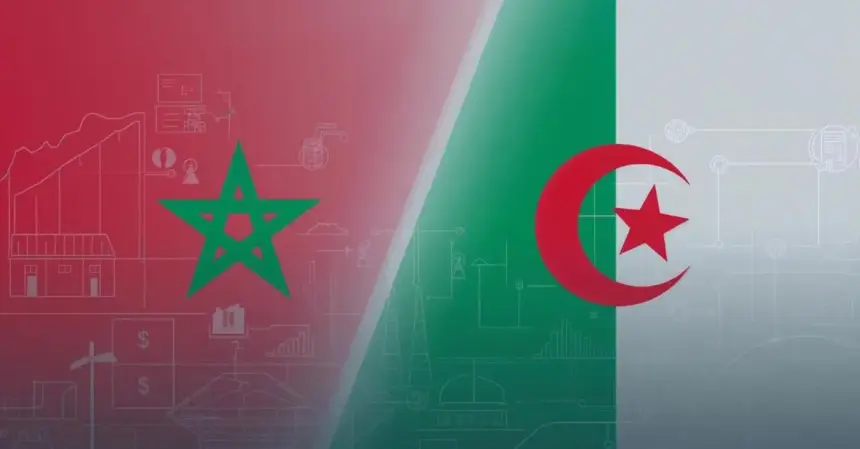
The economic rivalry between Morocco and Algeria is often reduced to a simple comparison of GDP figures. On paper, Algeria frequently takes the lead, buoyed by its vast energy reserves. However, modern economic analysis requires us to look beyond these “paper figures” to understand the real economy—the one that dictates the quality of life, infrastructure, and long-term sustainability for its citizens.
The Mirage of Administered Exchange Rates
The fundamental issue in comparing these two North African giants lies in currency valuation. Algeria operates with an administered exchange rate. The official value of the Algerian Dinar is strictly controlled by the state, creating a massive gap between the bank rate and the “black market” rate. Since international organizations like the IMF use official rates to calculate GDP in dollars, Algeria’s economic size is mechanically inflated.
Morocco, conversely, has moved toward a more transparent and market-oriented currency system. The Dirham is stable and its value in the streets matches its value in the banks. This transparency means that Morocco’s GDP represents a tangible, verifiable economic output. When you see a growth figure for Morocco, it reflects actual containers leaving ports and tourists spending money—not just a spreadsheet adjustment based on an artificial exchange rate.
Industrial Maturity vs. Resource Dependency
A healthy economy is a diversified one. Morocco has spent two decades building an industrial ecosystem that is now the envy of the continent.
-
Automotive Powerhouse: Morocco is now a global hub for car manufacturing, hosting giants like Renault and Stellantis.
-
Green Energy: Investments in solar and wind energy are not just environmental goals; they are economic strategies to lower production costs.
-
Global Connectivity: Through Tanger Med, Morocco is physically linked to over 180 global ports, making its GDP “real” in the sense of global trade integration.
Algeria’s economy remains a rentier state. While oil and gas provide significant cash flow, they do not create a resilient economic fabric. A GDP built on commodities is a “volatile GDP.” If oil prices drop, the economy shrinks instantly. This lack of structural diversity means that while the “paper GDP” might look large during a gas crisis in Europe, the internal productive capacity of the country remains stagnant.
Real Purchasing Power and Market Availability
The true test of an economy is the supermarket shelf. In Morocco, the liberalization of trade and the strength of the local agri-business mean that products are available, diverse, and price-competitive. In Algeria, despite a theoretically higher GDP per capita in some rankings, recurrent shortages of basic goods suggest an economy that struggles with supply chains and local production. This is the difference between having wealth in the ground (Algeria) and having wealth in circulation (Morocco).
FAQ
Why does Algeria’s GDP fluctuate more than Morocco’s? Because it is tied to energy prices. Morocco’s diversified exports (cars, phosphates, services) provide a buffer that ensures more stable growth year-over-year.
Is Morocco’s debt a problem compared to Algeria’s lack of debt? Algeria has very little foreign debt thanks to oil, but it also has limited international financial integration. Morocco uses debt strategically to fund massive infrastructure projects that generate future growth.