



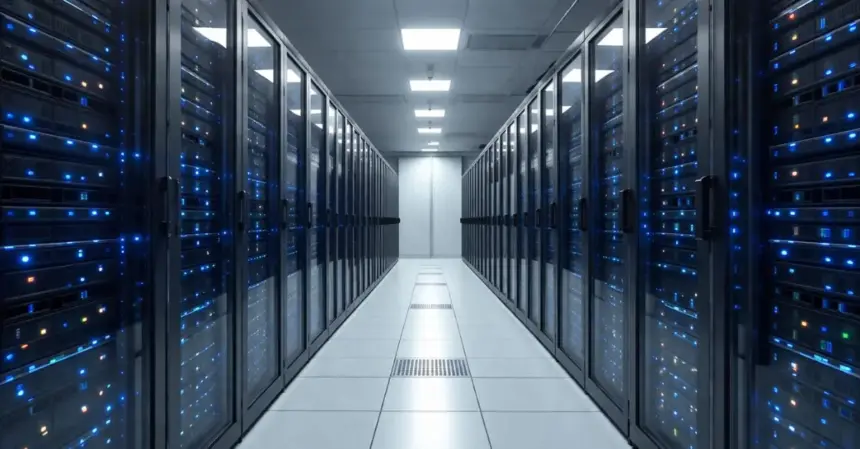
The meteoric rise of Data Centers in Morocco marks a historic turning point for the continent’s digital economy. In just a few years, the economic capital of the Kingdom has established itself as a premier technological hub, attracting global cloud and cybersecurity giants. This phenomenon is no accident. Located at the crossroads of Europe, Africa, and the Americas, Casablanca leverages its unique geographical position to offer unprecedented guarantees of digital sovereignty and technical performance.
- The explosive growth of storage infrastructure
- International connectivity as a growth lever
- Digital sovereignty for West Africa
- The impact of green energy on hosting costs
- An attractive economic and regulatory environment
- Cybersecurity challenges in the African cloud
- Training local talent at the heart of the system
- Future prospects for the Moroccan digital hub
The concept of a digital safe takes on its full meaning here. As data protection becomes an absolute priority for governments and multinational corporations, Casablanca offers infrastructure certified to the strictest international standards. By investing heavily in fiber optics and renewable energy, Morocco has created a favorable ecosystem for hosting critical data, transforming the city into a mandatory gateway for West African internet traffic.
The explosive growth of storage infrastructure
Casablanca’s skyline is changing, no longer just by office buildings, but by the appearance of massive, ultra-secure structures. These new-generation Data Centers, often classified as Tier III or Tier IV, guarantee nearly permanent service availability. Major players like Maroc Data Center and N+ONE have already deployed facilities capable of withstanding the most severe technical failures. This development responds to an explosion in local and regional demand, driven by the digital transformation of banks and public administrations.
The investment in these infrastructures represents billions of dirhams. It involves building environments where temperature, humidity, and power supply are controlled to the second. This reliability is the primary selling point for companies wishing to outsource their IT servers. In Casablanca, the density of the electrical grid and the redundancy of connections allow for an uptime often exceeding 99.98%, an indispensable standard for modern e-commerce and financial services.
International connectivity as a growth lever
The true secret of Casablanca’s success lies beneath the ocean. The city is connected to several high-capacity subsea fiber optic cables, linking Morocco directly to Spain, France, and West Africa. This international connectivity significantly reduces latency, the response time between when data is sent and received. For a company based in Dakar or Abidjan, hosting data in Casablanca is often more efficient than sending it to servers located in Northern Europe or the United States.
This technical proximity fosters a dynamic regional market. By becoming the landing point for new information highways, Morocco acts as a digital gateway. Telecommunications operators leverage this infrastructure to offer competitive cloud computing services. The advantage is twofold: a better user experience for end customers and reduced bandwidth costs for service providers, solidifying Casablanca’s position as the sector leader in Francophone Africa.
The pillars of Moroccan connectivity
-
Connection to major subsea cables such as Medusa and the West Africa Cable System (WACS).
-
Presence of multiple Internet Exchange Points (IXPs) facilitating local peering.
-
A vast national terrestrial fiber optic network interconnecting industrial zones.
-
Strategic partnerships with major global IP transit providers.
Digital sovereignty for West Africa
The issue of personal data protection has become a major political and legal challenge. With the entry into force of laws inspired by the European GDPR, such as Law 09-08 in Morocco, companies are required to know exactly where their information resides. By choosing Data Centers in Casablanca, West African countries ensure their data stays on the continent, under a stable and protective jurisdiction. This avoids dependence on distant powers and strengthens citizen trust in digital services.
Sovereignty is not just a legal matter, but also a question of technical mastery. By training thousands of engineers every year, Morocco provides a skilled workforce capable of managing these complex infrastructures. This local expertise ensures that maintenance and cybersecurity operations are performed on-site, without waiting for foreign intervention. This autonomy is what makes Casablanca a credible digital safe for state institutions and strategic large enterprises across the continent.
The impact of green energy on hosting costs
A Data Center is a voracious consumer of energy, primarily for powering processors and cooling server rooms. Morocco, an African leader in renewable energy, possesses a major competitive edge: its ability to produce clean electricity through solar and wind power. Many data center projects in Casablanca now integrate Green IT solutions, aiming to reduce their carbon footprint while simultaneously lowering energy bills. This ecological transition is a powerful argument for international companies under strict CSR mandates.
The use of innovative cooling systems, such as utilizing outside air or optimized water circuits, allows for a reduction in the Power Usage Effectiveness (PUE) ratio. In Casablanca, the moderate climate influenced by the Atlantic naturally assists in thermal regulation. By combining cutting-edge technology with natural resources, the sector succeeds in offering highly attractive hosting rates compared to European markets, while guaranteeing identical or even superior service levels in recent cases.
An attractive economic and regulatory environment
The Moroccan government has established dedicated zones, such as Casanearshore, which offer tax advantages and ready-to-use infrastructure for IT players. This incentive-based legislative framework encourages the installation of Data Centers and digital service companies. Simplified administrative procedures and support for Foreign Direct Investment (FDI) have allowed Casablanca to surpass other African metropolises in terms of digital attractiveness. The country’s political stability also plays a crucial reassuring role for long-term investors.
Furthermore, the presence of a solid and digitized banking sector creates permanent internal demand. Moroccan banks, which are expanding massively across West Africa, use Casablanca’s data centers to centralize their regional operations. This “hub” model of finance and technology is mutually beneficial: banks need secure servers, and Data Center owners benefit from stable institutional clients. This economic symbiosis guarantees the longevity of the infrastructure and encourages constant technological updates.
Cybersecurity challenges in the African cloud
Hosting sensitive data involves immense responsibility regarding cyber threats. Casablanca’s Data Centers are not mere server warehouses; they are digital fortresses equipped with Intrusion Detection Systems (IDS), next-generation firewalls, and Security Operations Centers (SOC) active 24/7. Combating Distributed Denial of Service (DDoS) attacks and phishing is a daily priority. Moroccan cybersecurity experts collaborate closely with international bodies to anticipate new forms of online crime.
Trust is earned through certification. Most prestigious data center sites in Casablanca proudly hold ISO 27001 (information security) and PCI DSS (payment card industry) standards. These labels assure clients that internal processes are audited and that data leak risks are minimized. In a world where a single breach can ruin a reputation, this operational rigor is what distinguishes Casablanca as the preferred destination for critical data storage in Africa.
Training local talent at the heart of the system
To operate these “digital cathedrals,” exceptional skills are required. Morocco has invested heavily in technical higher education. Engineering schools and universities in Casablanca produce specialists in Cloud Computing, virtualization, and Big Data. This concentration of talent attracts multinationals that find not only servers but also the expertise to configure and optimize them. Fluency in multiple languages further facilitates exchanges with international clients.
The ecosystem is complemented by numerous startups specialized in artificial intelligence and data analysis. These companies locally consume the resources of Data Centers, creating a virtuous circle of innovation. The idea is no longer just to store data, but to transform it into added value. Casablanca is thus becoming a laboratory where tomorrow’s digital services for the African market are invented, from Fintech to E-health and connected education.
Future prospects for the Moroccan digital hub
The future looks bright for the sector. The imminent arrival of 5G in Morocco will multiply the needs for data storage and processing at the network’s edge (Edge Computing). Data centers will need to evolve to handle massive real-time flows, particularly for the Internet of Things and smart cities. Casablanca is already preparing for this transition by modernizing its data distribution networks and densifying urban infrastructure to accommodate these new technologies.
The ambition is clear: maintain and strengthen regional leadership against growing competition. Thanks to its long-term strategic vision, Morocco is transforming its economic capital into an indispensable pillar of the African digital revolution. As a digital safe, Casablanca does not just protect the present; it actively builds the technical foundations upon which the future prosperity of an entire continent will rest.
FAQ on Data Centers in Casablanca
Why choose Casablanca over Europe for hosting data? Choosing Casablanca reduces latency for African users while benefiting from lower operational costs. Moreover, it ensures that data remains subject to African jurisdictions, strengthening regional digital sovereignty.
What are the common security certifications in Moroccan Data Centers? Most high-end sites hold ISO 27001 certifications for information security and the Uptime Institute’s Tier III standard, guaranteeing service availability of 99.982%.
Is Morocco ready for the Green Cloud? Yes, through its massive investments in solar and wind power, Morocco allows data centers to use an increasing share of clean energy, reducing the carbon footprint of hosted companies.