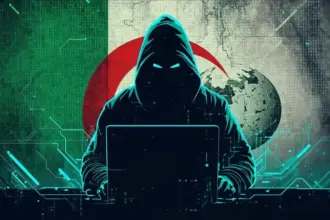




Bounty Hunters: These Moroccan ethical hackers paid by giants of the digital world are today shaking up the codes of global cybersecurity. Far from the clichés of the hooded computer pirate operating in the shadows to cause harm, these new knights of the keyboard use their genius to protect our data. In Morocco, a generation of computer geniuses has decided to put its skills at the service of collective security by tracking flaws in systems belonging to Google, Facebook, or Microsoft. These experts, often self-taught, transform lines of code into true digital ramparts while receiving compensation that would make any senior engineer dream.
This phenomenon, known as Bug Bounty, has created a real surge of interest among Moroccan youth. In cities like Casablanca, Rabat, or Marrakech, enthusiasts spend their nights scrutinizing critical infrastructures to detect the slightest vulnerability. Their goal is simple: find the flaw before malicious cybercriminals exploit it. Once the Proof of Concept (PoC) is established, they send a detailed report to the company involved, which, after verification, pays them a bounty proportional to the severity of the discovery. It is a game of cat and mouse where everyone wins, especially the Moroccan hacker who gains prestige and financial comfort.
The Meteoric Rise of Moroccan Bounty Hunters
Morocco has risen in just a few years to become one of the most active nations on international platforms like HackerOne or Bugcrowd. This success is no accident. It results from a culture of “resourcefulness” in computing combined with boundless curiosity. These Bounty Hunters: These Moroccan ethical hackers paid by giants knew how to take advantage of the web’s openness to train for free on specialized forums and challenge platforms (CTF). Today, some Moroccan names figure proudly in the “Hall of Fame” of the largest multinationals, proving that talent has no geographical boundaries.
International recognition is such that companies like Apple or Uber no longer hesitate to directly solicit these experts for private vulnerability research programs. In 2025, statistics showed that Morocco was in the top 3 in Africa in terms of bounties collected on Bug Bounty platforms. This performance is explained by methodological rigor and an ability to think “out of the box,” two essential qualities for outsmarting the most sophisticated security algorithms in Silicon Valley. The Moroccan community is close-knit, sharing tips and tools while remaining in healthy competition to land the next “critical bug.”
How Bug Bounty Programs Work
To understand the excitement around these Bounty Hunters: These Moroccan ethical hackers paid by giants, one must grasp the economic mechanism behind security. Instead of paying a team of consultants by the hour, companies open their systems to thousands of independent hackers and only pay for results. If no one finds anything, it costs the company nothing. But if a Moroccan hacker discovers a flaw allowing access to user accounts, they can receive a bounty ranging from $5,000 to over $50,000 in a single report.
This approach allows for testing the resilience of servers 24/7. The types of vulnerabilities sought are varied: SQL injections, XSS flaws, or complex authentication defects. Each discovery is subject to a rigorous technical report. For the hacker, it is a legal, ethical, and extremely rewarding source of income. It is also a way for Morocco to shine in the knowledge economy by virtually exporting high-value-added services without the talent needing to leave the national territory.
Why Tech Giants Bet on Morocco
If technology giants are so interested in Moroccan hackers, it is because they bring a fresh perspective to cybersecurity. Unlike traditional auditors who follow pre-established checklists, the Moroccan ethical hacker uses a creative and instinctive approach. They look for human error where the machine seems infallible. This complementarity has become vital for companies managing billions of sensitive data points that cannot afford a massive data leak, which would mean a stock market catastrophe.
Furthermore, Morocco’s time zone and mastery of several languages (Arabic, French, English) greatly facilitate exchanges with security teams based in the United States or Europe. Bug Bounty platforms note that reports sent by Moroccans are often among the best-documented. This technical quality reduces the processing time of flaws for companies, allowing them to deploy patches in record time. Morocco thus becomes, in effect, a leading test laboratory for global security.
Key Skills of the Ethical Hacker
Becoming one of these Bounty Hunters: These Moroccan ethical hackers paid by giants requires a colossal personal investment. It is not enough to know how to code; one must understand how systems communicate with each other. Here are the areas where Moroccan experts particularly excel:
-
Deep mastery of scripting languages like Python or Bash to automate tests.
-
Advanced knowledge of network protocols and cloud architectures (AWS, Azure).
-
The art of “Recon,” which consists of mapping a target’s infrastructure without being detected.
-
Source code analysis to spot business logic errors.
-
Perseverance, as it sometimes takes weeks of research to find a single small entry point.
Impressive Income for a Connected Youth
We are not talking about a few dirhams here, but sums that can change a life. Some very active Moroccan hackers manage to accumulate several hundred thousand dollars in rewards in a single year. These individual successes have a ripple effect on an entire generation of developers. Rather than aiming for a traditional salaried position, many prefer to go freelance in Bug Bounty, taking advantage of geographical freedom and a salary indexed to American standards.
However, behind these flashy figures lies the reality of hard work. Bug Bounty is a global competition: the first to report the flaw gets the bounty, the others receive nothing. This requires constant technological monitoring because a flaw that works today will be fixed tomorrow. For Bounty Hunters: These Moroccan ethical hackers paid by giants, every day is a new race against time. Stories of young people who bought their first apartment or financed their relatives’ studies thanks to a critical flaw found at Twitter or PayPal are no longer urban legends.
Ethics at the Heart of the Practice
What distinguishes these experts from “Black Hats” (malicious hackers) is their moral sense. The ethical hacker scrupulously respects the rules defined by the company. They must not copy data, must not disrupt service, and must keep their discovery confidential until it is corrected. This deontology is crucial: it transforms a potential threat into a trusted partner. In Morocco, associations and university clubs are forming to frame this practice and raise awareness among youth about the legal risks associated with illegal hacking.
The Moroccan legal framework is also beginning to adapt to these new realities. Collaboration between public institutions and ethical hackers is encouraged to protect the country’s vital infrastructures. By joining the ranks of Bounty Hunters: These Moroccan ethical hackers paid by giants, these young people actively participate in the Kingdom’s digital sovereignty. They prove that cybersecurity is not just an expense, but a future sector capable of generating wealth and international influence.
Challenges and Risks of the Ethical Hacker Profession
Despite the attractive bounties, the profession of Bounty Hunter is not without pitfalls. The main challenge is the instability of income. One month can be extremely lucrative thanks to a series of discoveries, while the next can be completely empty. This financial pressure can be stressful for those who make it their primary activity. Additionally, the mental fatigue associated with constant analysis of complex code is a reality not to be neglected. “Burn-out” often looms over the most passionate bounty hunters.
There is also a legal risk if the hacker exceeds the framework authorized by the program. This is why careful reading of the “Scope” (perimeters) is the first step of any investigation. A Moroccan hacker who tests an unauthorized server would expose themselves to prosecution, even if their intentions were good. The line is sometimes thin, and discipline is required. Bounty Hunters: These Moroccan ethical hackers paid by giants must therefore also be good legal researchers to never put themselves at risk.
Training in Bug Bounty in Morocco
Today, Morocco has increasingly efficient training structures. While being self-taught remains the golden rule, engineering schools are now integrating specific modules on offensive cybersecurity. Events like local CTF (Capture The Flag) competitions allow for detecting talent from a young age. These tournaments are often sponsored by companies looking to recruit the best profiles. For a beginner, the journey often starts with training platforms like TryHackMe or HackTheBox before jumping into the deep end of Bug Bounty.
Mentorship is also a key to success. Many veterans, who have become global references, do not hesitate to advise newcomers via Discord channels or LinkedIn groups. This knowledge transfer is one of the strengths of the Moroccan community. By joining the Bounty Hunters: These Moroccan ethical hackers paid by giants movement, a passionate young person offers themselves an international career without having to leave their roots.
Social and Economic Impact for Morocco
The success of Moroccan ethical hackers has a direct impact on the country’s brand image. Morocco is increasingly perceived as a major technological hub in North Africa. This not only attracts foreign investment in the IT sector but also boosts the local startup ecosystem. Many Moroccan companies are starting to launch their own Bug Bounty programs, realizing that security can no longer be the responsibility of just one internal team.
On the economic front, the foreign currency brought back by these experts contributes to the balance of payments. But beyond money, the transfer of skills is invaluable. These Bounty Hunters: These Moroccan ethical hackers paid by giants bring back high-level working methods, knowledge of global security standards, and a culture of excellence that irrigates the entire national technological sector. Morocco is thus preparing its cyber-sentinels for the challenges of tomorrow.
Useful FAQ on Ethical Hacking in Morocco
What is the difference between an ethical hacker and a cybercriminal? The difference lies in authorization and intent. The ethical hacker acts with the company’s consent within a defined legal framework, and their goal is to protect the system. The cybercriminal acts without authorization to steal, destroy, or extort funds.
Can one actually live off Bug Bounty in Morocco? Yes, it is entirely possible, and some do it with great success. However, it requires a very high level of expertise and great discipline. Many start by doing it as a supplement to a salaried job before going full-time.
What are the best platforms to start with? HackerOne and Bugcrowd are the global leaders. To train specifically, sites like PortSwigger Academy (for web) or HackTheBox are excellent resources for building skills before submitting your first report.
Is it legal in Morocco to look for computer flaws? It is only legal within the framework of Bug Bounty programs explicitly authorized by companies. Any intrusion into a computer system without prior authorization is punishable by Moroccan law (specifically Law 07-03).