

Morocco reaches a milestone in military aviation with a strategic announcement that redefines the North African geopolitical landscape: the arrival of the Indian aerospace giant Hindustan Aeronautics Limited (HAL). This move represents a clean break from traditional defense procurement models. By establishing itself near the prestigious Ben Guerir Air Base, the Indian manufacturer is doing more than just exporting hardware; it is planting a complete industrial ecosystem. This unprecedented collaboration between Rabat and New Delhi transforms the Kingdom into a high-tech hub capable of managing complex weapon systems, shifting from a buyer to a major industrial player.
The stakes of this establishment go far beyond simple logistics. It is a long-term vision driven by the Royal Air Force (FRA) to ensure total operational sovereignty. The choice of Ben Guerir is no accident; this base, already famous for hosting strategic installations and runways capable of receiving space shuttles, is becoming the beating heart of modern aeronautical maintenance. The arrival of HAL symbolizes this rise in power, where Indian expertise meets Moroccan ambition to build a self-reliant, resilient, and technologically advanced defense capable of meeting 21st-century regional security challenges.
A strategic aeronautical factory in Ben Guerir
The installation of this industrial complex by 2027 represents a massive investment in the country’s defense infrastructure. The Ben Guerir complex will be designed to meet the strictest international standards in aircraft manufacturing. This site will not be a mere branch of HAL, but an integrated production and maintenance unit. The goal is to reduce dependence on foreign service providers for maintenance in operational condition (MCO). By internalizing these processes, Morocco ensures its fleet remains available at all times, without suffering from the long delays often found in global supply chains.
The local economic impact will also be considerable. Ben Guerir, a city already focused on innovation through the Mohammed VI Polytechnic University (UM6P), will benefit from the creation of hundreds of highly skilled jobs. Engineers, defense electronics technicians, and composite structure experts will be trained on-site. This synergy between the defense industry and the Moroccan academic world creates a virtuous circle. The factory thus becomes a catalyst for a national defense industry, attracting international subcontractors eager to be close to this new center of excellence.
Modernizing F-16s for enhanced performance
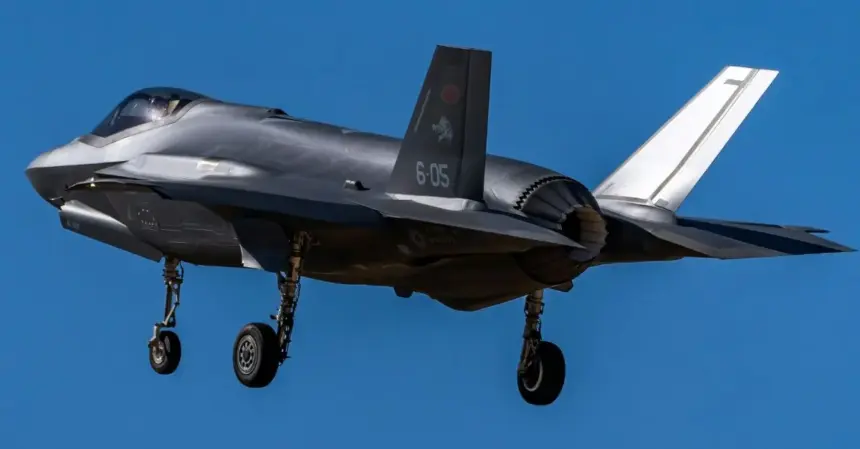
The first phase of this large-scale project focuses on the F-16 Block 50/52, which currently forms the backbone of Moroccan fighter aviation. These aircraft, renowned for their versatility, require constant updates to remain competitive against emerging threats. HAL’s expertise in avionics system integration will be utilized to extend the operational life of these fighters. This is not just about repairs, but a true technological “rejuvenation,” including the overhaul of Pratt & Whitney engines and the upgrade of combat software.
This advanced maintenance phase improves the surveillance and targeting capabilities of the F-16s. Through the integration of new sensors and the modernization of electronic warfare systems, Moroccan pilots will have better situational awareness on the battlefield. This technical autonomy is a pillar of the Kingdom’s military strategy. By mastering the maintenance of its American-made aircraft on its own soil, Morocco strengthens its credibility within NATO as a major non-member ally capable of maintaining standards of excellence without constant external assistance.
Technical benefits of local modernization
-
Flight potential extension: Aircraft structures are reinforced to handle additional flight cycles, pushing back the retirement date.
-
Avionics upgrade: Replacement of onboard computers with faster units capable of processing massive data streams in real-time.
-
Radar signature optimization: Application of new absorbent coatings to reduce aircraft visibility during penetration missions.
-
Fleet reliability: Drastic reduction in ground downtime thanks to the immediate proximity of the Ben Guerir workshops.
-
Cost reduction: Substantial savings on ferry costs and outsourced international maintenance contracts.
Local assembly of the LCA Tejas starting in 2028
By 2028, the Ben Guerir complex will cross a historic threshold with the launch of the LCA Tejas MK1A assembly line. This light multirole fighter, the flagship of the Indian industry, won over Moroccan authorities with its agility and optimized operating costs. Morocco becomes the first international customer to opt for local production, a bold choice that confirms its desire for real technology transfer. The contract covers 58 aircraft, including 48 single-seat combat versions and 10 twin-seaters, with an option for two dozen additional jets.
The local assembly of the LCA Tejas in Morocco is an industrial revolution. Receiving aircraft in kits (CKD – Completely Knocked Down) means that Moroccan technicians will be responsible for final integration, from complex wiring to initial flight tests. The Tejas MK1A is equipped with a cutting-edge AESA radar, capable of detecting targets at long range and resisting intense electronic jamming. This aircraft is intended to gradually replace the Mirage F-1, offering a smooth technological transition to a modern digital platform capable of carrying a wide range of weaponry.
Pilot training and skills transfer
The success of such a project relies above all on human capital. Long before the factory opens, waves of Royal Air Force pilots and technicians began intensive training cycles in India, at HAL facilities in Bangalore. These programs are not limited to flying; they encompass a deep understanding of the Tejas system architecture. Moroccan engineers are learning to diagnose complex faults on digital flight systems (Fly-by-wire) and handle latest-generation composite materials, which are essential for the aircraft’s lightness and robustness.
This skills transfer is the guarantee of true technological autonomy. By training its own staff, Morocco prepares the next generation for a national aeronautical industry capable, eventually, of designing its own components or adapting existing systems to its specific needs. This expertise acquired in Ben Guerir can then be applied to the civil sector, reinforcing Morocco’s position as a global aeronautical hub. The goal is clear: to make every technician an expert capable of ensuring the Kingdom’s aerial superiority.
Impact on sovereignty and regional security
Geopolitically, HAL’s installation in Ben Guerir sends a strong signal. Morocco is asserting itself as a military power capable of integrating diverse technologies from various partners (USA, France, and now India). This diversification of suppliers reduces the risk of diplomatic pressure and ensures defense continuity in all circumstances. The Kingdom positions itself as a security lock in the Mediterranean and a bulwark against instability in the Sahelo-Saharan zone. The ability to produce and maintain its own combat jets places Morocco in the restricted club of militarily industrialized nations.
This cooperation with India also illustrates the emergence of a dynamic South-South axis. By partnering with a rising power like India, Morocco gains access to advanced technologies without the political constraints often associated with traditional partners. This strategic partnership strengthens Moroccan national security while offering India a technological showcase in Africa. The Ben Guerir complex could even become, in the future, a regional maintenance center for other African or Arab countries that choose the Tejas, consolidating Rabat’s diplomatic and industrial leadership on the continent.
A technological leap toward the future of defense
In conclusion, HAL’s industrial project in Ben Guerir is much more than a simple commercial transaction; it is the foundation of a new era for Moroccan defense. By combining the modernization of F-16s and the assembly of LCA Tejas, Morocco optimizes its resources and prepares its fleet for tomorrow’s challenges. This industrial complex ensures that Moroccan skies will remain protected by cutting-edge technologies, maintained by Moroccan hands, on Moroccan soil. This is the very definition of sovereignty in the 21st century: mastering the defense tool from design to maintenance.
The path traveled since the Kingdom’s first aeronautical acquisitions is immense. Today, with the support of visionary partners like Hindustan Aeronautics Limited, Morocco is crossing a decisive turning point. The Ben Guerir factory will be the symbol of this ambition: a modern structure, creating value and expertise, definitively anchoring the country among the world’s aeronautical leaders. For aviation enthusiasts and strategic analysts alike, the message is clear: the future of African military aviation is now being written in Morocco.
FAQ on the Ben Guerir aeronautical project
Why did Morocco choose the LCA Tejas over another aircraft? The Tejas MK1A offers an exceptional performance-to-price ratio. It features modern avionics, including an AESA radar and electronic warfare capabilities, while being more economical to operate than heavy fighters. Furthermore, the agreement includes a full technology transfer with local assembly.
What role will the Ben Guerir base play in this complex? The Ben Guerir Air Base provides the necessary infrastructure for flight tests, facility security, and proximity to Royal Air Force operational units. Its central location in Morocco also facilitates logistics and access for engineers and technicians.
When will the first Moroccan-produced aircraft be operational? According to the planned schedule, the factory will be operational by 2027. The assembly phase for the first LCA Tejas kits will begin in 2028. The first “Made in Morocco” units are expected to join fighter squadrons shortly thereafter, following a series of rigorous validation tests.
Will this project have an impact on employment in Morocco? Absolutely. This complex is estimated to generate hundreds of direct jobs for highly qualified profiles (engineers, aeronautical technicians, logisticians). It will also encourage the emergence of a network of local subcontractors, creating thousands of indirect jobs in the Marrakech-Safi region.