
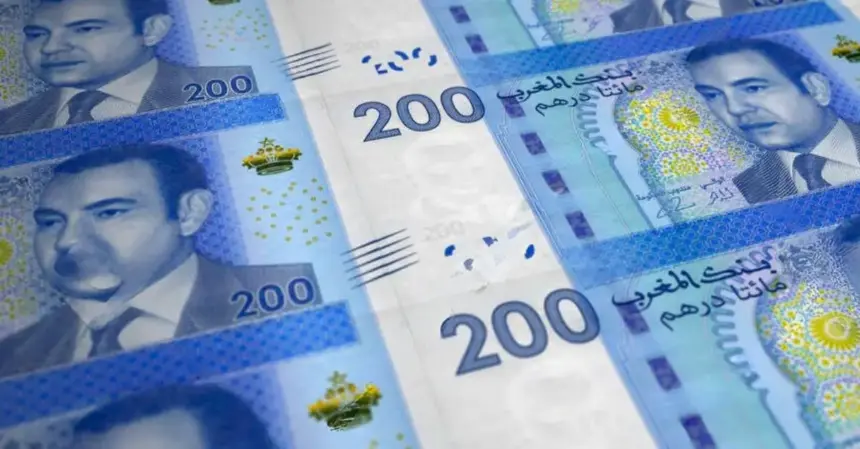
In a global economic environment frequently characterized by extreme volatility and currency collapses, the Moroccan Dirham (MAD) stands out as a remarkable model of financial resilience. While several emerging economies have faced drastic devaluations or hyperinflationary spirals in recent years, the Moroccan currency has maintained an exemplary stability. This steady performance is not a product of luck; it is the strategic outcome of a highly disciplined monetary policy conducted by Bank Al-Maghrib, the nation’s central bank. For international investors, expatriates, and tourists, understanding the mechanics of this stability is crucial to grasping Morocco’s role as a reliable regional economic gateway.
The stability of the Dirham is anchored in a fixed-but-flexible exchange rate regime that has evolved with calculated caution. Unlike nations that opted for a “shock therapy” approach by floating their currencies overnight, Morocco chose a gradual transition. This methodology has shielded the domestic economy from external shocks while progressively integrating the country into global financial flows. By examining foreign exchange reserves, trade balances, and regulatory frameworks, one discovers a model of macroeconomic management that prioritizes long-term sustainability over short-term speculative gains.
The Currency Basket Mechanism
One of the fundamental pillars supporting the Dirham’s stability is its link to a currency basket. Currently, this basket is weighted at 60% Euro and 40% US Dollar. This specific composition is a direct reflection of Morocco’s international trade structure. Since the European Union is the Kingdom’s primary economic partner, the dominance of the Euro in the Dirham’s valuation helps smooth out fluctuations in trade with the Eurozone. Simultaneously, the 40% Dollar allocation provides a necessary hedge for energy imports and commodity transactions, which are globally priced in greenbacks.
This weighting system functions as a natural shock absorber. When one currency in the basket appreciates, the other often moves in a direction that partially offsets the impact, thus stabilizing the Dirham’s overall value. Bank Al-Maghrib manages a fluctuation band that has been widened incrementally from 0.3% to 5%. This controlled flexibility allows the currency to breathe and adjust to market pressures without the risk of a freefall. It is a “soft landing” strategy that prevents the massive speculative attacks often seen in fully floating currency regimes.
The Pivotal Role of Bank Al-Maghrib
Under the leadership of its governor, Abdellatif Jouahri, Bank Al-Maghrib has earned an international reputation for its rigor and independence. The central bank’s primary mandate is price stability. By keeping a tight grip on inflation, the institution ensures that the Dirham’s internal purchasing power remains intact—the first essential step toward external stability. Morocco’s monetary policy is frequently lauded by the IMF for its pragmatism and its ability to anticipate global financial crises before they severely impact the local economy.
The management of foreign exchange reserves is another critical defensive layer. Morocco consistently maintains a level of reserves sufficient to cover at least five to six months of imports. These reserves are fueled by several strategic and resilient sources:
-
High-value phosphate exports and derivatives managed by the OCP Group.
-
The phenomenal growth of the automotive and aerospace industries (Tanger Med hub).
-
Constant and growing remittances from Moroccans Living Abroad (MRE).
-
A vibrant tourism sector that attracts millions of visitors annually.
-
Significant Foreign Direct Investment (FDI) drawn by the country’s political stability.
Economic Diversification as a Currency Anchor
A currency’s strength is ultimately a reflection of the economy it represents. Over the past two decades, Morocco has achieved a profound industrial transformation. The country has successfully moved away from a total reliance on agriculture, which is often hit by climate variability. The rise of “Global Professions of Morocco,” such as the automotive industry—where Morocco is now Africa’s top producer—generates massive and consistent foreign currency inflows. This diversification reduces the Dirham’s vulnerability to sector-specific shocks and bolsters its credibility in international markets.
Furthermore, Morocco has maintained acceptable budgetary balances despite successive global crises. The confidence of international lenders, signaled by the IMF’s Flexible Credit Line (FCL), serves as a global “seal of approval.” For the markets, the fact that major financial institutions trust Morocco’s management means there is no logical reason to bet against the Dirham. This institutional trust is an intangible but vital asset that prevents capital flight and keeps the exchange rate within its target zone.
The Impact of Diaspora Remittances and Tourism
It is impossible to discuss the Dirham’s health without highlighting the extraordinary contribution of the Moroccan diaspora. Remittances from Moroccans living abroad (MRE) reach record levels every year, often exceeding tens of billions of dollars. These inflows represent a permanent and structural support for the national currency, providing a constant supply of Euros, Dollars, and Riyals to the central bank. This massive liquidity helps offset the national trade deficit, particularly the energy bill, which is Morocco’s largest foreign currency expenditure.
The tourism sector has also shown spectacular resilience. With over 14 million tourists visiting the Kingdom annually, the influx of foreign currency is steady and reliable. Every hotel stay, meal, and handicraft purchase contributes directly to the demand for Dirhams. This regular flow ensures a balanced payments position, helping to stabilize the currency even during periods of global economic cooling. The Moroccan tourism brand has become a reliable generator of the hard currency needed to defend the Dirham’s value.
Challenges and Future of Liberalization
Morocco is committed to a process of gradual exchange rate liberalization. The ultimate goal is to transition from a fixed to a floating regime, where market forces determine the Dirham’s value. However, the monetary authorities are proceeding with extreme caution. They aim to avoid the mistakes made by other emerging markets that saw their currencies lose 50% of their value in a matter of days due to rushed liberalization. In 2026, Morocco continues to follow this prudent roadmap, ensuring all macroeconomic prerequisites are met before moving to the next stage of flexibility.
This transition is necessary to support Morocco’s ambition to become an international financial hub through Casablanca Finance City (CFC). A more flexible currency will better absorb external shocks and give the central bank more autonomy in managing domestic interest rates. The challenge lies in maintaining that famous stability while offering more freedom to global investors. Thus far, the strategy has been a success: the Dirham remains one of the safest and most stable currencies in the entire Africa and Middle East region.
FAQ on Dirham Stability
Is there a risk of a sudden Dirham devaluation?
No. According to economic experts and international financial institutions, the risk of a sudden or “forced” devaluation is extremely low. Morocco’s central bank holds robust foreign reserves, and the country’s diversified export base acts as a solid shield against such events.
Why isn’t the Dirham fully convertible internationally?
The Dirham is a currency with limited convertibility to protect the country’s foreign exchange reserves and prevent capital flight. This regulatory framework is precisely what has allowed Morocco to maintain such high levels of stability compared to its neighbors.
How does the price of oil affect the Dirham?
Since Morocco imports most of its energy, a spike in oil prices increases the demand for Dollars to pay for these imports. However, the strong performance of phosphate exports, tourism, and MRE remittances typically acts as a counterweight, preventing any significant negative impact on the Dirham’s value.
What role does the IMF play in the Dirham’s stability?
The IMF provides Morocco with credit lines that act as a “liquidity insurance.” While Morocco rarely needs to draw from these funds, their presence signals to international markets that the country’s macroeconomic management is sound, which maintains investor confidence in the Dirham.