

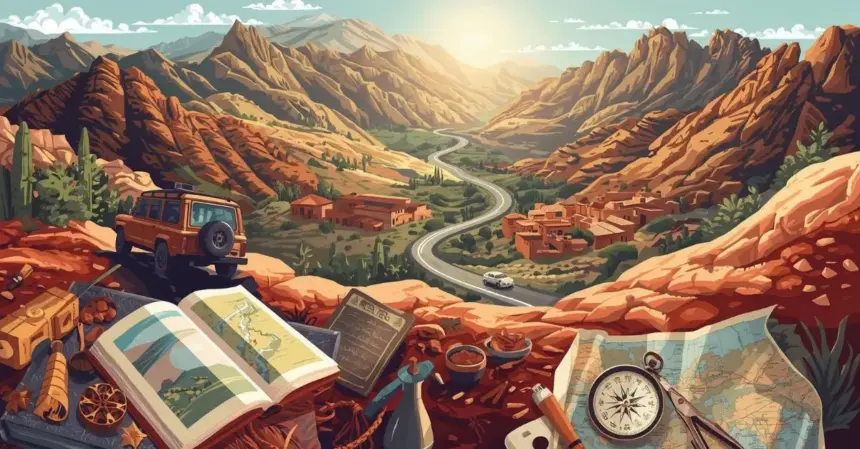
Embarking on a journey through the Atlas Mountains is an invitation to witness Morocco’s most raw and dramatic landscapes. Far from the bustling souks of Marrakech, this mountain range offers a sanctuary of snow-capped peaks, deep canyons, and ancient Berber villages that cling to the hillsides. A road trip here is not just about the destination; it’s about the sheer thrill of navigating winding roads that reveal a new perspective at every turn. To master the Atlas, you need a blend of careful planning, a sturdy vehicle, and an adventurous spirit ready to embrace the unexpected.
The adventure truly begins as you tackle the legendary Tizi n’Tichka pass, which sits at an elevation of 2,260 meters. This high-altitude road is a masterpiece of engineering, offering sweeping views that stretch as far as the eye can see. Driving this route requires focus, as you’ll share the pavement with local buses and intrepid cyclists. However, the reward is immediate: the air gets crisper, the light becomes sharper, and the landscape shifts from lush greenery to the striking red earth typical of the pre-Saharan regions. It’s the ultimate test for any driver and a highlight of any Moroccan itinerary.
Mapping Out Your Mountain Route
Planning your path through the Atlas requires a realistic understanding of mountain geography. On these terrain types, a 60-mile drive can easily take three hours due to the elevation changes and hairpin turns. For a balanced experience, aim for a loop that lasts at least a week. Start your journey in the Ourika Valley for a taste of alpine freshness, then move towards the serene Ouirgane reservoir. This area is perfect for those seeking tranquility and serves as a gateway to the more rugged interior of the High Atlas.
Further west, the village of Imlil beckons. Known as the “Chamonix of the Atlas,” it is the starting point for treks to Mount Toubkal, the highest peak in North Africa. Even if you aren’t planning to summit, the surrounding walnut groves and terraced fields offer incredible day hikes. Staying in a local mountain lodge (gîte) provides an authentic look into the daily life of the Amazigh people. Remember to keep your schedule flexible; sometimes the best experiences are found in the villages that aren’t even on the map.
Selecting the Right Vehicle and Gear
When it comes to your ride, don’t settle for a basic compact car if you plan on going off the beaten path. While the main highways are well-paved, many of the most beautiful viewpoints are accessed via gravel tracks or “pistes.” Renting a 4WD or a high-clearance SUV is highly recommended for safety and comfort. Ensure your rental includes a full-sized spare tire and check the brakes thoroughly. In 2024, fuel is readily available in towns, but always top up when your tank hits half-full, as distances between stations can be vast in the high altitudes.
Packing for the Atlas is all about versatility. Temperatures can swing by 20 degrees between noon and sunset. Layering is essential. Additionally, digital preparation is just as important as physical gear. Download offline maps like Google Maps or Gaia GPS, as cell service can be spotty in the deep valleys. Here is a quick checklist of essentials for your Moroccan road trip:
-
Heavy-duty portable power bank for your devices.
-
A physical map of Morocco as a backup for GPS.
-
First-aid kit with basic rehydration salts.
-
Sturdy, broken-in hiking boots for spontaneous treks.
-
A high-SPF sunscreen (the mountain sun is deceivingly strong).
Deep Dive into Berber Hospitality
The soul of the Atlas Mountains lies within its people. The Berbers, who call themselves Amazigh, have lived here for millennia and are world-renowned for their hospitality. Don’t be surprised if you’re invited for tea by a local villager; it’s a genuine gesture of welcome. Accepting a glass of “Berber Whiskey” (fresh mint tea) is the best way to break the ice. Food in the mountains is simple but incredibly flavorful—look for slow-cooked tagines with prunes and almonds, often prepared over charcoal fires that infuse the meat with a smoky aroma.
Cultural sensitivity goes a long way in these traditional regions. While the Atlas is accustomed to tourists, dressing modestly is appreciated, especially when visiting remote hamlets. The pisé architecture (rammed earth) you’ll see is a testament to ancient wisdom, providing natural insulation against the harsh climate. If your trip coincides with a weekly village market (souk), make it a priority to visit. It’s a sensory explosion of spices, livestock, and local crafts where you can witness the traditional barter system still in action.
Must-See Landmarks Along the Way
Your itinerary should definitely include the Dades Valley and the Todra Gorge. The Dades Valley is famous for its “monkey fingers” rock formations and the iconic zig-zag road that appears in almost every Moroccan travel brochure. It’s a spectacular drive that tests your steering and rewards your eyes. Meanwhile, the Todra Gorge features massive limestone walls that rise 300 meters high, creating a narrow corridor that feels like something out of a fantasy novel. It’s a paradise for rock climbers and photographers alike.
No road trip is complete without a stop at Aït Ben Haddou. This fortified village (Ksar) is a UNESCO World Heritage site and a masterpiece of clay architecture. Walking through its gates feels like stepping onto a film set—and for good reason, as it has hosted productions like Gladiator and The Mummy. Try to arrive early in the morning or late in the afternoon to avoid the tour bus crowds and catch the golden hour light hitting the ancient walls.
Safety and Driving Etiquette
Driving in the mountains demands a different mindset. Roads can be narrow, and you might find yourself backing up to let a large truck pass on a cliffside. The general rule is that the vehicle going uphill has the right of way, but common sense should always prevail. Use your horn briefly when approaching blind corners to alert oncoming traffic. Avoid night driving at all costs; between unlit roads, wandering livestock, and potential rockfalls, the risks far outweigh the benefits of reaching your destination a few hours earlier.
If you encounter a mechanical issue, you’ll find that Moroccan mechanics are incredibly resourceful. Even in small villages, there’s usually someone who can fix a tire or a radiator. However, prevention is better than cure—keep an eye on your engine temperature during long climbs. The local driving style can be assertive, so stay calm and predictable. By driving defensively and respecting the environment, you ensure that your Atlas adventure remains a positive, life-changing experience.
Frequently Asked Questions for Travelers
When is the best time for an Atlas road trip? Spring (March to May) is the prime season, offering green valleys and pleasant temperatures. Autumn (September to November) is also beautiful with its golden hues. Winter brings snow and possible road closures, while summer can be quite hot in the lower foothills but remains cool at high altitudes.
Is cash necessary in the mountains? Yes, absolutely. Credit cards are rarely accepted in mountain villages, local cafes, or small gîtes. Ensure you have enough Moroccan Dirhams (MAD) for fuel, food, and accommodation before leaving major hubs like Marrakech or Ouarzazate. ATMs are scarce once you are deep in the range.
Do I need a local guide for the drive? While you can drive the main routes independently, hiring a local guide for specific areas or hikes is highly beneficial. They provide cultural context that you won’t find in guidebooks and can help navigate the more obscure tracks that lead to hidden gems.