Coming out of that meeting, I reread the Royal Cabinet’s statement and the first reactions in the Moroccan and international press. The ambition is clear, quantified and openly stated: by 2035, build an industrial base capable of covering around 40% of the needs of the Royal Armed Forces and the security services, create nearly 50,000 direct and indirect jobs, and generate more than 65% of its revenue from exports.
The subject is not new. Since Law 10-20 of 2020, which modernized the legal framework for defense equipment and opened the way to manufacturing and export licenses, Morocco has been steadily adding new facilities. What is changing today is the overall architecture and the timeline. The Hassan II Fund for Economic and Social Development has been instructed to contribute 4 billion dirhams to speed up the setting up of governance structures, the development of the zones and the financing of the first projects.
A roadmap to move from assembly to ecosystem
The plan rests on three pillars. A strategic agency in charge of steering national policy and supporting investors. An industrial holding company meant to structure the ecosystems, mobilize public and private capital, and foster the emergence of local players. A specialized academy to train engineers, technicians and researchers. The priority sectors are explicitly oriented toward dual-use technologies: drones and autonomous systems, land and naval systems, defense electronics, cyberdefense and artificial intelligence.
The challenge is not only to reduce dependence on imports. It is also to build on the skills already developed in aerospace, automotive and civil electronics. Industry Minister Ryad Mezzour stressed this continuity to Reuters: Morocco, one of Africa’s most industrialized economies, intends to transfer existing know-how to the defense sector.
First sites already in production
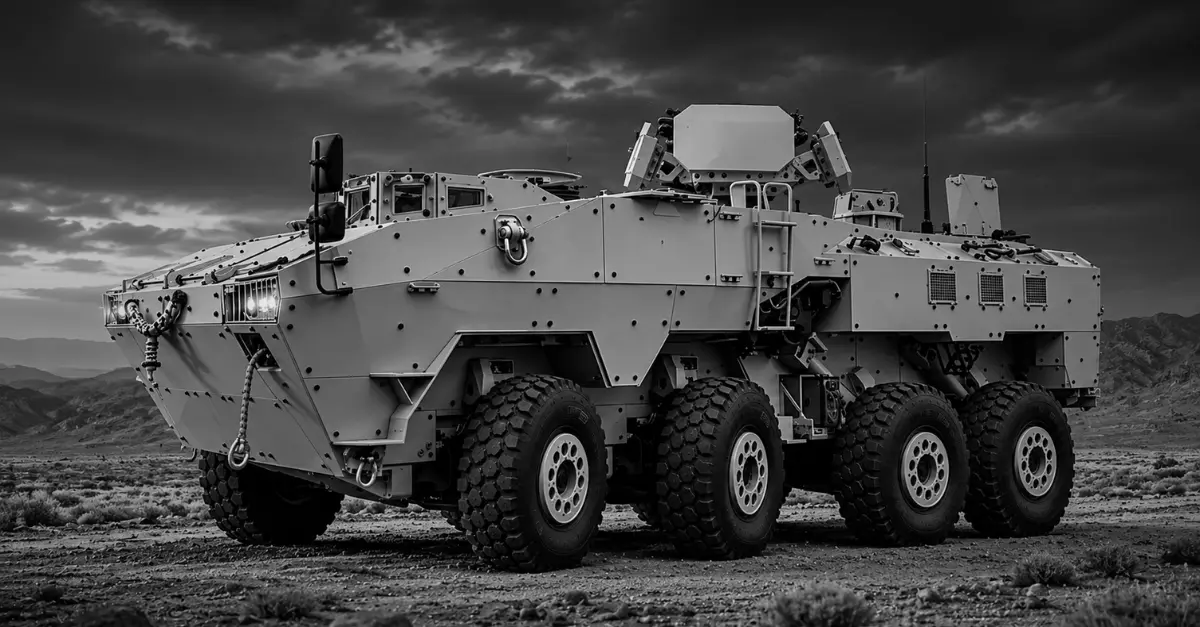
Several concrete projects predate the November 18 announcement. In Berrechid, the Tata Advanced Systems Maroc (TASM) plant, inaugurated on September 23, 2025, produces WhAP 8×8 armored vehicles. The first units were delivered to the Royal Armed Forces in December 2025. The local integration rate starts at 35% and is expected to rise gradually to 50%. The site plans for 90 direct jobs and around 250 indirect jobs, with an export vocation toward Africa.
In Nouaceur, Moroccan Military Industry (MMI), a subsidiary of the Israeli group Elbit Systems, operates a weapon systems unit. Its CEO, Kaduri Naor, confirmed on the sidelines of the October 2026 Marrakech Air Show that the first 30 mm turrets for the WhAP 8×8 will be delivered in March 2027. A second unit is being set up in Sidi Yahya for medium- and large-caliber ammunition. The company is also developing an anti-drone version of its turrets.
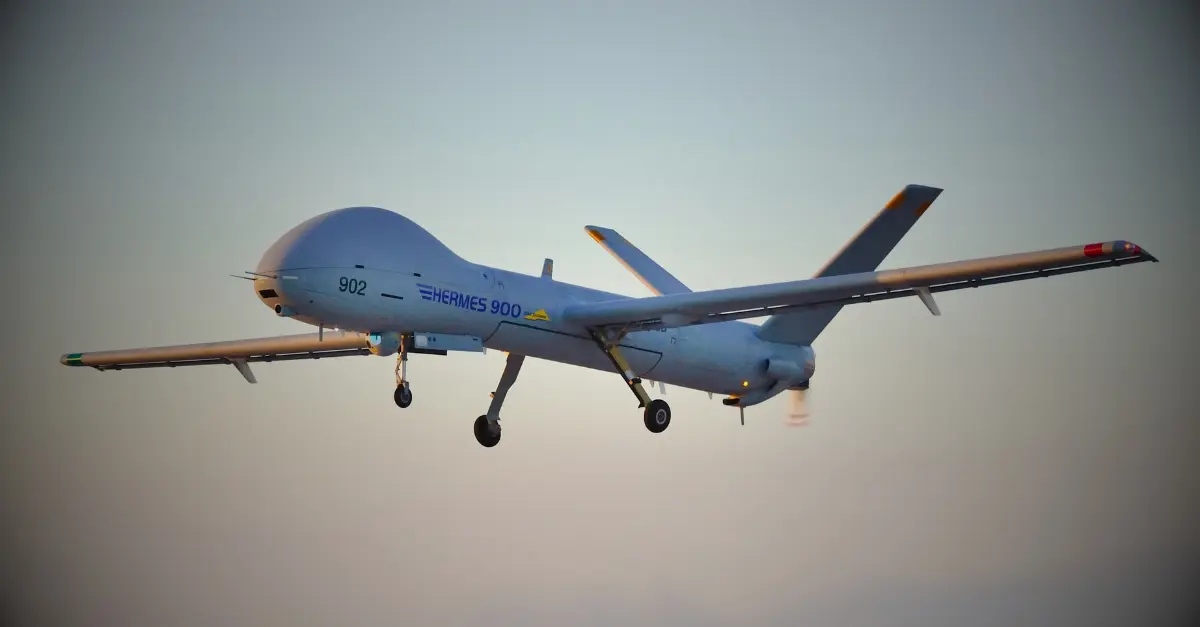
In the drone sector, Benslimane hosts several projects. Baykar’s Moroccan subsidiary, Atlas Defence, is already recruiting for a production and maintenance center. Reports also point to the installation of a unit by BlueBird Aero Systems (a subsidiary of Israel Aerospace Industries) dedicated to assembling SpyX loitering munitions, with entry into service forecast around April 2026. These facilities remain largely in the transfer and assembly phase.
Four zones to structure the sector
Two defense industrial acceleration zones have already been launched and are managed by the Société de gestion des zones industrielles de défense (SGZID), a partnership between the Agency for Military Housing and Facilities (ALEM) and MEDZ. Nouaceur covers 75 hectares, focused on technological activities without active materials (electronics, optronics, integration). Sidi Yahya spans 600 hectares and can host heavier production, subject to authorization.
The roadmap provides for two new zones in Benguérir and Benslimane. Their development will expand hosting capacity and spread activity to other economic regions. At the October 2026 Marrakech Air Show, the SGZID already concluded several land agreements with manufacturers (Arquus, MKU, Inkas and Harmattan AI, among others).
Key figures of the 2035 roadmap
- Around 50,000 direct and indirect jobs
- Coverage of around 40% of the needs of the Royal Armed Forces and the security services
- More than 65% of revenue generated from exports
- Initial contribution from the Hassan II Fund: 4 billion dirhams
- Existing zones: Nouaceur (75 ha) and Sidi Yahya (600 ha); new zones planned in Benguérir and Benslimane
The real challenge: mastering the technologies
Producing locally does not yet mean designing. Between assembling a system designed abroad, manufacturing components and mastering the full chain (design, engineering, integration, testing, maintenance), the levels of added value and technological sovereignty differ sharply. Morocco’s first projects remain mostly in the first or second category. Moving to the third level will depend on the ability to develop local research and engineering, and to negotiate sufficiently deep technology transfers.
Current partnerships (India, Israel, Turkey, and European or North American players in discussions) provide leverage, but they also come with dependencies. Cyberdefense and artificial intelligence, priorities in the roadmap, are areas where barriers to entry are high and where algorithmic and software expertise matters as much as hardware production. The specialized academy and the links with civil sectors (aerospace, automotive, electronics) will be decisive on this point.
Geopolitically, this industrialization takes place in a tense regional context and reflects Morocco’s desire to diversify its suppliers while strengthening its autonomy. It also raises questions about export controls and compliance with international arms regulation regimes, which the 2020 legal framework and its implementing decree are precisely meant to govern.
Jobs, exports and financing: the conditions for success
The 50,000 jobs announced cover production units, subcontracting, maintenance and research. Their realization will depend on the actual ramp-up of the projects and on the ability to train a specialized workforce in sufficient numbers. The export orientation (more than 65% of revenue) is ambitious: the domestic market of the Royal Armed Forces and the security services is meant to serve as a base, but the sector’s growth will rely on winning foreign markets, notably in Africa, and on integration into global value chains.

The initial public funding of 4 billion dirhams is a strong signal, but it will cover only part of the needs. Success will also depend on how attractive the sector is to private investors, on the planned incentives (subsidies, administrative facilitation) and on the ability to turn land agreements and partnerships into actual, lasting production.
Local equipment production is a first step. The place Morocco will be able to occupy in the global defense industry by 2035 will be determined by its ability to design systems, master the technologies that go with them and export them competitively. The coming months, with the setting up of governance structures and the actual start of the new zones, will show whether this roadmap moves from quantified ambitions to a lasting industrial ecosystem.
Frequently asked questions
When are the first significant deliveries expected?
Tata’s WhAP 8×8 vehicles have already been delivered to the Royal Armed Forces since late 2025. MMI’s first turrets are announced for March 2027.
Are the Nouaceur and Sidi Yahya industrial zones already operational?
Yes, they have been launched and are managed by the SGZID. Land agreements were signed in 2026, but most projects are still in the preparation or start-up phase.
Is Morocco aiming for complete self-sufficiency by 2035?
No. The official goal is to cover around 40% of the needs of the Royal Armed Forces and the security services, while directing most of the production toward export.
Which industrial partners are the most advanced today?
Tata Advanced Systems (armored vehicles), MMI/Elbit (turrets and ammunition) and the Baykar and BlueBird drone projects in Benslimane are among the most concrete at this stage.