


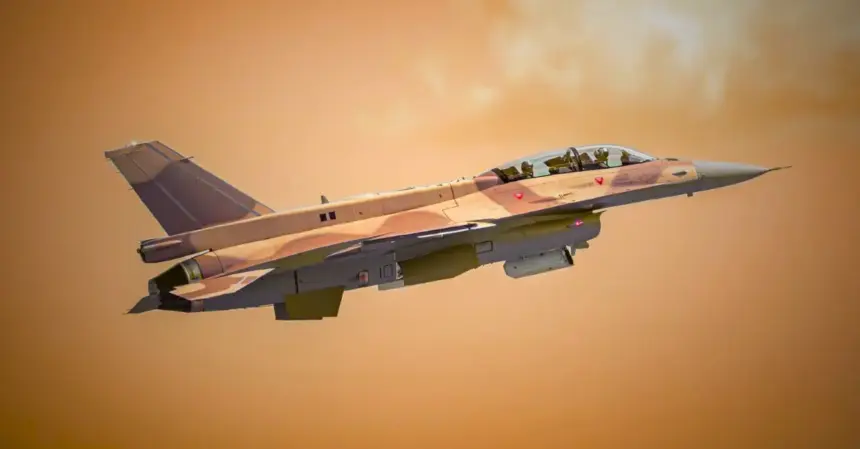
Morocco’s first F-16 Block 72 has made its maiden flight. Lockheed Martin announced the event on 6 October 2026. According to the manufacturer, the flight took place on 1 October at its production facility in Greenville, South Carolina. A test pilot carried out system validations as part of standard acceptance procedures.
- Morocco’s first F-16 Block 72 has flown in Greenville, according to Lockheed Martin.
- The flight took place on 1 October 2026 and was announced on 6 October.
- The contract covers 25 new aircraft and the modernization of 23 F-16s.
- No delivery date has been announced, and the programme has fallen behind schedule.
- The aircraft remains a fourth-generation fighter, amid an air power rivalry with Algeria.
The announcement is brief, but it comes at a time when the programme’s timeline is being closely watched in both Rabat and Washington. It deserves to be placed in context: a contract more than seven years old, documented delays, and a regional environment in which combat aviation remains a central marker of strategic balance.
What Lockheed Martin actually announced
The manufacturer describes a “milestone” on the road to delivery, not a delivery. The aircraft will continue its flight-test programme before joining the Royal Moroccan Air Force. Mike Shoemaker, who heads Lockheed Martin’s Integrated Fighter Group, described the flight as a concrete step forward for the Moroccan programme.
The company also points to a relationship with the Kingdom spanning more than fifty years, dating back to the delivery of a first C-130 Hercules in 1974. The Royal Armed Forces currently operate F-16s, C-130s, advanced radar systems and Black Hawk helicopters. According to Moroccan media relaying the press release, they are also due to receive HIMARS rocket launchers. The text finally mentions Morocco’s ambition to become a regional hub for aircraft maintenance, repair and overhaul.
At this stage, the press release gives neither a delivery date nor the number of aircraft covered by the first handover. We therefore stick to what is established.
A contract signed in a different context
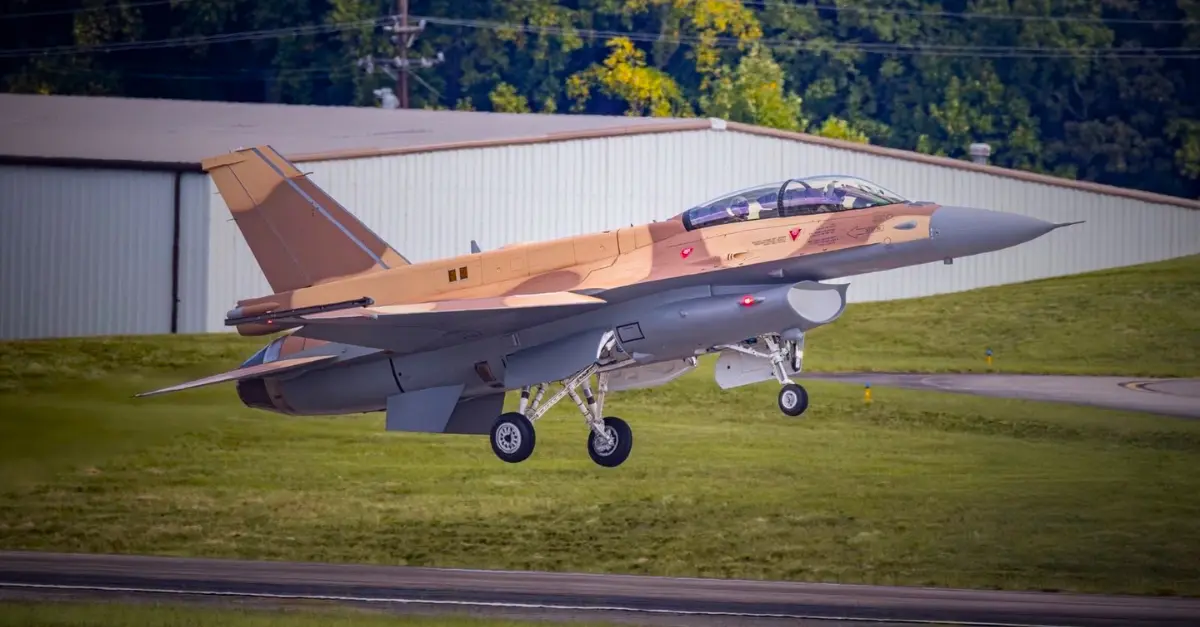
To grasp the significance of this flight, we need to go back to March 2019. The US State Department, through the Defense Security Cooperation Agency (DSCA), then approved two possible sales to Morocco. The first covered 25 new F-16C/D Block 72 aircraft, for $3.8 billion, including engines, weapons, navigation systems and spare parts. The second, worth $985.2 million, was to upgrade the 23 F-16s already in service to the F-16V configuration, known as “Viper”.
The DSCA noted that Morocco, already an F-16 operator, would have “no difficulty” absorbing these aircraft. It saw the sales as strengthening interoperability with the United States and Morocco’s ability to take part in coalition operations, such as the sorties flown against the Islamic State group in Syria and Iraq.
Morocco ordered its first F-16s in 2008, 24 in total, and lost one in 2015 during operations in Yemen as part of the Saudi-led coalition. This background clarifies the logic of the current programme: it is less a change of doctrine than the modernization of an existing fleet.
A timeline that has slipped
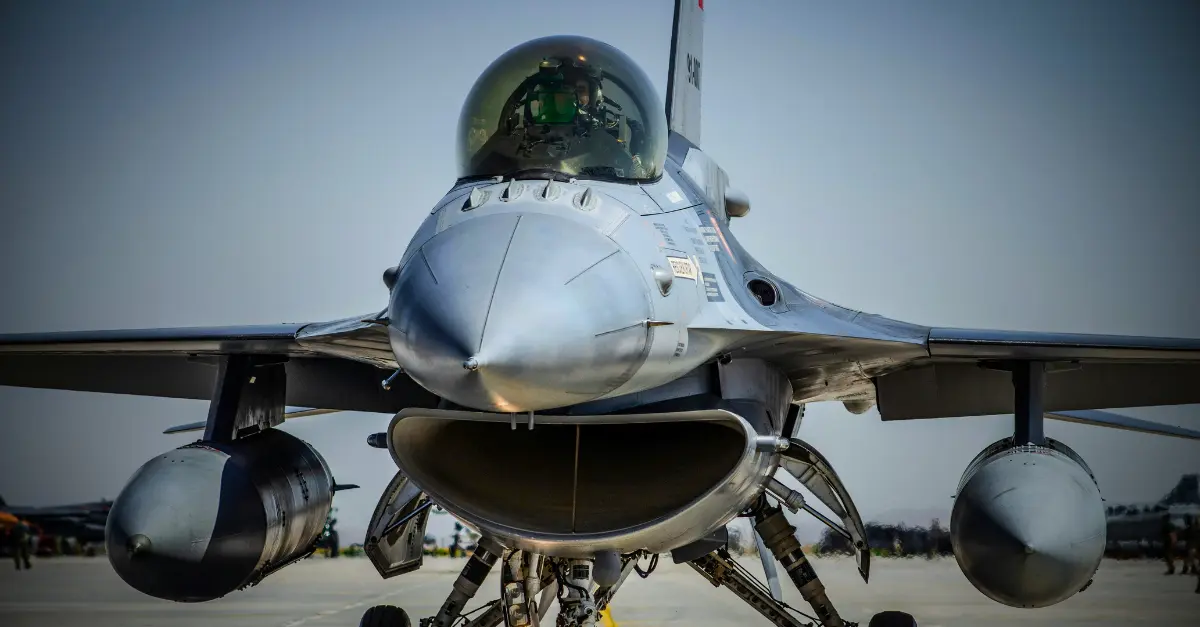
Early projections were markedly more optimistic. Articles from 2023, citing industry sources, mentioned the first aircraft being completed in 2024 and deliveries starting in 2025. A Cato Institute report, cited by the Moroccan press, anticipated delivery in 2027. It noted a gap of about eight years between the US announcement and delivery, among the longest observed for this family of aircraft.
More recently, Africa Intelligence, picked up by Hespress, reported that Rabat considers the programme to be more than a year behind schedule. According to that outlet, the Kingdom is seeking compensation from the manufacturer. To our knowledge, this information has not been officially confirmed and should be read accordingly.
The causes are partly known. The Block 70/72 is a recent variant, and Taiwan, the first large customer with 66 aircraft, has also experienced delays. Taiwan’s defence ministry attributed them in 2023 to supply chain difficulties, then to problems with the flight control software. In May 2026, Lockheed Martin indicated, according to Hespress, that the aircraft intended for Morocco and Taiwan share a specific technological configuration, which required modifications after flight tests. The company says it has completed this phase ahead of the first deliveries.
Key figures
- 25 new F-16C/D Block 72 aircraft, for $3.8 billion (DSCA, March 2019).
- 23 existing F-16s to be upgraded to the F-16V standard, for $985.2 million (DSCA, March 2019).
- First delivery originally expected in 2024-2025, according to press sources at the time.
- First flight of the Moroccan Block 72: 1 October 2026 in Greenville, according to Lockheed Martin.
🇲🇦✈️ Les F-16 de la Force Royale Air survolent Marrakech en préparation des démonstrations du Marrakech Airshow 2026 ! 🔥
#MarrakechAirshow #Maroc #Morocco #F16 #RoyalAirForce #Aviation #Airshow #Defense #Marrakech https://t.co/bdlUSRQI3o— Silicon Valley (@SiliconValleyMa) October 5, 2026
What the Block 72 changes
Lockheed Martin presents the Block 70/72 as the most advanced version of the F-16 family, with a structural life more than 50% longer than earlier models and an active electronically scanned array (AESA) radar. Electronic warfare equipment is among the most frequently cited upgrades. In 2023, defence contractor L3Harris indicated that Morocco’s F-16s would be fitted with the Viper Shield system, designed to detect and counter radar threats.
Some nuance is nonetheless needed. The F-16 Block 72 remains a fourth-generation, non-stealth fighter. Its value lies in its avionics, its sensors and its integration into a network, rather than in a break with the platform. For the Royal Air Force, the challenge is also logistical: pilot training, maintenance, compatible munitions. Adaptation work at the Benslimane and Benguerir air bases (aircraft arresting systems, a flight simulator, an engine test area) had been reported by the specialist press, citing the Spanish outlet Defensa.
A regional air balance under scrutiny
The Greenville flight inevitably has to be read against the backdrop of the competition with Algeria. The two countries have had no diplomatic relations since 2021, and Algerian airspace is closed to Moroccan aircraft. According to several media outlets, including the APA agency, Algiers has reportedly begun integrating its first Russian Su-57Es, which would make Algeria the first foreign customer for the aircraft. This information rests on unofficial sources, and the conditional is warranted. The Su-57’s “fifth-generation” status is itself debated among specialists.
Analysts differ on the significance of this development. Some experts cited by the Moroccan press believe Morocco retains a qualitative edge thanks to the alignment of its equipment with Western standards and its interoperability with NATO. Others point out that Algeria has a larger fleet, notably of Su-30s, and that Morocco must compensate with force multipliers: airborne early warning aircraft, electronic warfare, drones.
On the Moroccan side, several avenues have been mentioned in the press. American F-35s have been the subject of speculation, with no official confirmation. The French Rafale is reportedly back among the options being studied, with deliveries not expected before 2030 or 2031. Discussions around the Pakistani JF-17 have also been reported. We mention them to frame the debate, not as decisions that have been made.
What to watch
Three points seem decisive to us in the coming months.
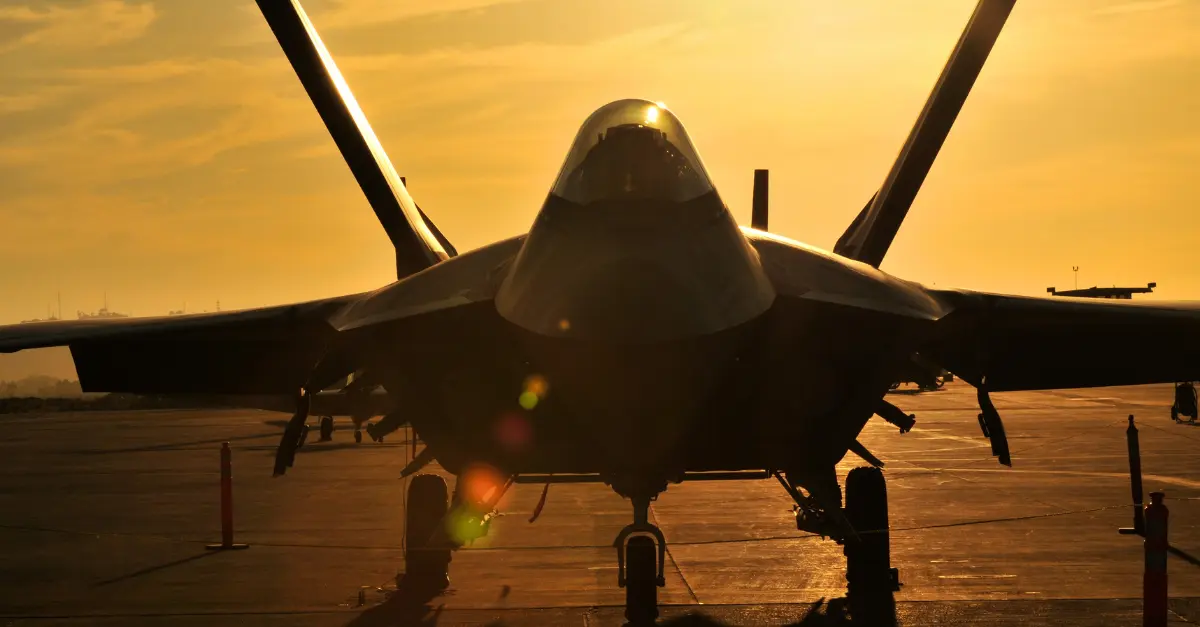
The first is the date of the first delivery. A test flight in Greenville does not commit the delivery schedule. The flight-test campaigns and then the acceptance procedures must first be completed.
The second is the pace of production. Lockheed Martin must deliver to several customers, including Taiwan, with a production line relocated to South Carolina. Competition between orders will weigh on the Moroccan timeline.
The third is the industrial dimension. The press release mentions Morocco’s ambition to become an aeronautical maintenance hub. If it materializes, it would give the programme an economic reach that goes beyond the acquisition of the aircraft.
A real milestone, an open conclusion
This first flight does not say when the Royal Air Force will have its Block 72s, nor under what conditions it will integrate them into an increasingly heterogeneous fleet. It does show, however, that the programme has emerged from a delicate development phase and that a production aircraft is flying. In a field where announcements often precede reality, that fact matters.
The question remains whether this milestone will mark the start of a regular delivery pace or just one more episode in a programme whose timeline has remained uncertain. The answer will depend as much on American industrial output as on Rabat’s choices regarding diversification.
FAQ
What is the F-16 Block 72?
It is the latest version of the F-16 Fighting Falcon produced by Lockheed Martin. It features, among other things, an AESA radar, upgraded avionics and an extended structural life, but remains a fourth-generation aircraft.
How many F-16 Block 72s has Morocco ordered?
The contract approved by the United States in March 2019 covers 25 new aircraft, for $3.8 billion. It comes with the modernization of 23 F-16s already in service.