

Morocco, a global powerhouse in phosphate resources, currently occupies a central position in the geopolitical and food security challenges of the 21st century. By holding more than 70% of the world’s proven reserves, the Kingdom is no longer just a simple exporter of raw materials. Through the OCP Group (Office Chérifien des Phosphates), the country has successfully transformed this geological wealth into a lever for international sovereignty. In a world where the population continues to grow, food security directly depends on the ability of farmers to fertilize their soils. Phosphate, an essential component of fertilizers, has thus become the “white gold” of the Moroccan economy, positioning Rabat as the indispensable arbiter of world hunger.
This dominance is not solely based on the massive quantities stored in the subsoils of Khouribga or Gantour. It is the result of a bold industrial strategy initiated several decades ago. Morocco has succeeded in integrating the entire value chain, moving from mining extraction to complex chemical transformation. Today, the Jorf Lasfar industrial platforms transform raw ore into tailor-made fertilizers, adapted to the specificities of every soil, particularly on the African continent. This technical expertise, coupled with global commercial reach, makes Morocco the guarantor of sustainable agriculture and global geopolitical stability.
Monumental geological reserves of the Kingdom
Morocco’s comparative advantage begins right under its feet. According to the latest data from the US Geological Survey, Moroccan phosphate rock reserves are estimated at approximately 50 billion tonnes. To give an idea of the scale, direct competitors like China, Algeria, or the United States possess stocks that number only in the few billions. This exceptional concentration allows Morocco to plan its development over several centuries, whereas other nations see their deposits gradually depleting. This longevity ensures international partners of the Kingdom a rare stability of supply in the extractive industries sector.
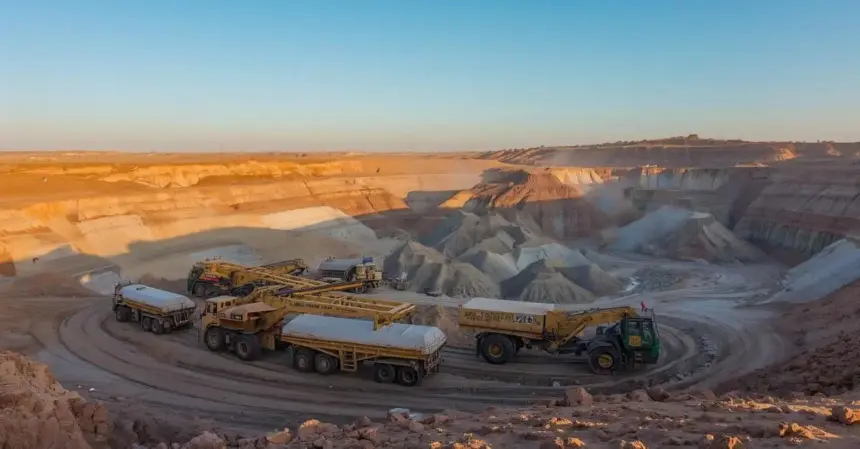
Moroccan deposits also offer the advantage of being relatively easy to access and of high purity. Open-pit mines allow for extraction at competitive costs, strengthening the sector’s profitability. But beyond mere extraction, the country has invested heavily in innovative transport infrastructure. The “Slurry Pipeline,” a pipeline connecting the Khouribga mines to the port of Jorf Lasfar, transports phosphate in the form of liquid pulp. This system has revolutionized mining logistics, drastically reducing energy consumption and CO2 emissions, while significantly lowering operational costs.
Strategic management by the OCP Group
The OCP Group, the state’s industrial arm in this sector, has become a multinational present on all five continents. Its strategy is no longer limited to selling rock but focuses on providing intelligent fertilization solutions. By investing more than $8 billion in its industrial program since 2008, OCP has tripled its fertilizer production capacity. This transformation has allowed Morocco to capture a larger share of the wealth created while stabilizing global phosphate prices through particularly fine and intelligent supply management.
OCP is now the country’s largest employer and the main contributor to export revenues. Its role goes beyond the economic framework to touch on social and educational sectors. With the creation of the Mohammed VI Polytechnic University (UM6P) in Benguérir, the group is preparing the next generation of engineers and researchers. This synergy between industry and academia is the bedrock of Morocco, a global powerhouse in phosphate resources, as it allows for constant innovation in extraction and chemical transformation processes.
The pivot of global food security
The growth of the global population, expected to reach 10 billion individuals by 2050, poses a major challenge: producing more with less arable land. Phosphate is one of the three essential nutrients (NPK) required for plant growth. Without it, agricultural yields would drop by half, causing widespread famine. In this context, Morocco literally holds the keys to global food survival. During periods of geopolitical tension, such as the Ukrainian crisis, Morocco’s role as a stabilizer has become evident to the world’s major powers.
The Kingdom has adopted a “phosphate diplomacy,” particularly active in Africa. By offering fertilizers adapted to local soils at preferential prices, Morocco helps the continent achieve its own green revolution. Strategic partnerships have been signed with countries like Nigeria and Ethiopia to build local fertilizer production plants. This “South-South” approach strengthens Rabat’s diplomatic influence, making phosphate a formidable tool of soft power. Morocco does not just sell a product; it exports expertise to guarantee the food autonomy of its neighbors.
Specifics of new generation fertilizers
Innovation is the watchword to maintain this leadership. Morocco is developing “smart” fertilizers, known as controlled-release fertilizers, which minimize runoff into groundwater. This approach meets the increasing environmental requirements of European and American markets. By customizing the chemical composition based on soil analysis, OCP allows farmers to optimize their harvests while using fewer products. Here are some pillars of this Moroccan innovation:
-
Development of specific formulas for African coffee, cocoa, or maize.
-
Integration of biotechnology to improve phosphorus absorption by roots.
-
Use of data to map the nutrient needs of soils on a national scale.
-
Reduction of the carbon footprint through the use of renewable energy in plants.
-
Recycling of industrial wastewater to preserve water resources.
Leadership rooted in sustainable development
Morocco, a global powerhouse in phosphate resources, does not exercise its power at the expense of the environment. Aware of climate challenges, the OCP Group launched an extremely ambitious “Green Growth” program. The goal is to achieve carbon neutrality by 2040. Currently, a significant portion of the group’s energy needs is met by wind and solar power. The industrial platforms of Safi and Jorf Lasfar are models of circular economy, where the heat generated by the production of sulfuric acid is recovered to produce clean electricity.
Water management is the other major challenge of the sector. Morocco being a country under water stress, the phosphate industry had to reinvent itself. OCP now makes massive use of seawater desalination for its industrial needs, thus freeing up fresh water resources for local agriculture and human consumption. Eventually, the group plans to use 100% non-conventional water. This ecological responsibility is a major selling point with international investors who now prioritize ESG (Environmental, Social, and Governance) criteria.
Investment in green hydrogen
To produce nitrogen fertilizers, Morocco needs ammonia. Currently, this ammonia is largely imported. To complete the circle of its sovereignty, Morocco is investing heavily in green hydrogen. By using solar and wind energy to produce hydrogen through the electrolysis of water, the country will be able to produce its own green ammonia. This titanic project will transform Morocco into a leader in global green chemistry. Moroccan phosphate will then be transformed into totally decarbonized fertilizer, a world first that will give the Kingdom a definitive competitive advantage.
This decarbonization strategy is not only ecological but also economic. With the progressive implementation of carbon taxes at the European Union’s borders, producing “green” fertilizers becomes a necessity to maintain market share. Morocco, thanks to its natural resources in sun and wind, has an unbeatable energy mix. Phosphate thus becomes the vector of a new clean heavy industry, proving that being a global powerhouse in phosphate resources and respecting the planet can go hand in hand.
Socio-economic impact of the mining sector
The phosphate sector is the true lung of the Moroccan economy. It represents approximately 20% of the Kingdom’s exports and contributes significantly to the GDP. But beyond macroeconomic figures, an entire ecosystem of local SMEs and subcontractors lives thanks to mining and chemical activity. Cities like Khouribga, Laayoune, or Benguérir have been literally transformed by OCP’s investments. The group finances health centers, schools, and cultural infrastructure, playing a locomotive role for regional development.
The Moroccan model is one of shared national wealth. OCP invests in the “Act4Community” program, which encourages its employees to get involved in local development projects. This ranges from supporting agricultural cooperatives to training young people in digital professions. This strong social footprint guarantees stability for the sector and ensures the support of local populations for the country’s industrial strategy. Moroccan phosphate is perceived as a common good that must be valued for future generations.
An influential mining diplomacy
Thanks to its reserves, Morocco sits at the table of major international negotiations. Its voice carries weight within the UN and world agricultural organizations. The Kingdom uses this influence to promote a vision of food security based on equity. By providing fertilizers to countries in difficulty or participating in international research programs, Morocco strengthens its stature as a regional and global power. Phosphate has become the trump card of Moroccan diplomacy, opening economic and political doors across the globe.
This diplomacy is backed by concrete facts: Morocco is the world’s leading producer of phosphoric acid and one of the largest exporters of phosphate fertilizers. This position allows it to forge strategic alliances with countries like India, the world’s largest consumer of fertilizers, or Brazil. These long-term partnerships guarantee stable outlets for Moroccan phosphate while ensuring the food security of millions of people halfway around the world. Morocco has become, by necessity, the epicenter of the global fertilizer market.
FAQ on phosphates in Morocco
Why does Morocco hold so much phosphate? Morocco’s geology is unique. Millions of years ago, an inland sea covered a large part of the country. Marine sediments rich in organic remains accumulated, creating the largest and richest phosphate deposits in the world.
What is the role of the OCP Group in the economy? OCP is the world’s leading exporter of phosphate and fertilizer. It is the financial pillar of Morocco, funding major infrastructure and research projects while being a key player in global food security through its exports.
Is Moroccan phosphate ecological? Morocco is investing billions to decarbonize its production. Through solar and wind energy and seawater desalination, the Kingdom aims for 100% green fertilizer production by 2040, minimizing its environmental impact.
How does Morocco help Africa with its phosphates? Morocco pursues a South-South cooperation policy. It provides fertilizers adapted to African soils, builds local blending plants, and offers training to farmers to improve yields and fight hunger.