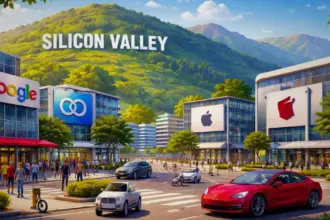

The long-standing alliance between the American tech elite and the world’s most prestigious universities has hit a breaking point. What used to be a seamless pipeline from Stanford or Harvard to Sand Hill Road has turned into a battlefield. A vocal group of Silicon Valley’s most powerful figures is now leading a systematic “cabal” against the traditional college degree. Industry titans like Elon Musk and Peter Thiel are no longer just questioning the value of a diploma; they are actively encouraging the next generation of innovators to skip campus altogether.
This shift isn’t just about contrarian tweets; it reflects a deep-seated frustration with an academic model that many tech leaders view as archaic. They argue that higher education has become an expensive, bureaucratic machine that is failing to prepare students for the real-world demands of the 21st-century economy. In a world where AI is redefining skills every few months, the four-year university cycle feels like a relic of a slower, analog past.
The Paradox of the Ivy League Rebels
The most striking aspect of this anti-college movement is the background of its leaders. Almost all the tech barons attacking universities are products of the very elite institutions they now criticize. This creates a fascinating paradox: men who leveraged the networks and prestige of the Ivy League to build their empires are now telling young entrepreneurs that those same institutions are stifling. They argue that while the system worked decades ago, it has since devolved into a “signaling” game rather than a center of true intellectual growth.
Consider the Thiel Fellowship, perhaps the most famous manifestation of this crusade. By offering $100,000 to students to drop out and start companies, Peter Thiel made a bold statement: brilliance is wasted in the classroom. The philosophy here is that the university environment optimizes for social conformity and risk aversion, whereas the tech world requires high-risk, high-reward experimentation. They see the degree not as a badge of competence, but as a “loyalty oath” to a system that prioritizes credentials over actual output.
The Financial Fallout and ROI Crisis
From a purely economic perspective, Silicon Valley sees the university model as a failed investment. The skyrocketing cost of tuition in the United States has far outpaced inflation, creating a Return on Investment (ROI) crisis. For a tech CEO focused on efficiency, paying hundreds of thousands of dollars for a degree in a rapidly changing field makes little sense. The $1.7 trillion in student debt is viewed as a “innovation killer,” saddling young creators with financial burdens that make it impossible to take the risks necessary to build a startup.
Venture capitalists like Marc Andreessen have argued that universities have become “managerial cathedrals” where tuition hikes fund administrative bloat rather than better teaching. In an age where world-class educational resources are available for free online, the monopoly of the campus is being challenged. To the pragmatists of Palo Alto, the physical university is an inefficient middleman that needs to be “disrupted” just like the taxi industry or traditional retail.
Core Grievances of the Tech Elite Against Academia
To understand the scope of this cabal, we can break down their primary criticisms into several key pillars:
-
Skill Obsolescence: The pace of technological change often renders a four-year curriculum outdated before graduation.
-
The Debt Trap: Massive loans prevent graduates from pursuing entrepreneurial paths or high-risk ventures.
-
Ideological Homogeneity: A belief that campuses have become echo chambers that punish dissenting opinions and critical thinking.
-
Administrative Bloat: Too much of the tuition goes toward non-academic staff and luxury campus amenities.
-
The Signaling Trap: Degrees are seen as a way to filter for social class rather than actual technical or creative merit.
Building the Parallel Educational Ecosystem
Silicon Valley isn’t just complaining; it’s building a new educational infrastructure. We are seeing a surge in coding bootcamps, specialized apprenticeships, and company-led certification programs. Google, IBM, and Apple have famously removed the college degree requirement for many of their top-tier roles, focusing instead on “skills-based hiring.” The goal is to “unbundle” the university, allowing students to acquire specific, verifiable skills in months rather than years.
The role of Artificial Intelligence is central to this new vision. AI-driven platforms offer personalized, asynchronized learning that can adapt to an individual’s pace—something a lecture hall of 300 people can never do. This vision shifts the focus from institutional prestige to personal capability. In this new world, your “GitHub” profile or your portfolio of AI-generated projects is your real diploma. The university is no longer a gatekeeper; it’s just one option among many.
The Cultural War and Intellectual Freedom
Beyond economics and skillsets, the crusade is deeply rooted in a cultural divide. The tech world, historically built on libertarian and “first principles” thinking, views modern campuses as hostile to free inquiry. Leaders like Elon Musk have been vocal about the “woke” culture on campuses, arguing that it creates an environment where students are afraid to challenge the status quo. This is seen as a direct threat to the “disruptive” mindset required in the tech industry.
There is a growing fear that universities are producing graduates who are intellectually fragile and unable to handle the friction of a high-pressure startup environment. The concept of “safe spaces” is often mocked in the Valley as the antithesis of the grit needed to succeed. This has led to the funding of new institutions, like the University of Austin, which promise a return to unfettered debate and a focus on objective truth rather than social engineering.
The Future of the Degree in a Tech-Driven World
Despite this massive offensive, the university remains a vital hub for fundamental research—the kind of long-term science that often births the technologies Silicon Valley later commercializes. However, the monopoly on the credential is fading. We are entering an era of “hybrid education” where the traditional degree is just one part of a lifelong learning journey, often supplemented or replaced by industry-recognized micro-credentials.
The Silicon Valley crusade is forcing a long-overdue reckoning for higher education. Prestige is no longer a sufficient justification for astronomical costs, and academic authority is being challenged by the democratization of knowledge. While the university won’t disappear, it will have to evolve into a more agile, affordable, and intellectually diverse version of itself to survive the disruption coming from the West Coast.
FAQ: Silicon Valley vs. Higher Education
Why do tech leaders attack colleges if they are alumni themselves?
They believe the system has fundamentally changed since they graduated, becoming more about administrative growth and ideological conformity than actual learning. They also argue that the cost has become unjustifiable compared to the value provided.
What are the main alternatives to a degree?
Alternatives include intensive coding bootcamps, industry-specific certifications (like those from Google or AWS), self-directed learning through AI tutors, and the “Thiel Fellowship” model of starting a business immediately.
Will a college degree eventually become useless?
In specialized fields like medicine or law, it remains essential. However, in tech, creative arts, and entrepreneurship, the degree is becoming secondary to a portfolio of work and proven skills.
How does AI impact the value of a university education?
AI democratizes access to elite-level knowledge, making the “information delivery” aspect of a university less valuable. It also challenges traditional academic assessment, pushing for a more project-based approach to education.