
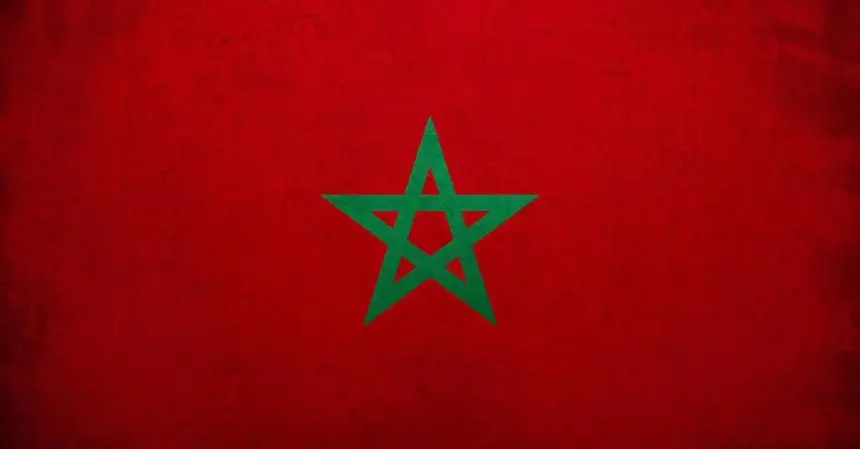
The national banner of the Kingdom of Morocco, with its striking scarlet field and interlaced emerald star, is a masterpiece of heraldic simplicity and deep symbolism. As we move through 2026, this flag remains a potent emblem of a nation that has successfully balanced its ancient traditions with a rapid drive toward modernization. But why does the Moroccan flag feature a five-pointed star? The answer lies in a fascinating blend of theological principles, dynastic history, and the necessity of national distinction in an era of global transition.
While the red background pays homage to the Alawite dynasty and the courage of the Moroccan people, the green star—often referred to as the “Seal of Solomon”—is the spiritual heart of the design. Added officially in the early 20th century, this pentagram was chosen to ground the Moroccan identity in a visual form that was both unique and deeply rooted in local iconography. The contrast between the red and green creates a visual harmony that represents the union between the earthly strength of the state and the spiritual guidance of the faith.
A Journey Through the History of Moroccan Banners
For centuries, Moroccan dynasties used various banners to represent their authority. During the Almoravid and Almohad periods, flags were frequently white or decorated with complex Arabic calligraphy. It wasn’t until the rise of the Alawite Dynasty in the 17th century that solid red became the standard color of the Sherifian Empire. At that time, the flag was a simple red rectangle without any central motif. While this design was bold, it caused significant confusion at sea, as many other maritime powers used similar red ensigns.
The turning point came in 1915. Under the reign of Sultan Moulay Youssef, a royal decree (Dahir) was issued to introduce the green pentagram to the center of the flag. This was a strategic move to give Morocco a distinct national identity that would stand out on the international stage. The pentagram was not a foreign invention; it was already a recurring element in Moroccan architecture, coinage, and handicrafts. By formalizing this star, the Sultan created a sovereign symbol that bridged the gap between the empire’s historical past and its future aspirations.
The Theological Pillars Behind the Five Points
Morocco is a nation where the spiritual and the temporal are closely intertwined, and the flag is perhaps the clearest expression of this relationship. For the majority of Moroccans, the five points of the star are a direct representation of the Five Pillars of Islam. This religious interpretation provides a moral framework for the flag, transforming it from a political piece of cloth into a sacred representation of the nation’s foundation.
The choice of green for the star is equally significant. In Islamic tradition, green is the color of paradise and was favored by the Prophet Muhammad. In the Moroccan context, it also symbolizes peace, hope, and the fertility of the land. By placing this green emblem at the center of a red field, the design suggests that faith is the central axis around which the strength and bravery of the nation revolve. It is a visual pledge of stability and religious devotion.
The Five Pillars Encapsulated in the Star
The association between the star’s branches and religious duty is taught as part of Moroccan civic and religious education. These pillars include:
-
Shahada: The declaration of faith in the oneness of God.
-
Salat: The five daily prayers that structure the day.
-
Zakat: The act of giving to the poor and needy.
-
Sawm: Fasting during the holy month of Ramadan.
-
Hajj: The pilgrimage to the holy city of Mecca.
The Seal of Solomon and Protective Mysticism
The green star is also traditionally known as the Seal of Solomon (Khatam Soulaymane). In the mystical traditions of the Mediterranean and the Middle East, this interlaced pentagram is believed to offer protection and represent divine wisdom. For Morocco, adopting this seal was a way to invoke a sense of national protection. The way the lines of the star are woven into one another signifies the interconnectedness of life and the eternity of the divine.
This symbol appears everywhere in Morocco, from the intricate zellige tilework of Fez to the hand-woven carpets of the Atlas Mountains. By choosing a symbol with such deep roots in local craftsmanship, the Moroccan state ensured that the flag would resonate with the common people. The Seal of Solomon serves as a national talisman, a reminder of the wisdom and resilience that have allowed the Kingdom to maintain its independence throughout a turbulent history.
A Modern Symbol of Sovereignty and Unity
In 2026, the Moroccan flag has transcended its historical and religious origins to become a symbol of total territorial integrity. From the northern tip of Tangier to the golden sands of the Saharan provinces, the red and green banner represents a unified people. During the struggle for independence in the mid-20th century, the flag became a rallying cry for resistance against colonial rule. Today, it is a source of immense pride, especially during international sporting events and global diplomatic summits.
The five-pointed star is now a major component of Morocco’s “soft power.” It is a design that is globally recognized and respected for its balance and historical weight. For the younger generation, the flag is not just a relic of the past; it is a symbol of the future. It represents a Morocco that is technologically advanced and economically ambitious, yet remains firmly anchored in the spiritual and cultural values represented by that central green star.
FAQ: Common Questions About the Moroccan Flag
Why was the star added only in 1915?
The star was added to differentiate the Moroccan flag from other plain red flags used by maritime nations and the Ottoman Empire. It provided a unique visual identity for the Kingdom during a period of significant geopolitical change.
Does the five-pointed star have any political meaning?
While its primary meanings are religious and historical, the star also represents the unity of the Moroccan people under the leadership of the King. It symbolizes the five regions and the harmony between the different components of Moroccan society.
Is the Moroccan pentagram the same as other stars?
No. While many flags use stars, the Moroccan star is specifically an interlaced pentagram. Unlike a solid star, the lines of the Moroccan pentagram pass over and under each other, representing the Seal of Solomon and the concept of eternity.








A fascinating explanation of the Moroccan flag and the rich historical and spiritual symbolism behind its green pentagram. The connection between tradition, faith, and national identity is especially interesting.
thank you