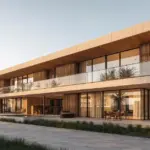

The global landscape of industrial manufacturing is shifting toward regions that offer both strategic location and a clear vision for sustainable development. In a significant move for the Mediterranean industrial sector, the Austrian-based Amiblu Group, the world’s foremost authority on high-performance pipe systems, has officially launched an expansion of its manufacturing facility in Morocco. This strategic investment is a direct response to the escalating demand for resilient water management solutions across North Africa and beyond. By scaling up the production of Glassfiber Reinforced Plastics (GRP) pipes, Amiblu is not merely selling a product; it is providing the structural backbone for Morocco’s ambitious hydraulic sovereignty plan. This expansion underscores the Kingdom’s emergence as a premier hub for international industrial players seeking stability and growth.
For observers of the Moroccan economy, this development is a clear indicator of the country’s successful industrial acceleration. The decision by a European giant to reinvest heavily in its local unit reflects a deep trust in the Moroccan workforce and the nation’s business-friendly environment. As the region grapples with the realities of climate change and fluctuating rainfall patterns, the need for efficient, leak-proof, and durable water transport systems has never been more critical. The GRP technology produced by Amiblu offers a sustainable alternative to traditional materials, ensuring that every cubic meter of water intended for drinking supply, sanitation, or irrigation reaches its destination without loss or contamination.
A Strategic Hub for the African Continent and Beyond
The expansion of the Amiblu unit in Morocco is meticulously timed to coincide with the rollout of massive national infrastructure projects. Situated at the crossroads of major trade routes, the facility is designed to serve as a high-tech nerve center for the production of large-diameter pipes. This increased capacity allows the group to meet the domestic needs of the Moroccan National Office of Electricity and Drinking Water (ONEE) while simultaneously positioning the plant as an export powerhouse for the Sub-Saharan African market. The “Made in Morocco” label, backed by Austrian engineering standards, has become a hallmark of quality that facilitates entry into diverse international markets.
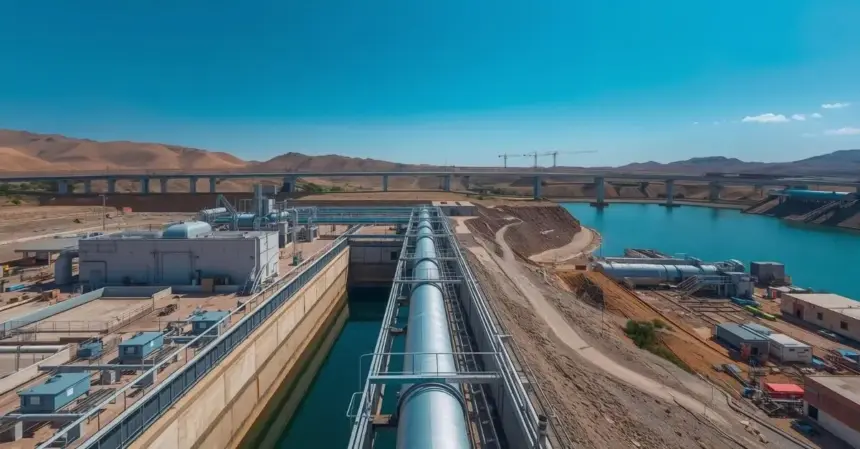
The technical upgrades included in this expansion involve the integration of advanced centrifugal casting and continuous filament winding technologies. These processes allow for the creation of pipes that can withstand extreme internal pressures and heavy external loads. By doubling the output of its local lines, Amiblu provides the Moroccan government with the logistical flexibility required to execute fast-track projects, such as the famous Water Highways. These inter-basin transfer projects, which move water from the northern regions to the drought-prone plains, require massive quantities of high-spec piping that only a localized, large-scale industrial operation can reliably supply.
Engineering Advantages of Glassfiber Reinforced Plastics
Why has GRP become the preferred choice for modern hydraulic engineers over traditional ductile iron or concrete? The answer lies in the unique material properties of the composite. GRP (Glassfiber Reinforced Plastics) is inherently resistant to corrosion, both from the surrounding soil and the fluids it carries. In the coastal and saline environments common in Morocco, traditional metal pipes often suffer from rapid degradation, leading to frequent bursts and high maintenance costs. Amiblu’s GRP solutions, however, boast a service life exceeding 50 years, providing a much higher return on investment for public utilities and private contractors alike.
Beyond durability, the hydraulic efficiency of these pipes is a game-changer for energy conservation. The interior surface of a GRP pipe is nearly as smooth as glass, which minimizes friction during fluid transport.
-
Lower Pumping Costs: Reduced friction means less electricity is required to move water over long distances.
-
Lightweight Handling: GRP pipes weigh significantly less than concrete, reducing the need for heavy machinery on-site.
-
Rapid Installation: The advanced coupling systems allow for faster jointing, shortening project timelines by weeks or months.
-
Chemical Resistance: Ideal for wastewater systems where hydrogen sulfide gas would typically erode concrete structures.
-
Customization: Pipes can be engineered with specific stiffness classes to suit varying soil conditions.
Supporting the Green Revolution in Moroccan Agriculture
Agriculture remains the cornerstone of the Moroccan economy, yet it is also the most vulnerable sector to water scarcity. The expansion of Amiblu’s production capacity is a vital component of the National Program for Irrigation Modernization. By replacing open-air canals with pressurized GRP networks, the Kingdom is significantly reducing evaporation losses and improving water distribution efficiency. These underground networks enable farmers to adopt drip irrigation at scale, ensuring food security even during prolonged dry spells. The ability to produce these specialized pipes locally ensures that agricultural development projects remain on schedule and within budget.
The collaboration between Amiblu and regional agricultural development authorities (ORMVA) has led to the design of bespoke solutions tailored to the Moroccan landscape. Whether it is transporting raw water from dams to processing plants or distributing treated water to remote farmsteads, the reliability of the network is paramount. A failure in an irrigation pipe can ruin an entire harvest; thus, the quality control measures implemented at the Moroccan plant are identical to those in Amiblu’s European facilities. This commitment to excellence helps stabilize the rural economy and prevents the migration of agricultural communities to urban centers by securing their primary livelihood: water.
Morocco as a Magnet for International Industrial Investment
The Amiblu expansion story is part of a broader narrative of Moroccan industrial maturity. The country has successfully transitioned from a low-cost manufacturing base to a high-value industrial destination. Key factors such as the proximity to Europe, world-class port infrastructure like Tanger Med, and a stable legal framework have created an ecosystem where foreign direct investment (FDI) can thrive. For Amiblu, the Moroccan unit is not just a branch; it is a center of excellence that trains local engineers in the latest composite material sciences. This knowledge transfer is essential for the long-term growth of the Moroccan industrial sector.
Furthermore, the presence of such a specialized facility encourages the development of a local supply chain. From logistics providers to raw material suppliers, the “Amiblu effect” ripples through the local economy, creating a network of specialized SMEs. This industrial density is exactly what the Moroccan government aims to foster through its Industrial Acceleration Plan. By attracting and retaining leaders like Amiblu, Morocco solidifies its position as a competitive alternative to Asian manufacturing hubs, offering shorter lead times for European markets and a deep understanding of the unique challenges faced by emerging economies in Africa.
Environmental Sustainability and Urban Wastewater Management
As Moroccan cities continue to grow, the pressure on urban sanitation systems increases. Effective wastewater management is crucial for protecting public health and preventing the contamination of natural water bodies. Amiblu’s expansion includes a focus on large-diameter pipes specifically designed for sewerage and drainage. Unlike concrete, GRP does not react with the corrosive gases found in sewage systems, making it the most sustainable choice for municipal authorities. This investment directly supports the National Liquid Sanitation Program (PNA), which aims to increase the rate of wastewater treatment across the country.
The environmental footprint of the manufacturing process itself is also under constant optimization. Amiblu is committed to reducing waste and energy consumption within its Moroccan plant. The long-term environmental benefit of GRP is twofold:
-
Water Conservation: The superior joint integrity of GRP pipes prevents leakages, saving millions of liters of treated water every year.
-
Carbon Reduction: The lightweight nature of the material means fewer trucks are needed for transport, and the ease of installation reduces the carbon footprint of the construction phase. By investing in these technologies, Morocco is demonstrating that industrial growth and environmental stewardship can go hand in hand.
FAQ Regarding Amiblu’s Investment in Morocco
What are the main benefits of GRP pipes for irrigation?
GRP pipes are highly resistant to the chemicals often found in fertilizers and the abrasive sediments in raw water. Their smooth internal surface ensures high flow rates with minimal energy loss, which is essential for large-scale pressurized irrigation systems.
How does this expansion affect the local job market?
The expansion creates high-skilled positions for engineers, quality control specialists, and advanced machinery operators. It also provides vocational training opportunities, enhancing the technical expertise of the Moroccan workforce in the field of composite materials.
Why is Morocco a strategic location for the Amiblu Group?
Morocco offers a stable economic environment, proximity to the European market, and a gateway to Africa. Additionally, the government’s massive investment in water infrastructure provides a consistent and growing domestic market for Amiblu’s products.
Can GRP pipes be used for desalination projects?
Yes, GRP is an ideal material for desalination plants because it is completely immune to saltwater corrosion. As Morocco invests more in desalination to combat water scarcity, Amiblu’s locally produced pipes will play a critical role in these facilities.