
The diplomatic and educational landscape of the Moroccan Sahara is witnessing a major transformation. Christophe Lecourtier, the French Ambassador to Morocco, has officially announced the upcoming opening of the Laayoune International School. This project, designed to accommodate approximately 600 students, marks a historical milestone in the bilateral relations between Paris and Rabat. Far from being a mere educational facility, this school represents France’s commitment to supporting the socio-economic development of the Southern Provinces through high-level academic excellence and cultural exchange.
The decision to establish an international institution of this caliber in Laayoune is a strategic move that reflects the city’s growing importance as a regional hub. For decades, Laayoune has seen massive investments in infrastructure, energy, and fishing. However, the addition of a world-class international education system fills a crucial gap for local families and expatriates. By providing a curriculum that meets global standards, the school ensures that the youth of the region are equipped with the skills necessary to compete in an increasingly globalized job market.
In addition to the school, Ambassador Lecourtier confirmed the establishment of a French Cultural Center in the heart of the city. This center will serve as a vibrant space for language learning, artistic expression, and intellectual debate. As administrative procedures reach their final stages, the anticipation among the local population is palpable. This dual initiative—educational and cultural—is set to redefine the daily lives of thousands of residents, fostering a deeper understanding between French and Moroccan cultures while celebrating the unique Sahrawi heritage.
Excellence and Innovation at Laayoune International School
The pedagogical vision of the Laayoune International School is built on academic rigor and a multicultural approach. Catering to students from preschool to high school, the institution aims to create a nurturing environment for intellectual growth. The curriculum will follow the French National Education standards, supplemented by robust modules in Arabic language and Moroccan history. This dual-track system ensures that students maintain their local roots while gaining the fluency and critical thinking skills required by top universities worldwide.
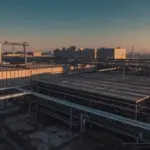
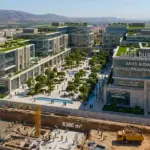
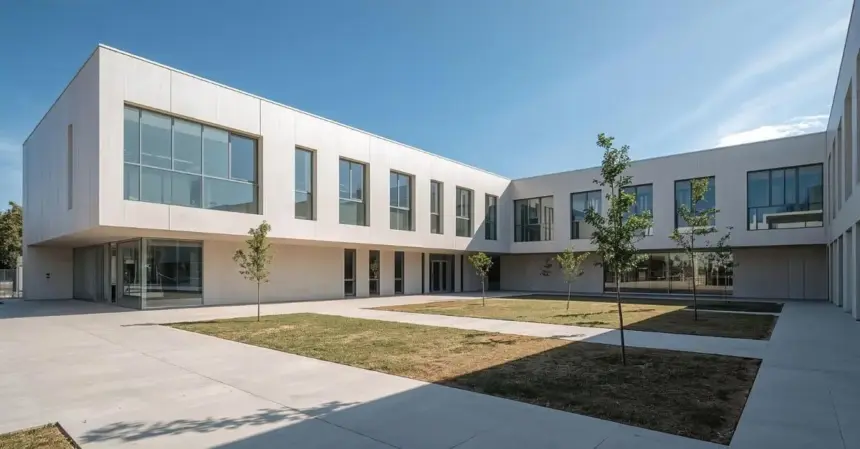
From an architectural standpoint, the school is designed to be a modern masterpiece that respects the local environment. State-of-the-art science labs, a digitalized library, and professional-grade sports facilities will provide students with an unparalleled learning experience. The goal is to transform the school into a knowledge hub for the entire Laayoune-Sakia El Hamra region. For local authorities, the presence of this school is a powerful magnet for talent, attracting skilled professionals and investors who seek quality education for their children.
-
Total Capacity: 600 enrollment slots across all academic levels.
-
Teaching Staff: Certified experts trained in modern active learning methods.
-
Facilities: Modern media centers, IT labs, and diverse sports courts.
-
Languages: Trilingual education (French, Arabic, and English).
-
Accreditation: Part of the AEFE network (Agency for French Education Abroad).
The inclusion of English as a core language from an early age highlights the forward-thinking nature of the project. As Morocco diversifies its international partnerships, multilingualism has become a non-negotiable asset. The school serves as a laboratory for success, where every child can build a personalized academic path. Tuition details and enrollment procedures will be made public once the final agreements with the Moroccan Ministry of National Education are ratified, ensuring a transparent and fair selection process.
Strengthening Cultural Ties in the Moroccan Sahara
The forthcoming French Cultural Center in Laayoune is the second pillar of this historic announcement. Much more than a simple library, it will be a true crossroads of creativity and exchange. Contemporary art exhibitions, French film screenings, lectures, and theater workshops will define the institution’s vibrant calendar. This center will allow the residents of Laayoune to access a diverse cultural offering without the need to travel to larger northern cities, bringing the world to their doorstep.
Ambassador Lecourtier emphasized that culture is the bedrock of lasting relationships. By establishing this center, France recognizes Laayoune’s central role as a bridge between Sub-Saharan Africa and the Maghreb. Local artists will find a dedicated space for residencies and collaborations with French creators, stimulating the regional creative economy. This project aligns with France’s global strategy to strengthen its “soft power” while meeting the concrete needs of local populations for quality leisure and lifelong learning.
Access to French language certifications (DELF/DALF) will also be streamlined through this center. This is a significant advantage for students at the University of Laayoune who wish to pursue higher education in France or other Francophone countries. By simplifying these processes, the cultural center acts as a facilitator for international mobility. It is a long-term vision that bets on human capital and continuous training as primary drivers for the region’s prosperity.
Geopolitical and Economic Implications
Beyond the classrooms and art galleries, the project carries significant geopolitical weight. Many observers view this initiative as a major step toward full French support for Moroccan sovereignty over its Southern Provinces. By investing in permanent, institutional structures, Paris demonstrates its commitment to accompanying Morocco in its ambitious development plan for the Sahara. This is a multidimensional cooperation that now reaches the heart of civil society and human development.
Economically, the arrival of 600 families and a dedicated teaching staff will provide a boost to the local economy, particularly in the retail and real estate sectors. French companies operating in Morocco also welcome this development, as it makes relocating staff to the South more attractive. Laayoune is rapidly becoming a destination of choice for professionals looking for a dynamic lifestyle coupled with high-quality educational services. The ripple effect on business tourism and foreign direct investment (FDI) should not be underestimated.
In conclusion, the success of this project will likely serve as a blueprint for other cities like Dakhla. The demand for international education is surging across the Moroccan Sahara, and the Laayoune school will be the pioneer that sets the standard. This dynamic of educational modernization is the foundation upon which the region’s future prosperity is built, ensuring that local youth have the same opportunities as their peers in the world’s major capitals.
FAQ: French Projects in Laayoune
When will the international school open? The opening is planned for the next academic year, pending the finalization of the technical details mentioned by the ambassador.
Who is eligible to enroll? The school is open to students of all nationalities, including Moroccans, French citizens, and foreign residents living in the Laayoune region.
What services will the cultural center provide? The center will offer a multimedia library, language courses, official certifications, and a year-round cultural program (cinema, concerts, workshops).
Does the school follow the Moroccan or French calendar? It will follow the calendar of the AEFE network, with adaptations for Moroccan national holidays.