

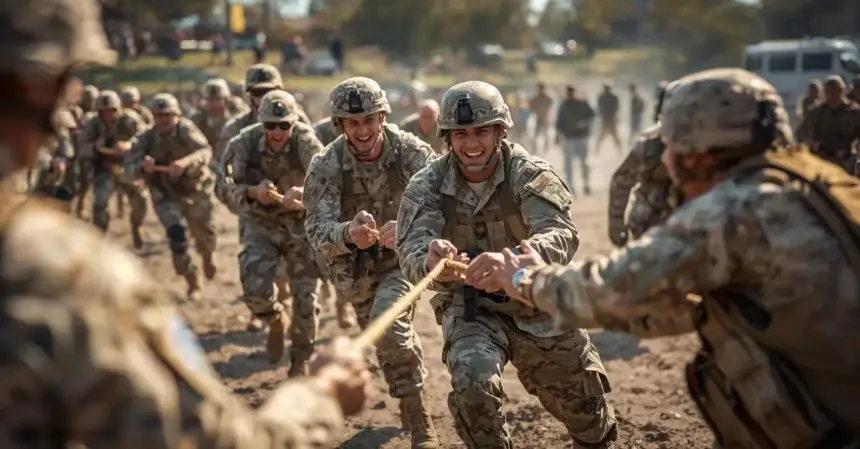
In the Moroccan collective imagination, the acronym FAR does not only evoke the defense of territorial integrity but also a sporting epic that has lasted for over six decades. In 2026, as Morocco prepares to host major global events like the World Cup, the role of the Royal Armed Forces in the national sporting landscape has never been more central. A pioneering institution, the Moroccan military has transformed military rigor into a champion-forging machine, making sports a vehicle for soft power and national cohesion. From football pitches to international track and field, the FAR embodies excellence and discipline in service to the flag.
The love story between the army and sports in Morocco takes root from independence, under the impetus of His Late Majesty Hassan II. The idea was innovative: to create a multi-sport structure capable of rivaling the best civilian clubs while establishing unprecedented standards of physical and mental preparation. Today, the Association Sportive des Forces Armées Royales (AS FAR) is no longer a mere club; it is a true state institution that feeds all the Kingdom’s sporting federations with its elite cadres and athletes.
AS FAR: The Standard-Bearer for Football and Multi-Sports
Football remains the most visible showcase of this success. The first Moroccan club to win an African Champions Cup in 1985, AS FAR paved the way for national football. In 2026, the club continues to play leading roles in the Botola Pro, relying on a training center in Maâmora that is considered one of the most efficient on the continent. The philosophy is clear: early detection, rigorous academic education, and physical training modeled on high-level requirements. This approach has allowed for a regular supply of talented players to the Atlas Lions.
But limiting the FAR to football would be a mistake. The institution shines in a multitude of disciplines: basketball, volleyball, handball, boxing, and especially equestrian sports. Show jumping and traditional equestrian arts are areas where Moroccan military riders often dominate national and international podiums. The management of these sections follows a strict hierarchy that guarantees continuity in results, far from the management instabilities that some civilian clubs may experience. The FAR infrastructures, spread across the country, provide athletes with a unique work environment combining sports technology and iron discipline.
Athletics and the Shaping of World Records
If there is one area where the military “stamp” has worked miracles, it is athletics. The greatest names in Moroccan long-distance and middle-distance running have, for the most part, trained or benefited from the support of the FAR. The military lifestyle — controlled nutrition, forced rest, twice-daily training, and mental rigor — is perfectly aligned with the requirements of endurance. In 2026, the FAR Sports Center continues to be the laboratory where future Olympic medalists are refined.
The army offers athletes rare material and social security, allowing them to focus exclusively on their performance. This status as a high-level athlete within the army guarantees an assured transition into military ranks after their sporting career. Here are the pillars of this success in athletics:
-
Access to high-altitude training centers (Ifrane).
-
State-of-the-art medical follow-up by the military health corps.
-
Tactical discipline in race management.
-
Psychological support for stress management in competition.
-
Detection programs in remote areas via military schools.
International Reach and Soft Power
Sports have become a major diplomatic tool for Morocco, and the FAR is one of its armed branches. When Moroccan military teams participate in the Military World Games or international parachuting championships, they carry a message of modernity and professionalism. In 2026, these competitions are no longer seen as secondary; they are showcases where the Kingdom’s organizational power is displayed to the world. The success of military athletes contributes directly to the “Morocco Brand”.
Moreover, the expertise of the FAR is sought by many partner countries, particularly in Africa, for the establishment of elite sports structures. This south-south cooperation strengthens political and military ties through the universal language of sports. By training foreign sports cadres, Morocco, through its military institutions, exports a model of success that combines martial tradition and contemporary athletic performance.
Challenges and Outlook for 2030
The major challenge for the FAR by 2030 is the massive integration of technology and data in training. In 2026, the move to “Smart Training” is already well underway. The use of biometric sensors, AI video analysis, and cryogenic recovery are now part of daily life in military sports centers. The goal is clear: optimize every second of training to remain competitive against the most advanced nations.
Another challenge is the development of women’s sports. The FAR women’s football team has already shown the way by winning the African Champions League, breaking glass ceilings and inspiring a new generation of young girls. The military is now committed to opening more of its multi-sport sections to women, proving that military discipline is a universal foundation for sporting success.