

Laayoune is no longer just a dot on the Saharan map; it has evolved into a vibrant urban center that surprises every newcomer. As you drive through its wide, sun-drenched boulevards, the sheer scale of development is undeniable. The city, which serves as the administrative and economic heart of the Moroccan Sahara, is currently undergoing a metamorphosis so rapid that even frequent visitors find something new every few months. From high-tech street lighting to expansive public squares, Laayoune is shedding its old skin to become a modern African gateway that connects the north of the continent with the Atlantic coast and the Sahel region.
This transformation is fueled by a massive national investment plan designed to turn the desert into a land of opportunity. Walking through the city, you sense a unique blend of traditional Sahrawi hospitality and a fast-paced, forward-looking mindset. The local economy is buzzing, supported by strategic infrastructure that has paved the way for international trade and local entrepreneurship. Laayoune’s portrait today is one of resilience and ambition, proving that with vision and investment, the desert can host a thriving, sustainable, and highly connected metropolis.
Infrastructure and Economic Engines of Growth
The backbone of Laayoune’s rapid ascent lies in its groundbreaking infrastructure projects. One of the most significant achievements is the Tiznit-Dakhla highway, a monumental road project that has slashed travel times and revolutionized logistics in the region. This highway is more than just asphalt; it is a trade corridor that links Morocco to its African neighbors, facilitating the flow of goods and people. Within the city itself, the new bridge over the Sakia El Hamra river stands as a testament to modern engineering, ensuring that the city remains accessible even during the rare but intense seasonal floods.
Economically, the city is diversifying at a breakneck speed. While phosphate mining remains important, the blue economy is taking center stage. The Port of Laayoune has been upgraded to handle massive volumes of fish processing and exports, creating a chain of value-added industries that employ thousands of locals. Furthermore, the region is becoming a global leader in green energy. The sprawling wind farms at Foum El Oued and the solar initiatives in the area are not just powering the city; they are positioning Laayoune as a key player in the global fight against climate change, attracting green tech investors from around the world.
A Hub for Education and Human Excellence
Investing in people is at the core of Laayoune’s strategy. The establishment of the Faculty of Medicine and Pharmacy is perhaps the most transformative social project in the city’s recent history. For the first time, students from the Sahara can pursue high-level medical degrees in their home city, ensuring a future generation of local doctors and healthcare professionals. This is complemented by the “Cité des Métiers et des Compétences,” a vocational training center equipped with the latest technology to prepare youth for jobs in renewable energy, digital tech, and logistics.
The social fabric of the city is also being strengthened through world-class sports and cultural facilities. Laayoune has invested in dozens of all-weather football pitches, Olympic-sized swimming pools, and indoor arenas that have hosted international championships. These spaces are not just for professional athletes; they are communal hubs where families gather and children play. The city’s commitment to quality of life is evident in its architectural landmarks and public services:
-
The Great Library of Laayoune, a hub for knowledge and digital research.
-
Modern healthcare centers equipped with telemedicine capabilities.
-
Expansive green parks that use recycled water for irrigation.
-
The Arts and Crafts Village, preserving traditional Sahrawi heritage.
Tourism and the Unique Saharan Lifestyle
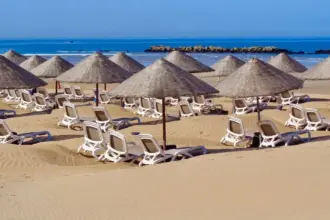
Laayoune is also carving out a niche as a unique tourist destination. The nearby coastal town of Foum El Oued offers a stunning contrast where the golden dunes of the Sahara meet the turquoise waters of the Atlantic. The beach promenade has been completely renovated, making it a hotspot for windsurfing, fishing, and family outings. For those looking for adventure, the surrounding desert offers trekking and 4×4 expeditions, while the nearby Khnifiss Lagoon—a UNESCO-recognized site—is a paradise for birdwatchers and nature lovers seeking tranquility.
Life in Laayoune moves at a pace that respects tradition while embracing the future. The local markets, or souks, are a sensory delight where the scent of Oud fills the air and colorful “Melhfas” (traditional dresses) are displayed alongside the latest electronics. There is a deep sense of community and safety that makes the city incredibly welcoming. Whether you are sipping traditional Saharan tea under a tent or dining in a modern rooftop restaurant overlooking the illuminated city, Laayoune offers an experience that is both authentic and sophisticated.
FAQ about Laayoune’s Development
How has Laayoune changed in the last decade? The city has transitioned from a provincial town into a major regional hub with international-standard hospitals, universities, and industrial zones, supported by the Moroccan Southern Provinces Development Model.
Is Laayoune a safe city for international visitors? Yes, Laayoune is known for being one of the safest cities in the region, with a very low crime rate and a welcoming, hospitable local population.
What are the main industries driving the local economy? The economy is driven by renewable energy (wind and solar), sea fishing and processing, phosphate mining, and a growing service and tourism sector.